
Aviation
CITA Boss Seeks Jet A-1 Pipeline Revival to Cut Costs
Dr. Thomas Ogungbangbe, CEO, CITA Energies Limited delivering his address on the Industry overview at CITA Energies Colloquium in conjunction with League of Airport and Aviation Correspondents, LAAC themed ‘Aviation Fuel Business in Nigeria: The Scenario and the Metaphor’ in Ikeja, Lagos on Thursday


The Chairman of CITA Energies Limited, Dr. Thomas Ogungbangbe, has urged the Federal Government to prioritize the restoration of the Jet A-1 (aviation fuel) pipeline from Atlas Cove to the airports, describing it as a critical infrastructure project capable of saving millions of dollars in logistics costs and enhancing national economic efficiency.
Speaking at the CITA Energies Colloquium themed “Aviation Fuel Business in Nigeria: The Scenario and the Metaphor” held on October 23, 2025, at the Radisson Blu Hotel, Lagos, Ogungbangbe said the pipeline’s rehabilitation would address rising aviation fuel costs, reduce dependence on road tankers, and promote operational safety.
“The Jet A-1 pipeline is still structurally viable,” he stated. “With proper testing and the right government backing, it can be restored. Once operational, it will remove at least 100 fuel trucks from Lagos roads daily, saving time, reducing accidents, and cutting transportation costs.”
A Missed Economic Asset
According to Ogungbangbe, the pipeline, which once served Nigeria’s aviation industry efficiently, was shut down in 1998 following an accident. He argued that modern safety standards and monitoring technology now make its restoration both feasible and necessary.
“That infrastructure was effective until a single incident prompted its closure,” he said. “Today’s technology can ensure safer operations. The government must revisit that decision to unlock value and efficiency in fuel logistics.”
He emphasized that the line’s revival would enhance Nigeria’s fuel distribution network, reduce operational risks, and strengthen supply chain resilience across the aviation sector.
Refineries and Strategic Energy Independence
Ogungbangbe lamented that despite Nigeria’s longstanding refinery capacity, the country only recently began consistent Jet A-1 production, relying for decades on imports and blending of domestic kerosene.
“For years, Nigeria had refineries but produced only household kerosene,” he explained. “It shares a similar hydrocarbon structure with Jet A-1, yet we never fully utilized the potential. We must now prioritize productivity over dependency.”
He urged policymakers to treat refining and storage as strategic national assets that underpin aviation and energy security.
Economic Drain from Imports
The CITA Energies Chairman disclosed that before the Dangote Refinery began operations, local marketers spent about $500,000 monthly importing aviation fuel from Togo, despite Nigeria’s coastal advantage.
“Before Dangote came on stream, we were spending heavily to bring in products from Togo,” Ogungbangbe said. “Ironically, we have the same maritime access here. We’re simply exporting opportunities that should be ours.”
He added that Togo has become the main aviation fuel hub for West and Central Africa, a position Nigeria could easily reclaim through targeted infrastructure investment and policy support.
Untapped Maritime Opportunities
Ogungbangbe also identified the lack of local dry-docking and ship repair facilities as a major source of foreign exchange loss.
“Most vessels lifting petroleum products from Nigeria go abroad for maintenance, spending up to €800,000 for two weeks of dry docking,” he revealed. “Developing local shipyards and docks would save costs, retain capital, and create jobs.”
He urged collaboration between the aviation, maritime, and energy sectors to optimize logistics, reduce foreign service dependency, and build a stronger domestic industrial base.
Infrastructure Modernization for Growth

Looking ahead, Ogungbangbe advocated for the installation of hydrant refueling systems across Nigerian airports to improve efficiency and safety while supporting future growth in air travel demand.
“Hydrant systems eliminate manual handling risks and make refuelling seamless,” he said. “If we invest now, the benefits will serve both current operators and the next generation of travelers.”
Projecting the nation’s aviation growth, he said that with Nigeria’s population of about 250 million, even a modest rise in air travel would create enormous demand for Jet A-1.
“If just 10 percent of our population flies regularly, that’s 25 million travelers,” he noted. “The growth potential is clear, and our infrastructure must match that scale.”
Ogungbangbe concluded by calling for policy alignment, private investment, and infrastructure renewal to position Nigeria as a regional energy and logistics hub, rather than a market dependent on imports.
Aviation
Nigeria, Russia Move to Replace 59-Year-Old Air Pact
Nigeria’s Minister of Aviation and Aerospace Development, Festus Keyamo, with members of the Nigerian delegation at the bilateral aviation meeting with Russian officials in Moscow

Nigeria and Russia have agreed to renegotiate their 59-year-old Bilateral Air Services Agreement (BASA), with both countries setting April 2027 as the deadline for concluding negotiations and signing a new agreement.
The decision followed a high-level bilateral meeting led by the Minister of Aviation and Aerospace Development, Festus Keyamo, SAN, and Russia’s State Secretary and Deputy Minister of Transport, Dmitry Stanislavovich Zverev, on the sidelines of the Third Russia-Africa Summit in Moscow.
The proposed renegotiation is aimed at replacing the existing agreement, which dates back to 1967, with a modern framework that reflects current developments and emerging opportunities in international aviation.
The development was disclosed in a statement signed by Tunde Moshood, Special Adviser on Media and Communications to the Minister of Aviation and Aerospace Development.
Both countries agreed that negotiations would be concluded within six months, with the new agreement scheduled for signing in Saint Petersburg, Russia, in April 2027.
To ensure that the deadline is met, Nigeria and Russia have constituted their respective negotiating teams to begin work immediately on the proposed agreement.
The revised BASA is expected to strengthen air transport relations between both countries, improve connectivity, promote institutional collaboration and create opportunities for mutually beneficial engagement between their aviation industries.
Beyond the renegotiation of the air services agreement, the meeting also considered other areas of potential cooperation between Nigeria and Russia, with both sides expressing readiness to explore opportunities that could deepen bilateral relations in aviation and related sectors.
The Nigerian delegation included the Director-General of the Nigerian Civil Aviation Authority (NCAA), Capt. Chris Najomo; the Registrar of the Nigerian College of Aviation Technology (NCAT), Dr. Danjuma Adamu Ismaila; and directors from the Federal Ministry of Aviation and Aerospace Development and the NCAA.
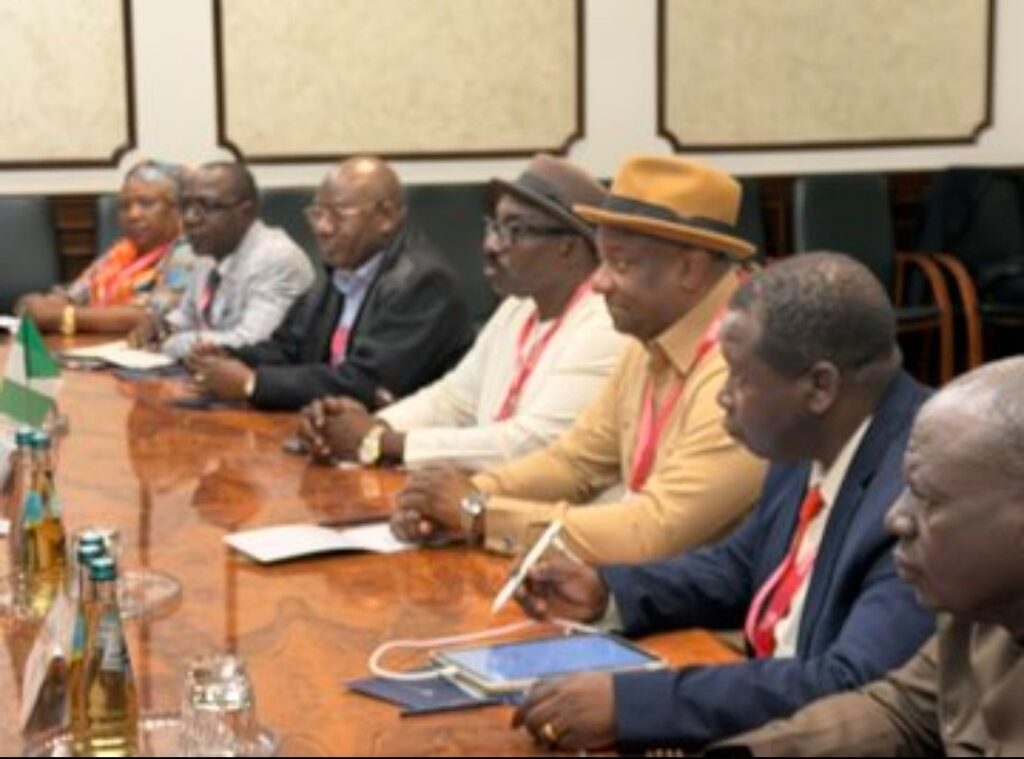
The meeting forms part of Nigeria’s efforts to strengthen international aviation partnerships and update existing bilateral frameworks to reflect changing industry realities.
Airspace
ATSSSAN Backs NAMA Push for Higher TSC, Aviation Clearance Revenue
Outgoing Chairman Comrade Wole Dada (left) handing over to Comrade Ekip Ekip Eso, during the inauguration of the branch’s new executive in Lagos

The Air Transport Services Senior Staff Association of Nigeria (ATSSSAN), NAMA Branch, has pledged to support efforts by the Nigerian Airspace Management Agency (NAMA) to secure improved revenue allocation from the Ticket Sales Charge (TSC) and Aviation Height Clearance to strengthen its operational capacity.
The newly inaugurated executive of the union also pledged to promote industrial harmony, protect workers’ welfare and sustain constructive engagement with management to improve the agency’s performance.
The commitments were made by the new branch chairman, Comrade Ekip Ekip Eso, during the inauguration of the executive at NAMA headquarters annex in Lagos.
In a statement signed by NAMA’s Director of Public Affairs and Consumer Protection, Dr Abdullahi Musa, Eso said the new leadership would pursue responsible unionism, accountability and policies that promote members’ welfare and the development of Nigeria’s aviation industry.
He said adequate and sustainable funding was essential for NAMA to maintain critical air navigation infrastructure, strengthen operational capacity and discharge its statutory responsibility of managing Nigeria’s airspace.
According to him, the union would pursue constructive advocacy and engage relevant government authorities and industry stakeholders, alongside sister unions, to support the agency’s position on improved revenue allocation.
Eso said the new executive recognised the responsibility entrusted to it and would discharge its mandate with dedication, fairness and accountability.
He also commended members and stakeholders who supported the branch during its delegate conference in Jos, particularly the ATSSSAN National President, Comrade John Ogbe, for promoting dialogue and reconciliation that helped restore peace and mutual understanding within the union.
The chairman urged members to sustain the renewed unity in the association, noting that collective progress required mutual respect, cooperation and commitment to common objectives.
On workers’ welfare, he pledged that the executive would prioritise timely payment of entitlements, equitable career advancement, professional training, safe working conditions and sustained engagement with management.
He also called on NAMA management to intensify efforts towards securing the urgent approval and implementation of the agency’s new Conditions of Service, describing the document as important to addressing workers’ welfare and employment-related concerns.

The new executive said it would maintain a cooperative relationship with management while ensuring that the legitimate interests of members remained adequately protected.
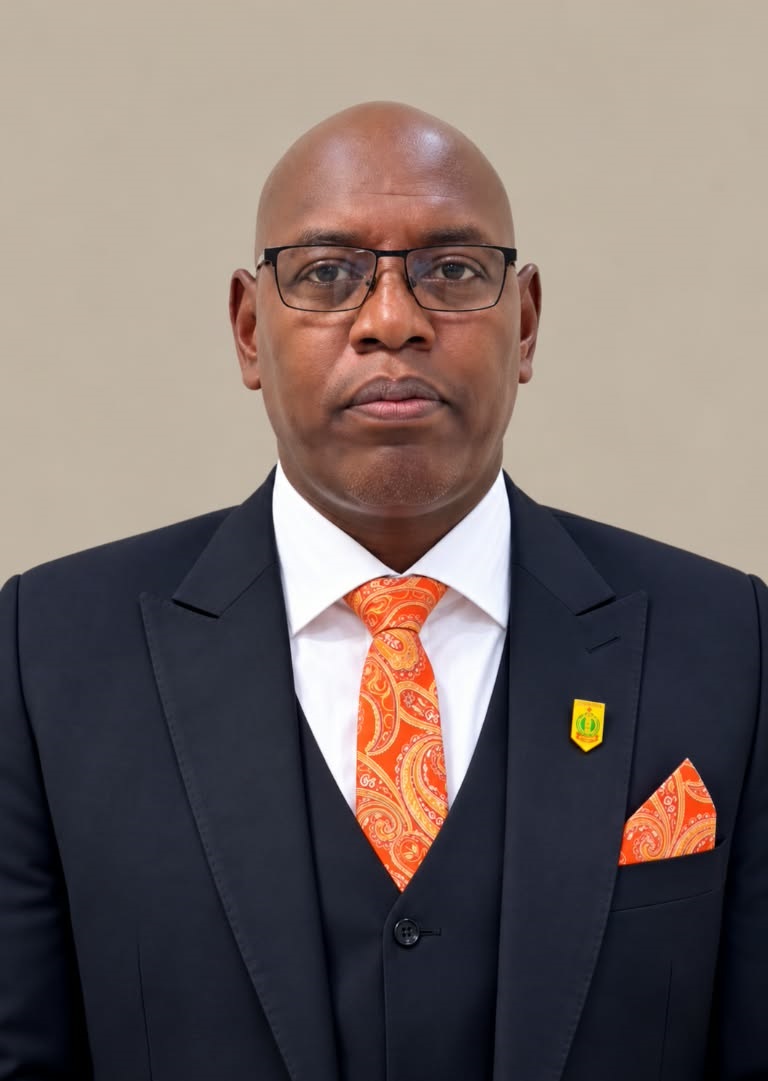
Nigeria’s representation in international aviation leadership has received a boost with the re-election of Ahmad Abba, Director of Aerodrome and Airspace Standards at the Nigeria Civil Aviation Authority (NCAA), as Executive Vice President for Africa and the Middle East of the International Federation of Air Traffic Controllers’ Associations (IFATCA).
Abba secured another three-year term covering 2027 to 2029 at the federation’s 37th Africa and Middle East Regional Meeting held in Amman, Jordan, from October 26 to 30, 2026.
The re-election marks his second consecutive mandate in the regional leadership position, having first been elected in 2024. It also underscores the continued confidence of IFATCA member associations in his leadership and contributions to the advancement of air traffic control across Africa and the Middle East.
In the renewed position, Abba will coordinate with air traffic controllers’ associations, aviation authorities, international organisations and industry stakeholders to strengthen regional collaboration and promote improvements in air navigation safety and efficiency.
His mandate will also focus on supporting the development of aviation manpower, strengthening the professional capacity of air traffic controllers and advancing their welfare and career development.
Reacting to his re-election, Abba thanked the member associations for their renewed confidence, pledging to sustain efforts towards strengthening the federation and supporting air traffic controllers across the region.
He said he remained committed to working with member associations and regional partners to build a safer, more resilient and sustainable aviation system.
Abba is a licensed air traffic controller with over 25 years of aviation experience. He is an International Civil Aviation Organization (ICAO)-certified instructor and has served in several operational, safety, search and rescue, and regulatory capacities.
At the NCAA, he heads the Directorate of Aerodrome and Airspace Standards, where he is responsible for regulatory oversight of the areas and contributes to the development of Nigeria’s civil aviation sector.
His re-election places him in a position to continue representing the interests of African and Middle Eastern air traffic controllers in international aviation engagements while further strengthening Nigeria’s participation in global aviation leadership.

Versat Deepens EXEED’s Push into Nigerian Auto Market

Onyema Hails Fidelity Bank for Repaying $400m Eurobond

CIBN Confers Honorary Fellowship on FAAN MD, Onabanjo-Kuku

Air Peace Expands Domestic Flight Schedule

Lufthansa Group to Bring Eurowings to Nigeria in 2027

Gateway International Airport Takes Off as Ogun Joins Nigeria’s Air Map
-
 Airlines5 months ago
Air Peace Expands Domestic Flight Schedule
-
 Airlines2 months ago
Lufthansa Group to Bring Eurowings to Nigeria in 2027
-
 Aviation1 year ago
Gateway International Airport Takes Off as Ogun Joins Nigeria’s Air Map
-

 Airlines1 year ago
₦100m Land Deal: Air Peace Backs Onyema’s Claim on Anambra Airport
-

 Aviation1 year ago
Nigeria, UAE Firm Sign Landmark Cargo Information Deal
-

 Airlines1 year ago
High Airfares, Hot Hotels: Nigeria’s Travel Paradox
-

 AIRPORTS1 year ago
MMA2 Named Nigeria’s Best Cargo Airport, Jibodu Honored
-
 Airlines1 year ago
UK Partnership Opens Heathrow, Gatwick Gates for Air Peace – Onyema