
AIRPORTS
Airport Mobility: Why Passenger Safety and Convenience Must Go Together
Mr. Henry Agbebire-Director of Public Affairs and Consumer Protection-Federal Airports Authority of Nigeria


By Henry Agbebire, Director,
Public Affairs & Corporate Protocol, Federal Airports Authority of Nigeria (FAAN)
The continuing public conversation around the operations of Uber, Bolt and other e-hailing services at Nigerian airports deserves a little more context and a broader perspective.
Understandably, passengers want convenient, affordable and readily available transportation when they arrive at an airport. E-hailing platforms have transformed urban mobility and have become an important part of the travel experience for many Nigerians. FAAN recognises this.
It is within this wider context that FAAN’s position and its ongoing engagements with the e-hailing operators should be understood. Indeed, the Authority has never been opposed to e-hailing services.
The issue before us is not whether passengers should be able to use Uber, Bolt or other platforms. It is how commercial transportation operates within a highly regulated airport environment. That distinction is important.
An airport is not an ordinary pick-up point
An airport is a security-sensitive environment where thousands of passengers, employees, vehicles and service providers interact every day.
Consequently, every commercial vehicle operating within the airport environment must be identifiable and accountable. The airport authority needs to know, where necessary, who is operating the vehicle, what vehicle is involved, where passengers are being picked up and how the activity can be tracked if a security or passenger-related incident occurs.
This is not peculiar to Nigeria. Even Uber’s own published guidance recognises that airports operate under specific rules, including designated pick-up locations, staging areas and other airport-specific requirements. The principle is simple: the convenience of digital mobility does not remove the need for airport-specific safety and operational controls.
The real issue is visibility and accountability
One of the questions that has become somewhat lost in the current debate is what happens when something goes wrong.
If a passenger reports an incident involving a vehicle that picked him or her up at an airport, the relevant question cannot simply be whether the trip was booked through an app. There must also be an operational framework through which the airport authority can establish the identity of the vehicle and driver, the circumstances surrounding the pick-up and the appropriate channel for intervention.
This is why FAAN has been seeking an arrangement that gives the Authority adequate visibility over commercial transportation activities within its airports. It is about accountability. It is about security. And ultimately, it is about the passenger.
ACHRAMS is not an alternative to Uber or Bolt
There has also been some misunderstanding about FAAN’s Airport Car Hire Rank Management System, ACHRAMS.
ACHRAMS is not FAAN’s attempt to create an alternative e-hailing platform. It was developed to provide greater operational visibility and tracking within the airport environment, while facilitating the accountable management of applicable concession and related airport charges.
The broader objective is to bring greater structure to airport ground transportation and address some of the long-standing challenges associated with unregulated activities, passenger solicitation and touting.
These are not imaginary concerns. FAAN has received complaints from passengers and has observed challenges associated with commercial transportation activities around airport premises.
A modern airport cannot afford to operate without adequate visibility over commercial activities taking place within its environment.
This is not about protecting one category of taxi from another
It is equally important to dispel the impression that FAAN’s position is designed to protect conventional airport taxis from competition. That is not the issue. FAAN’s concern should be, and is, the standard under which any commercial transportation provider operates within the airport.
Whether the vehicle is an airport taxi, an e-hailing vehicle or any other authorised commercial transport service, the same basic principles should apply: safety, security, identification, accountability, orderly operations and protection of passengers.
Competition is healthy. Passenger choice is important. Innovation is welcome. But none of these should require an airport authority to surrender operational visibility over vehicles and persons operating within its environment.
What about the concern over fares?
There is understandable concern that when transportation options are temporarily affected, passengers may face higher fares or reduced availability.
FAAN does not dismiss that concern. On the contrary, passenger convenience is an important consideration in resolving the current situation quickly.
But we should be careful not to allow the legitimate concern about fares to obscure the equally legitimate question of safety and security. The answer to a temporary inconvenience should not be to abandon a necessary safety framework. The answer should be to resolve the outstanding issues as quickly as possible so that passengers can enjoy both convenience and protection.
This is precisely why FAAN has continued its engagement with the affected operators.
The way forward is cooperation
There is little value in turning this into a contest between FAAN and the e-hailing companies. Uber and Bolt have become important parts of the transportation ecosystem, and FAAN recognises the value they bring to passengers.
At the same time, FAAN has a responsibility that cannot be delegated: ensuring that activities within the airport environment are conducted safely, securely and in an orderly manner.
The appropriate solution, therefore, is not confrontation. It is collaboration. The objective is to arrive at an operational framework that allows e-hailing companies to continue providing passengers with convenient transportation while satisfying the airport’s legitimate safety, security, accountability and operational requirements.
That is why the current engagement between FAAN and the operators is important, and why it is in the interest of everyone, particularly passengers, that it is concluded expeditiously.
Ultimately, the passenger must remain at the centre
The debate should therefore not be framed as FAAN versus Uber or FAAN versus Bolt. It should be about finding the right balance between two things that should never be presented as mutually exclusive: passenger convenience and passenger safety.
FAAN wants passengers to have choices. FAAN wants passengers to have convenient transportation. FAAN wants technology and innovation to thrive within the airport environment. But FAAN must also be able to answer the fundamental safety and security questions that arise whenever commercial vehicles operate within an airport.
That responsibility is not anti-competition. It is not anti-technology. And it is certainly not anti-passenger. It is responsible airport management.
As discussions continue with the relevant operators, FAAN remains committed to achieving a solution that preserves the convenience passengers value while providing the visibility, accountability and security that the airport environment requires.
At the end of the day, the objective is simple: every passenger should be able to leave a Nigerian airport conveniently, confidently and safely.
That is the balance FAAN is seeking, and it is a balance worth achieving.
AIRPORTS
Babalakin Hails Tinubu Over MMA2 Dispute Settlement
Chairman of Bi-Courtney Aviation Services Limited (BASL), Dr. Wale Babalakin, (SAN) in handshake with the Aviation Minister – Mr. Festus Keyamo (SAN) in Abuja

…Pledges quality jobs for Nigerians
The Chairman of Bi-Courtney Aviation Services Limited (BASL), Dr. Wale Babalakin, SAN, has commended President Bola Tinubu for facilitating the settlement of the more than 18-year dispute surrounding the Murtala Muhammed Airport Terminal Two (MMA2), describing the agreement as a victory for Nigeria.
Babalakin gave the commendation at the signing ceremony involving the Federal Government, the Federal Airports Authority of Nigeria (FAAN), Bi-Courtney Limited and Stabilini Visinoni Limited, following the resolution of the longstanding disagreement.
He credited the President’s intervention, facilitated through the Minister of Aviation and Aerospace Development, Festus Keyamo, SAN, with helping to resolve the impasse.
“This is not a win for us alone; it is a win for Nigerians,” Babalakin said, while expressing appreciation to the President, the minister and Nigerians who had followed the dispute over the years.
The development is expected to provide a basis for renewed cooperation among the parties and create opportunities for further infrastructure development and expanded operations at MMA2.
In a statement signed by the Head of Corporate Communications, Bi-Courtney Aviation Services Limited, Mrs. Ajoke Yinka-Olawuyi, the company said the settlement also addresses outstanding issues arising from the parties’ longstanding commercial relationship, including matters relating to the General Aviation Terminal (GAT), which remained under FAAN’s control and operation.
The agreement incorporates reciprocal concessions and revised obligations, providing a framework for the parties to move forward.
Babalakin said the resolution sends a positive signal to investors that longstanding disputes between government and private businesses can be resolved through dialogue and constructive engagement.
He noted that prolonged uncertainty could discourage long-term investment, adding that the settlement presents an opportunity to strengthen confidence in Nigeria’s investment environment.
The agreement is also expected to facilitate progress on key projects at MMA2, including the proposed Hotel and Conference Centre and the commencement of regional flight operations.
According to Babalakin, completing the hotel and conference facility would provide accommodation and meeting facilities for business travellers, corporate organisations and other airport users, while creating employment opportunities in construction, engineering, hospitality and facility management.
The planned regional flight operations, alongside the proposed expansion of the airport apron, are also expected to create opportunities for skilled employment and commercial growth.
Babalakin assured stakeholders that Bi-Courtney would fulfil its obligations under the agreement and work with the relevant parties to implement its provisions.
“We will not disappoint the President, the Ministry of Aviation and Aerospace Development, FAAN or Nigerians,” he said.

He added that the settlement offered an opportunity to strengthen cooperation, advance infrastructure development and realise MMA2’s full potential.
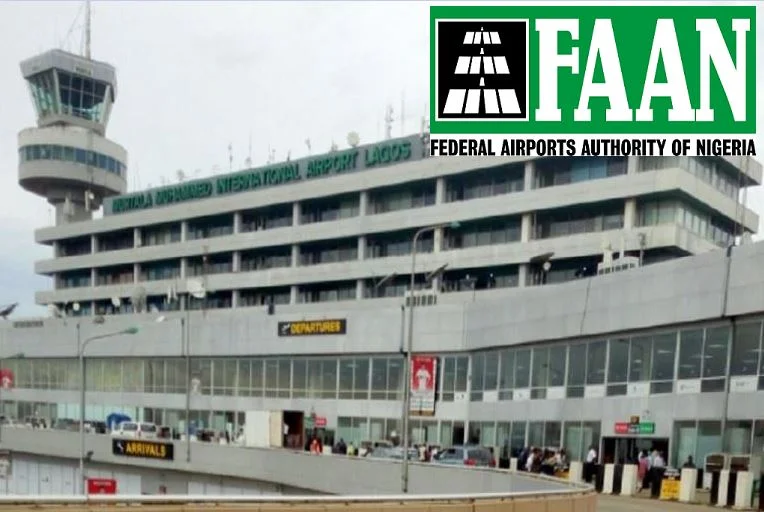
The Federal Airports Authority of Nigeria (FAAN) has stepped up vigilance across airport operations following the confirmation of an Ebola Virus Disease case in the Federal Capital Territory (FCT), urging passengers and other airport users to remain calm and cooperate with health officials.
The authority said it was working with the Nigeria Centre for Disease Control and Prevention (NCDC), Port Health Services, the Nigeria Civil Aviation Authority (NCAA) and other relevant agencies to support efforts to contain the disease and protect public health.
FAAN’s Director of Public Affairs and Consumer Protection, Henry Agbebire, disclosed this in a statement on Tuesday, October 20, 2026, assuring the public that the authority remained alert to developments and would continue to coordinate its response with relevant health agencies.
Agbebire said FAAN would align its actions with public health directives and support additional measures considered necessary to safeguard passengers, airport workers and other users of the country’s airports.
He noted that the early identification of the case and the commencement of contact tracing underscored the importance of effective disease surveillance, established public health protocols and cooperation among government agencies.
The FAAN spokesperson urged passengers, airlines, airport operators and other stakeholders to remain vigilant and cooperate with health officials as containment efforts continued.
He also advised members of the public to obtain information from credible, verified sources and refrain from circulating unconfirmed reports capable of creating unnecessary panic.
FAAN reaffirmed its commitment to working with relevant government agencies to protect public health while ensuring that airport operations across the country remain safe and efficient.
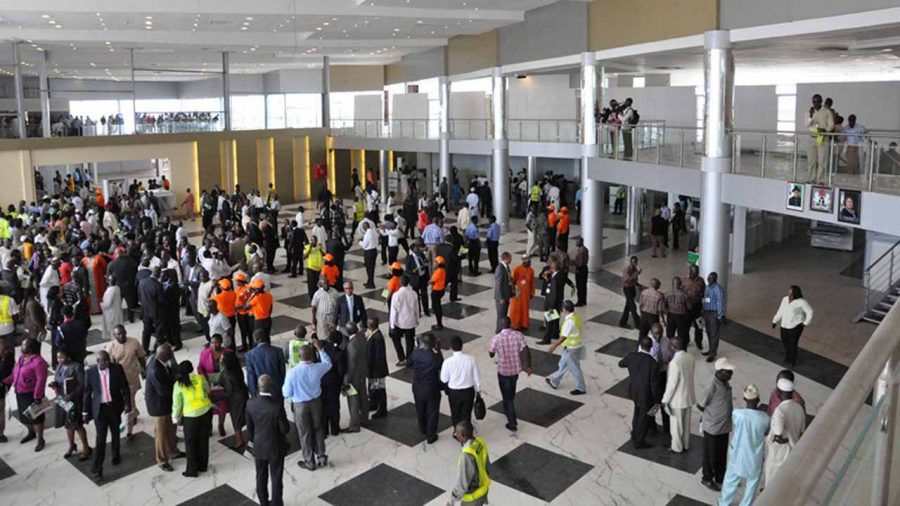
The authority said it would continue to respond to further guidance from public health officials as efforts to contain the reported case progressed.
AIRPORTS
MMA2 Regional Flights Nearer as FG, BASL End Two-Decade Dispute
Murtala-Muhammed-Airport-Two-MMA2-Lagos
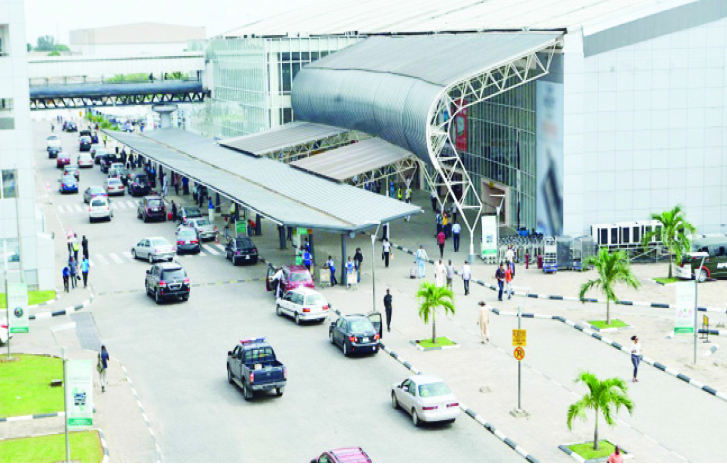
The Federal Government’s settlement of its nearly two-decade dispute with Bi-Courtney Aviation Services Limited (BASL) has cleared a major contractual obstacle to regional flight operations from the Murtala Muhammed Airport Terminal Two (MMA2), while opening the way for the Federal Airports Authority of Nigeria (FAAN) to begin collecting concession fees from the facility.
The Minister of Aviation and Aerospace Development, Festus Keyamo, announced the resolution in Abuja on Tuesday, describing it as a significant breakthrough in the relationship between the government and the private terminal operator.
Under the settlement, BASL will resume concession fee payments to FAAN in line with the original concession agreement, while both parties will relinquish historical claims against each other and operate under a clearer framework for meeting their contractual obligations.
The agreement also allows BASL to expand its apron facilities to accommodate regional flights across Africa, subject to the terminal’s operational capacity and applicable regulatory requirements. The provision is expected to create room for increased airline operations and stronger air connectivity between Lagos and other African destinations.
Keyamo said the settlement would also remove BASL’s exclusive rights under Article 2 of the original concession agreement, giving the Federal Government greater flexibility in planning future developments within the airport complex.
He further disclosed that the General Aviation Terminal (GAT) had been formally recognised as Federal Government property and placed under FAAN’s operational control, resolving another major point of disagreement between the parties.
The minister said FAAN had been unable to receive concession revenue from MMA2 for approximately 20 years because of the prolonged dispute. He expressed optimism that the settlement would end the impasse and establish a more productive relationship between the government and the concessionaire.
“However, settling past claims comes with clear obligations for the future. Upon execution of the agreement, the concessionaire is to commence payment of the concession fees due under the original agreements,” Keyamo said.

As part of the reciprocal arrangement, the Federal Government agreed to waive historical claims against BASL, including accumulated concession fees and specified ancillary payments arising before the settlement was executed.
The resolution is also expected to support further investment in MMA2, with the planned apron expansion providing additional capacity for regional operations, subject to the necessary approvals and operational requirements.
BASL Chairman, Dr Wale Babalakin, SAN, commended President Bola Ahmed Tinubu for intervening through the Ministry of Aviation and Aerospace Development to bring the longstanding disagreement to an end.
Babalakin said the dispute had persisted for more than 18 years despite the fundamental issues remaining substantially unchanged, adding that the president’s intervention helped both parties reach a compromise.
“We have found a solution to this issue,” he said, expressing appreciation to the president and Nigerians for their support.
He said the agreement would create employment opportunities, particularly well-remunerated jobs, and encourage improvements to the terminal’s appearance and renewed progress on projects that had stalled.
Babalakin also expressed hope that the resolution would strengthen investor confidence by demonstrating that disagreements between businesses and government could be addressed through dialogue and mutually acceptable settlements.

The agreement marks a new phase in the relationship between FAAN and BASL, with its practical benefits expected to depend on the implementation of the revised contractual arrangements, the commencement of concession payments and the fulfilment of requirements for regional flight operations at MMA2.

Versat Deepens EXEED’s Push into Nigerian Auto Market

Onyema Hails Fidelity Bank for Repaying $400m Eurobond

CIBN Confers Honorary Fellowship on FAAN MD, Onabanjo-Kuku

Air Peace Expands Domestic Flight Schedule

Lufthansa Group to Bring Eurowings to Nigeria in 2027

Gateway International Airport Takes Off as Ogun Joins Nigeria’s Air Map
-
 Airlines5 months ago
Air Peace Expands Domestic Flight Schedule
-
 Airlines2 months ago
Lufthansa Group to Bring Eurowings to Nigeria in 2027
-
 Aviation1 year ago
Gateway International Airport Takes Off as Ogun Joins Nigeria’s Air Map
-

 Airlines1 year ago
₦100m Land Deal: Air Peace Backs Onyema’s Claim on Anambra Airport
-

 Aviation1 year ago
Nigeria, UAE Firm Sign Landmark Cargo Information Deal
-

 Airlines1 year ago
High Airfares, Hot Hotels: Nigeria’s Travel Paradox
-
 Airlines1 year ago
UK Partnership Opens Heathrow, Gatwick Gates for Air Peace – Onyema
-

 AIRPORTS1 year ago
MMA2 Named Nigeria’s Best Cargo Airport, Jibodu Honored
Kemi Awe
September 7, 2026 at 6:22 pm