
AIRPORTS
Olubunmi Kuku Elected ACI Africa Vice President


Nigeria’s aviation industry has recorded another historic milestone as Olubunmi Kuku, Managing Director of the Federal Airports Authority of Nigeria (FAAN), has been elected Vice President of Airports Council International (ACI) Africa.
The announcement came during the 34th ACI Africa General Assembly held in Lusaka, Zambia, on September 18, 2025.
The election not only recognizes her leadership in Nigeria and across Africa but also secures her place as a permanent member of the ACI World Governing Board, the highest decision-making body overseeing more than 2,100 airports across 169 countries.
The global board, which comprises 814 members, sets standards and policy directions for airport operations worldwide.
ACI Africa itself represents 56 member states, working to promote the interests of airports on the continent, advocate for aviation growth, and address unique regional challenges. With her election, Mrs. Kuku is expected to play a pivotal role in strengthening African representation within the global aviation community, while also driving initiatives that promote safe, sustainable, and passenger-focused airport operations.
In her acceptance remarks, Mrs. Kuku described the appointment as a call to service not only for Nigeria but also for the wider African continent.
“Being elected as Vice President of ACI Africa is an incredible honor, one that I do not take lightly,” she said. “I am committed to collaborating with my colleagues to ensure that our airports not only meet international standards for safety and efficiency but also serve as critical drivers of economic growth and connectivity for our nations.”
Since assuming office as FAAN’s Managing Director, Kuku has overseen a series of reforms and transformation projects within Nigeria’s aviation sector. These include major infrastructure upgrades, improved regulatory compliance, and a push for service excellence across the nation’s airports.
Her leadership has been credited with repositioning Nigerian airports to meet international standards, while also enhancing operational efficiency and passenger experience.
With a professional background spanning aviation management and finance, Mrs. Kuku brings a wealth of expertise to her new role. She has been an advocate for sustainable aviation practices, infrastructure modernization, and innovative approaches to airport operations. Industry stakeholders note that her election to the ACI World Governing Board will give Africa a stronger voice in global aviation policy discussions.
Her tenure at FAAN has also attracted both local and international recognition, with the Authority earning awards for operational improvements and quality service delivery under her management.
As Vice President of ACI Africa, Mrs. Kuku is expected to champion collaborative initiatives that address challenges facing African airports, from infrastructure gaps and regulatory compliance to financing and technological innovation. Her vision includes making African airports more competitive globally while positioning them as key enablers of trade, tourism, and economic growth.
Aviation experts have hailed her election as a significant boost for Nigeria, noting that it will further spotlight the country’s aviation sector as a strategic player in continental and global affairs.
With this development, Olubunmi Kuku now joins a select group of African leaders shaping the future of aviation on the world stage, a role many believe will accelerate both Nigeria’s and Africa’s journey towards modern, world-class airport infrastructure

The management of Murtala Muhammed International Airport has rolled out sweeping new safety measures aimed at tightening operational discipline and reducing safety risks across Nigeria’s busiest aviation gateway.
The measures were announced after an emergency meeting of the airport’s Safety Committee, a body comprising safety managers from key airport stakeholders who regularly review operational concerns and recommend solutions.
In one of its strongest actions yet, the Committee reduced the speed limit for vehicles operating within the International Terminal Zone 1 construction corridor from 15km/h to 10km/h due to ongoing rehabilitation works at the E-Wing and D-Wing, which have significantly narrowed operational space. Authorities said fresh signage would be deployed immediately to enforce compliance, while the 15km/h limit remains applicable in ITZ 2 areas.
The newly inaugurated Airside Taskforce has also commenced operations, with responsibility for monitoring all personnel, vehicles and equipment operating within restricted airport zones.
Airport authorities warned that reckless driving, smoking, alcohol consumption and other unsafe practices on the airside would attract strict sanctions. Mandatory alcohol testing has now been introduced for relevant operators, while unserviceable vehicles and faulty equipment causing oil leaks or pavement damage will be impounded and fined.
The Committee also identified Foreign Object Debris (FOD) as a growing operational threat and consequently banned the sale of sachet alcoholic drinks within the airport environment. Officials said the decision became necessary following concerns over debris contamination capable of endangering aircraft safety.
According to the Committee, improved housekeeping, proper waste disposal and stricter environmental discipline would now be aggressively enforced across the airport.
The meeting further addressed rising incidents of fuel and oil spills, warning that organisations responsible for such violations would face sanctions, especially as the incidents continue to place pressure on Aerodrome Rescue and Fire Fighting Services coverage.
On communication protocols, the Committee reaffirmed that all airside communication must operate on designated frequencies, while restricting the use of handheld radios within prohibited ranges to avoid interference with pilots and Air Traffic Control operations.
It also reiterated approved reflective jacket standards, specifying lemon green for general personnel and orange strictly for marshallers.
The Committee acknowledged additional operational challenges, including congestion at arrival halls during peak periods, baggage handling delays, damaged taxiway infrastructure, poor road conditions and access control concerns at ramp entrances.
However, the Regional General Manager assured stakeholders that all identified issues would be escalated for immediate attention.
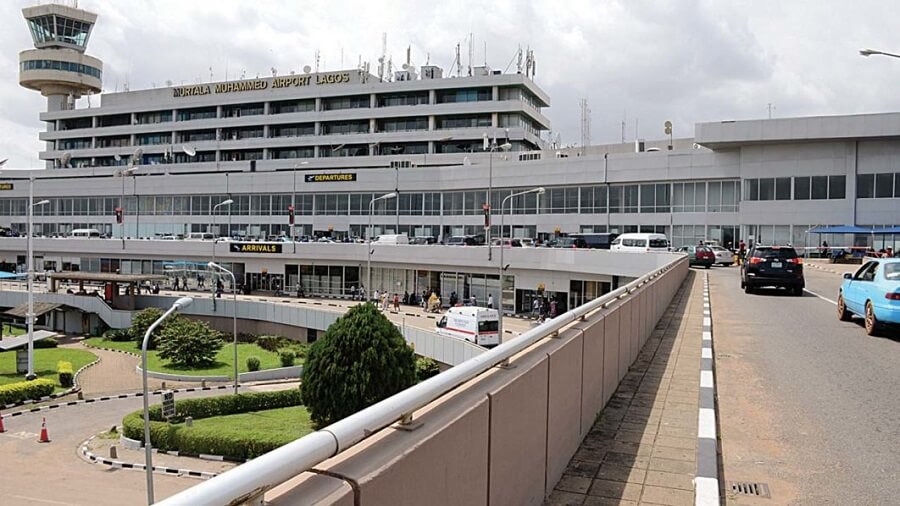
The Committee stressed that safety remains the foundation of airport operations and urged all stakeholders to comply fully with established operational procedures and regulatory standards.
The Federal Airports Authority of Nigeria (FAAN) has assured passengers and stakeholders of enhanced Ebola preparedness measures across the nation’s international airports following recent Ebola Virus Disease (EVD) concerns in parts of Central Africa.
FAAN said it had strengthened surveillance, passenger monitoring, and emergency response systems in collaboration with Port Health Services, the Nigeria Centre for Disease Control and Prevention (NCDC), and other relevant agencies.
In a statement signed by the Director of Public Affairs and Consumer Protection, Mr. Henry Agbebire, the authority disclosed that passengers arriving from high-risk regions are currently undergoing intensified health screening procedures at airports nationwide.
According to the statement, passengers are being screened for symptoms associated with Ebola, while any suspected case would be immediately isolated and subjected to secondary health checks in line with national and international health protocols.
FAAN stated that additional preventive measures had also been activated to strengthen the country’s preparedness against any possible outbreak.
The authority noted that coordination among aviation, health, and emergency response stakeholders had been reinforced to ensure swift and effective action whenever necessary.
It further disclosed that airport personnel had undergone increased sensitisation programmes, while emergency response procedures had been strengthened across airport facilities to improve readiness and operational safety.
“While there is currently no confirmed case of Ebola in Nigeria, FAAN remains vigilant and fully committed to safeguarding public health and maintaining safe airport operations,” the statement said.
The agency urged passengers to remain calm, cooperate with health officials during screening procedures, and promptly report any symptoms or health concerns to relevant authorities.
FAAN reaffirmed its commitment to maintaining safe, secure, and healthy airport environments while supporting national public health protection measures.

The authority added that continuous monitoring and collaboration with health agencies would remain in place to ensure Nigeria’s airports sustain global health and safety standards.
AIRPORTS
Nigeria Removed From AWG Blacklist as Keyamo Pushes Aviation Reforms
Minister of Aviation and Aerospace Development, Festus Keyamo (SAN), addressing global aviation financiers and stakeholders during the Aviation Working Group (AWG) General Meeting in London on Wednesday.

Nigeria has been removed from the Aviation Working Group (AWG) blacklist following major reforms introduced by the Federal Government to strengthen aviation financing, aircraft leasing, and compliance with the Cape Town Convention (CTC).
The Minister of Aviation and Aerospace Development, Mr. Festus Keyamo (SAN), disclosed this while addressing global aviation stakeholders at the Aviation Working Group General Meeting held in London.
Speaking before international financiers, aircraft lessors, legal practitioners, and aviation industry leaders, Keyamo said Nigeria’s compliance score under the Cape Town Convention improved significantly due to ongoing regulatory and judicial reforms implemented by the Federal Government.
According to the Minister, Nigeria’s compliance rating rose from 49 per cent to 70.5 per cent after the Chief Judge of the Federal High Court signed a new Practice Direction strengthening legal enforcement in aviation-related matters.
He added that the operationalisation of the Irrevocable Deregistration and Export Request Authorization (IDERA) further raised the country’s compliance score to 75.5 per cent, resulting in Nigeria’s removal from the AWG blacklist.
Keyamo described the development as a major boost for investor confidence and aircraft financing opportunities within Nigeria’s aviation sector.
He explained that the reforms were part of broader efforts to position Nigeria as a safe and competitive destination for aircraft leasing and aviation investments.
The Minister noted that over 80 per cent of aircraft operating within Nigeria’s registry are currently acquired through lease arrangements, adding that most leased aircraft whose contracts expired were deregistered and exported successfully without disputes.
“These milestones did not happen by chance. They were driven by targeted regulatory reforms designed to demonstrate the Federal Government’s commitment to implementing the Cape Town Convention both in substance and in practice,” he said.
Keyamo stated that the reforms were already producing positive outcomes, including successful dry lease transactions involving Nigerian airlines and international financing institutions.
He, however, acknowledged that operational challenges such as customs-related procedures, foreign exchange fluctuations, temporary importation processes, and inter-agency coordination issues still exist within the aviation financing environment.
The Minister assured stakeholders that the Federal Government was actively addressing the issues through coordinated institutional reforms, digitalisation programmes, and enhanced regulatory oversight by the Nigeria Civil Aviation Authority.
In another major development, Keyamo announced that the Federal Executive Council had approved the establishment of a Nigerian Aircraft Leasing Company projected to unlock over one billion dollars in future aviation financing capacity.
According to him, the initiative would help Nigerian airlines access aircraft on more competitive terms, reduce dependence on foreign lessors, and support fleet expansion and operational stability.
Keyamo stressed that Nigeria’s aviation market requires sustainable financing systems capable of supporting rising passenger traffic and long-term sector growth.
He reaffirmed the Federal Government’s commitment to international best practices, legal certainty, and constructive collaboration with global aviation stakeholders.
“The Cape Town Convention is more than a treaty. It is a framework for building trust,” the Minister stated.

He expressed confidence that Nigeria’s ongoing reforms would strengthen aviation financing and support economic growth not only within Nigeria but across the African continent.

FG Unveils Nigeria Aircraft Leasing Company to Rescue Local Airlines

Barbados Hails Air Peace Historic Caribbean Entry

MMIA Cracks Down on Airside Violations

Gateway International Airport Takes Off as Ogun Joins Nigeria’s Air Map

Nigeria, UAE Firm Sign Landmark Cargo Information Deal

UK Partnership Opens Heathrow, Gatwick Gates for Air Peace – Onyema
-
 Aviation8 months ago
Gateway International Airport Takes Off as Ogun Joins Nigeria’s Air Map
-
 Aviation8 months ago
Nigeria, UAE Firm Sign Landmark Cargo Information Deal
-
Airlines8 months ago
UK Partnership Opens Heathrow, Gatwick Gates for Air Peace – Onyema
-

 Airlines8 months ago
High Airfares, Hot Hotels: Nigeria’s Travel Paradox
-

 Airlines8 months ago
₦100m Land Deal: Air Peace Backs Onyema’s Claim on Anambra Airport
-

 AIRPORTS8 months ago
MMA2 Named Nigeria’s Best Cargo Airport, Jibodu Honored
-

 Airlines8 months ago
Aborted Take-off: Air Peace Assures Passengers of Safety on Abuja–Asaba Flight
-

 Aviation8 months ago
NCAA Hosts Sixth CODEVMET-AFI Steering Committee Meeting in Abuja