
Aviation
Nigeria, UAE Firm Sign Landmark Cargo Information Deal


Nigeria has signed a landmark Memorandum of Understanding (MoU) with DALIL UAE to introduce Advanced Cargo Information (ACI) systems across the country’s airports.
The agreement was sealed during a high-level mission to Abu Dhabi led by the Minister of Aviation and Aerospace Development, Olorogun Festus Keyamo, SAN, CON.
The Nigerian delegation toured DALIL UAE’s ACI and Command Centers, where they witnessed real-time cargo management, risk profiling, and aviation security technologies in action.
The MoU provides for technical cooperation, feasibility studies starting in October 2025, and a nationwide rollout of ACI systems by the third quarter of 2026.
Minister Keyamo said the initiative will strengthen aviation security, reduce clearance delays, improve government revenue assurance, and position Nigeria as a regional logistics hub, in line with ICAO and WCO global standards.

“With this partnership, Nigeria is taking a decisive leap into aviation digital transformation,” the Minister stated.
The deal makes Nigeria the first country in West Africa to commit to a nationwide ACI system, a move expected to transform cargo operations and boost trade efficiency
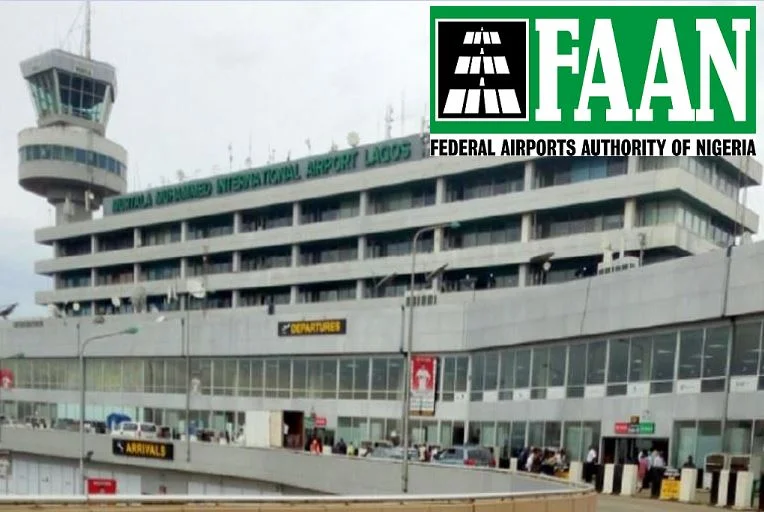
The Federal Airports Authority of Nigeria (FAAN) has stepped up vigilance across airport operations following the confirmation of an Ebola Virus Disease case in the Federal Capital Territory (FCT), urging passengers and other airport users to remain calm and cooperate with health officials.
The authority said it was working with the Nigeria Centre for Disease Control and Prevention (NCDC), Port Health Services, the Nigeria Civil Aviation Authority (NCAA) and other relevant agencies to support efforts to contain the disease and protect public health.
FAAN’s Director of Public Affairs and Consumer Protection, Henry Agbebire, disclosed this in a statement on Tuesday, October 20, 2026, assuring the public that the authority remained alert to developments and would continue to coordinate its response with relevant health agencies.
Agbebire said FAAN would align its actions with public health directives and support additional measures considered necessary to safeguard passengers, airport workers and other users of the country’s airports.
He noted that the early identification of the case and the commencement of contact tracing underscored the importance of effective disease surveillance, established public health protocols and cooperation among government agencies.
The FAAN spokesperson urged passengers, airlines, airport operators and other stakeholders to remain vigilant and cooperate with health officials as containment efforts continued.
He also advised members of the public to obtain information from credible, verified sources and refrain from circulating unconfirmed reports capable of creating unnecessary panic.
FAAN reaffirmed its commitment to working with relevant government agencies to protect public health while ensuring that airport operations across the country remain safe and efficient.
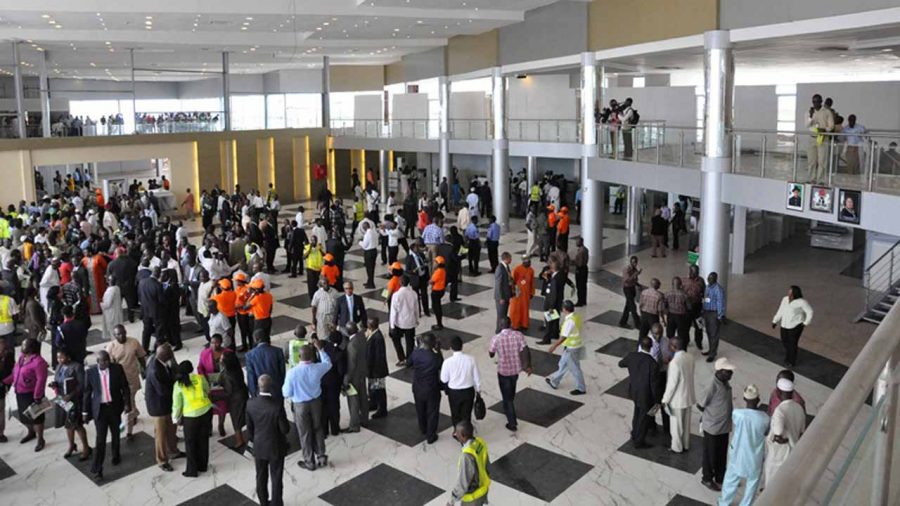
The authority said it would continue to respond to further guidance from public health officials as efforts to contain the reported case progressed.
Aviation
AAAU, NCAT Seek Digital Overhaul of Aviation Training
The Acting Vice-Chancellor of the African Aviation and Aerospace University (AAAU), Dr Mustapha Abdullahi, and the Rector of the Nigerian College of Aviation Technology (NCAT), Dr Ismaila Danjuma, at the second international conference organised by AAAU’s Department of Aviation Business in Abuja.

The African Aviation and Aerospace University (AAAU) and the Nigerian College of Aviation Technology (NCAT) have called for a shift towards digital-focused aviation training, warning that traditional methods alone may not adequately prepare professionals for emerging industry challenges.
The institutions said stronger research, innovation and collaboration among training institutions, regulators and industry operators were necessary to equip Africa’s aviation workforce with the skills required to manage technological changes and evolving safety demands.
The call was made on Tuesday at the second international conference organised by AAAU’s Department of Aviation Business in Abuja, where stakeholders examined the future of aviation education amid digital transformation and changing industry requirements.
The Acting Vice-Chancellor of AAAU, Dr Mustapha Abdullahi, said the university was committed to advancing knowledge, influencing policy and promoting research in aviation, aerospace and environmental science.
Abdullahi described the conference as evidence of the institution’s commitment to research and intellectual development, despite being in its formative years. He also acknowledged NCAT’s support, saying collaboration between the institutions could strengthen professional training and aviation capacity development across Africa.
NCAT Rector, Dr Ismaila Danjuma, said aviation training institutions must adapt their programmes to technological innovation, changing regulatory frameworks, emerging safety and security requirements, and evolving passenger expectations.
He noted that Africa’s growing population, rising air traffic and regional integration initiatives, including the African Continental Free Trade Area (AfCFTA) and the Single African Air Transport Market (SAATM), were increasing the demands on the continent’s aviation sector.
According to Danjuma, training institutions must strengthen research, encourage innovation and promote continuous professional development while building closer relationships with universities, regulators and aviation operators.
He stressed that the competence of pilots, aircraft engineers, air traffic controllers, flight dispatchers, safety inspectors, managers and regulators remained critical to aviation safety, operational efficiency and the industry’s long-term sustainability.
Danjuma said NCAT had trained aviation professionals for Nigeria and other African countries for more than 60 years, with its recognition as an International Civil Aviation Organisation Regional Training Centre of Excellence with Platinum status reflecting its contribution to aviation capacity development.
He, however, said the college was focused on preparing professionals not only for existing responsibilities but also for emerging technological and operational challenges.
“We must move from training for current tasks to training for emerging challenges and opportunities,” he said.
The rector also called for research findings and academic discussions to translate into practical improvements in industry operations and policy, stressing that aviation education must evolve alongside the sector it serves.
The Minister of Aviation and Aerospace Development, Festus Keyamo, reaffirmed the Federal Government’s commitment to developing the industry, with digital transformation and sustainability identified as important priorities for Africa’s multimodal transport system.
Keyamo, represented by the ministry’s Deputy Director of Planning, Research and Statistics, Shittu Ayodeji, said preparing the sector for future demands required attention to technological advancement and sustainable development.
The conference highlighted the need for stronger institutional partnerships and updated training approaches to ensure Africa’s aviation workforce can respond effectively to emerging technologies, regulatory changes and increasing operational demands.
AIRPORTS
FAAN Advances Financing for Lagos Airport Rail Link
FAAN Managing Director – Mrs. Olubunmi Kuku

The Federal Airports Authority of Nigeria (FAAN) has disclosed that discussions on financing the proposed extension of the Lagos Mass Transit Red Line Rail to the Murtala Muhammed International Airport (MMIA) have reached an advanced stage.
FAAN Managing Director and Chief Executive, Mrs. Olubunmi Onabanjo-Kuku, said the agency was working to complete the financing structure for the project, which is expected to connect the airport’s three terminals to the Lagos Red Line rail network.
Kuku disclosed this while speaking as a keynote panellist at the World Aviation Festival in Lisbon, Portugal, during a session themed “Defining the Airport of the Future—Technology, Partnerships and People.”
“We are actually working on completing the financing of the capital structure for that project,” she said.
According to her, the proposed rail link would provide faster connections between the city and the airport, with five stops within the airport complex. It would also connect the passenger terminals and extend to the cargo terminals.
She said the project would be implemented through collaboration between the Federal Government, FAAN and the Lagos State Government as part of the wider modernisation of MMIA.
Kuku also outlined plans to overhaul the airport’s Terminal 1, saying the project would focus on improving operational efficiency, passenger movement and the use of modern technology rather than expanding the terminal.
“The MMIA has had no major infrastructure upgrade since it was built. We have just embarked on that upgrade,” she said, adding that Lagos accounts for 68 per cent of Nigeria’s airport traffic.
She explained that the terminal’s internal layout was being redesigned, including immigration and customs facilities and the number of service counters, to make passenger processing more efficient and convenient.
The FAAN chief said the agency was balancing infrastructure investments across the country’s airports, with safety remaining its primary consideration.
She said that over the past three years, the authority had focused on rehabilitating major airports, particularly the primary international gateways, to strengthen operational safety and functionality.
According to Kuku, Nigeria’s international airports are also undergoing runway rehabilitation, including complete resurfacing of runway extensions where possible, as well as the installation of improved airfield lighting systems at two airports.
She noted that Lagos handles the largest share of the country’s air traffic, followed by Abuja, while Kano is among the other major airports accounting for a substantial proportion of passenger movements.
Kuku said the concentration of traffic at a few major airports made it necessary for FAAN to prioritise investments according to safety requirements, operational needs and the wider economic importance of air transport.
She added that the modernisation of MMIA was aimed at improving passenger experience and ensuring the airport’s infrastructure could support more efficient operations.


FG Pushes Gulf of Guinea Policy to Curb Illegal Fishing

NIWA Orders Quarterly Boat Checks, Targets 80% Cut in Accidents

Ebola Alert: FAAN Strengthens Airport Vigilance, Urges Calm

Air Peace Expands Domestic Flight Schedule

Lufthansa Group to Bring Eurowings to Nigeria in 2027

Gateway International Airport Takes Off as Ogun Joins Nigeria’s Air Map
-
 Airlines4 months ago
Air Peace Expands Domestic Flight Schedule
-
 Airlines2 months ago
Lufthansa Group to Bring Eurowings to Nigeria in 2027
-
 Aviation1 year ago
Gateway International Airport Takes Off as Ogun Joins Nigeria’s Air Map
-

 Airlines1 year ago
₦100m Land Deal: Air Peace Backs Onyema’s Claim on Anambra Airport
-

 Airlines1 year ago
High Airfares, Hot Hotels: Nigeria’s Travel Paradox
-
 Airlines1 year ago
UK Partnership Opens Heathrow, Gatwick Gates for Air Peace – Onyema
-

 AIRPORTS1 year ago
MMA2 Named Nigeria’s Best Cargo Airport, Jibodu Honored
-

 Airlines1 year ago
Aborted Take-off: Air Peace Assures Passengers of Safety on Abuja–Asaba Flight