
AIRPORTS
MMA2 Tariff Review Eases Parking, Boosts Passenger Flow
Murtala-Muhammed-Airport-Two-MMA2-Lagos

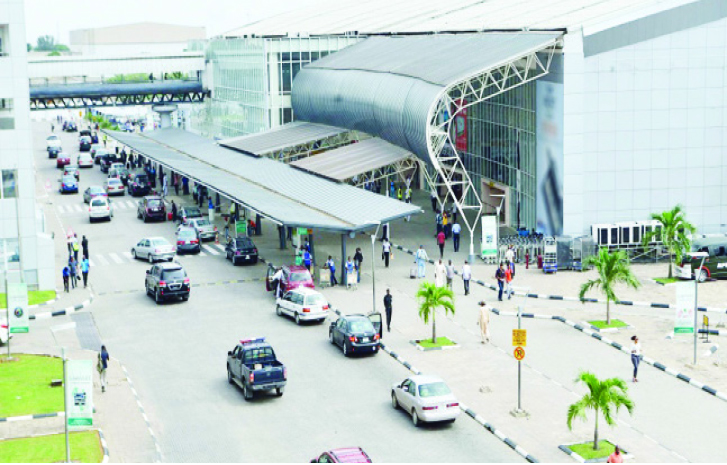
Passengers using Murtala Muhammed Airport Terminal Two (MMA2) are set to enjoy smoother access and improved parking availability following a recent review of tariffs at the terminal’s multi-storey car park.
The management of Bi-Courtney Aviation Services Limited said the adjustment was introduced as part of targeted operational measures to tackle long-standing congestion challenges and restore efficiency within the busy Lagos terminal.
According to a statement issued on April 13, 2026, the car park had increasingly been overwhelmed by vehicles left for extended periods, sometimes stretching into weeks and even years, limiting access for genuine airport users.
This situation often forced passengers to spend up to 30 minutes searching for parking spaces, occasionally leading to missed flights and unnecessary delays.
With the revised tariff structure now in place, management said the goal is to encourage faster turnover of parking spaces, ensuring availability for travellers, business visitors, and those picking up or dropping off passengers.
MMA2, widely regarded for its strong safety and security standards, noted that maintaining surveillance and operational control over long-term or abandoned vehicles had become increasingly complex. By discouraging such practices, the terminal aims to strengthen safety oversight while improving the overall passenger experience.
The management also revealed that abandoned vehicles had previously been identified and moved to secure holding areas to free up space, underscoring the urgency of the intervention.
Industry observers say the move reflects a broader commitment to efficiency and customer satisfaction, especially at one of Nigeria’s busiest domestic terminals.
Reaffirming its position, the operator emphasized that the tariff review is not revenue-driven but designed to create a more orderly, accessible, and user-friendly environment.
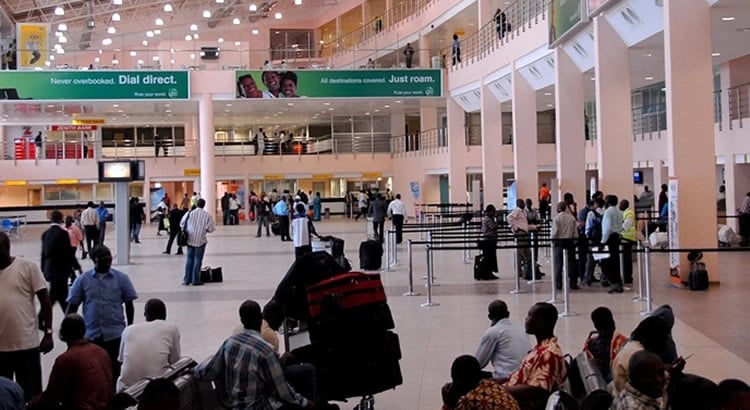
Passengers and stakeholders have been urged to support the initiative, which is expected to significantly enhance traffic flow, reduce congestion around terminal frontage, and ensure a more seamless airport experience.
AIRPORTS
NAHF, BASL Seal Aviation Heritage Deal
NAHF Co-Founders, Mr. Wole Shadare and Mr. Gboyega Adeoye, with BASL’s Head of Marketing and Creative Services, Ms. Gbubemi Vera Aibangbee, after signing the MoU for the NAHF Montage at MMA2.

The Nigeria Aviation Hall of Fame (NAHF) and Bi-Courtney Aviation Services Limited (BASL), operators of Murtala Muhammed Airport Terminal 2 (MMA2), have signed a Memorandum of Understanding (MoU) for the establishment of a permanent aviation Hall of Fame montage at the Lagos airport terminal.
The agreement marks a major step towards the preservation and promotion of Nigeria’s aviation heritage, with installation of the montage already underway at MMA2.
Under the partnership, the NAHF Montage will serve as a permanent wall of honour featuring photographs, profiles and citations of distinguished Nigerian aviators who have made significant contributions to the development of the country’s aviation industry.
The MoU was signed at the BASL headquarters in Lagos, with the company represented by its Head of Marketing and Creative Services, Ms. Gbubemi Vera Aibangbee, while NAHF was represented by its co-founders, Mr. Wole Shadare and Mr. Gboyega Adeoye.
The montage is scheduled for official unveiling on Friday, September 4, 2026, at MMA2 by the Minister of Aviation and Aerospace Development, Festus Keyamo, SAN.
The unveiling will precede the main induction ceremony of the NAHF and the launch of its maiden publication, Aviation Achievers, scheduled to hold at Golfview Hotel, Ikeja, Lagos, from 10:00 a.m.
Eighteen distinguished aviators are expected to be inducted at the ceremony, having been selected based on their decades of service, integrity, leadership and contributions to the growth of Nigerian aviation.
Speaking at the MoU signing, Shadare, an aviation journalist and co-founder of NAHF, said the initiative was designed to recognise aviation professionals whose contributions deserved to be preserved for future generations.
“For over 25 years I have reported on this sector and seen many heroes retire without recognition. The Nigeria Aviation Hall of Fame is our way of saying thank you while we are still here to clap for them,” he said.
Adeoye, also a co-founder of NAHF, said the partnership was about preserving history and values while inspiring young Nigerians seeking careers in aviation.
“We are proud that Bi-Courtney shares this vision with us,” he said.
Aibangbee said the location of the montage at MMA2 would expose millions of passengers who pass through the terminal to the contributions of aviation pioneers and professionals.
Under the agreement, BASL will provide the space for the montage as well as security and maintenance, while NAHF will be responsible for content curation, periodic updates and the induction process.

The Nigeria Aviation Hall of Fame is a non-political and non-profit initiative established to recognise excellence, document aviation history and promote mentorship within the Nigerian aviation industry.
The Federal Airports Authority of Nigeria (FAAN) has resolved its operational differences with Bolt, clearing the e-hailing platform to immediately resume services at airports managed by the Authority.
The resolution followed constructive engagements between FAAN and Bolt to establish an operational framework that addresses safety, security, accountability and orderly movement of commercial and e-hailing vehicles within the airport environment.
FAAN, in a statement signed by its Director of Public Affairs and Consumer Protection, Henry Agbebire, said the agreement was reached after the Authority listened to concerns raised by passengers over the disruption of e-hailing services and the inconvenience it caused.
The Authority also apologised to passengers for the difficulties experienced during the temporary interruption, acknowledging the impact of the disruption on travellers.
According to FAAN, its efforts to regulate commercial transportation at its airports were driven by safety, security and operational considerations, rather than economic interests.
The Authority said it had been addressing challenges associated with commercial and e-hailing vehicles at airports for nearly a decade, including passenger solicitation and touting, unregulated operations, random pick-ups and concerns over safety, security and accountability.
It said the challenges made it necessary to strengthen the management and visibility of commercial transportation within the airport environment.
To address the issues, FAAN introduced the Airport Car Hire Rank Management System (ACHRAMS), a queue-management and airport transportation system designed to improve structure, visibility and accountability among authorised airport car-hire operators.
FAAN clarified that ACHRAMS is not an e-hailing application and was not designed to compete with Bolt, Uber or other mobility platforms.
It also stressed that the system was not intended to create a monopoly in airport transportation, maintaining that passengers should retain the freedom to choose from available authorised transportation options.
The Authority further explained that the airport taxi fares recently discussed publicly were not newly imposed by FAAN or created by ACHRAMS, noting that the fares existed independently of the system.
FAAN said ACHRAMS merely provided greater visibility and transparency around prevailing airport taxi rates, although the comparison with lower fares available through e-hailing platforms had heightened concerns among passengers.
With the agreement now reached with Bolt, FAAN said the development demonstrated that airport safety and security could be protected while preserving passengers’ convenience and freedom of choice.
The Authority added that it was still engaging with other e-hailing operators and expressed confidence that the outstanding discussions would be concluded in the coming days.

FAAN assured passengers that their safety, security, convenience and overall airport experience would remain at the centre of its decisions.
AIRPORTS
Airport Mobility: Why Passenger Safety and Convenience Must Go Together
Mr. Henry Agbebire-Director of Public Affairs and Consumer Protection-Federal Airports Authority of Nigeria

By Henry Agbebire, Director,
Public Affairs & Corporate Protocol, Federal Airports Authority of Nigeria (FAAN)
The continuing public conversation around the operations of Uber, Bolt and other e-hailing services at Nigerian airports deserves a little more context and a broader perspective.
Understandably, passengers want convenient, affordable and readily available transportation when they arrive at an airport. E-hailing platforms have transformed urban mobility and have become an important part of the travel experience for many Nigerians. FAAN recognises this.
It is within this wider context that FAAN’s position and its ongoing engagements with the e-hailing operators should be understood. Indeed, the Authority has never been opposed to e-hailing services.
The issue before us is not whether passengers should be able to use Uber, Bolt or other platforms. It is how commercial transportation operates within a highly regulated airport environment. That distinction is important.
An airport is not an ordinary pick-up point
An airport is a security-sensitive environment where thousands of passengers, employees, vehicles and service providers interact every day.
Consequently, every commercial vehicle operating within the airport environment must be identifiable and accountable. The airport authority needs to know, where necessary, who is operating the vehicle, what vehicle is involved, where passengers are being picked up and how the activity can be tracked if a security or passenger-related incident occurs.
This is not peculiar to Nigeria. Even Uber’s own published guidance recognises that airports operate under specific rules, including designated pick-up locations, staging areas and other airport-specific requirements. The principle is simple: the convenience of digital mobility does not remove the need for airport-specific safety and operational controls.
The real issue is visibility and accountability
One of the questions that has become somewhat lost in the current debate is what happens when something goes wrong.
If a passenger reports an incident involving a vehicle that picked him or her up at an airport, the relevant question cannot simply be whether the trip was booked through an app. There must also be an operational framework through which the airport authority can establish the identity of the vehicle and driver, the circumstances surrounding the pick-up and the appropriate channel for intervention.
This is why FAAN has been seeking an arrangement that gives the Authority adequate visibility over commercial transportation activities within its airports. It is about accountability. It is about security. And ultimately, it is about the passenger.
ACHRAMS is not an alternative to Uber or Bolt
There has also been some misunderstanding about FAAN’s Airport Car Hire Rank Management System, ACHRAMS.
ACHRAMS is not FAAN’s attempt to create an alternative e-hailing platform. It was developed to provide greater operational visibility and tracking within the airport environment, while facilitating the accountable management of applicable concession and related airport charges.
The broader objective is to bring greater structure to airport ground transportation and address some of the long-standing challenges associated with unregulated activities, passenger solicitation and touting.
These are not imaginary concerns. FAAN has received complaints from passengers and has observed challenges associated with commercial transportation activities around airport premises.
A modern airport cannot afford to operate without adequate visibility over commercial activities taking place within its environment.
This is not about protecting one category of taxi from another
It is equally important to dispel the impression that FAAN’s position is designed to protect conventional airport taxis from competition. That is not the issue. FAAN’s concern should be, and is, the standard under which any commercial transportation provider operates within the airport.
Whether the vehicle is an airport taxi, an e-hailing vehicle or any other authorised commercial transport service, the same basic principles should apply: safety, security, identification, accountability, orderly operations and protection of passengers.
Competition is healthy. Passenger choice is important. Innovation is welcome. But none of these should require an airport authority to surrender operational visibility over vehicles and persons operating within its environment.
What about the concern over fares?
There is understandable concern that when transportation options are temporarily affected, passengers may face higher fares or reduced availability.
FAAN does not dismiss that concern. On the contrary, passenger convenience is an important consideration in resolving the current situation quickly.
But we should be careful not to allow the legitimate concern about fares to obscure the equally legitimate question of safety and security. The answer to a temporary inconvenience should not be to abandon a necessary safety framework. The answer should be to resolve the outstanding issues as quickly as possible so that passengers can enjoy both convenience and protection.
This is precisely why FAAN has continued its engagement with the affected operators.
The way forward is cooperation
There is little value in turning this into a contest between FAAN and the e-hailing companies. Uber and Bolt have become important parts of the transportation ecosystem, and FAAN recognises the value they bring to passengers.
At the same time, FAAN has a responsibility that cannot be delegated: ensuring that activities within the airport environment are conducted safely, securely and in an orderly manner.
The appropriate solution, therefore, is not confrontation. It is collaboration. The objective is to arrive at an operational framework that allows e-hailing companies to continue providing passengers with convenient transportation while satisfying the airport’s legitimate safety, security, accountability and operational requirements.
That is why the current engagement between FAAN and the operators is important, and why it is in the interest of everyone, particularly passengers, that it is concluded expeditiously.
Ultimately, the passenger must remain at the centre
The debate should therefore not be framed as FAAN versus Uber or FAAN versus Bolt. It should be about finding the right balance between two things that should never be presented as mutually exclusive: passenger convenience and passenger safety.
FAAN wants passengers to have choices. FAAN wants passengers to have convenient transportation. FAAN wants technology and innovation to thrive within the airport environment. But FAAN must also be able to answer the fundamental safety and security questions that arise whenever commercial vehicles operate within an airport.
That responsibility is not anti-competition. It is not anti-technology. And it is certainly not anti-passenger. It is responsible airport management.
As discussions continue with the relevant operators, FAAN remains committed to achieving a solution that preserves the convenience passengers value while providing the visibility, accountability and security that the airport environment requires.
At the end of the day, the objective is simple: every passenger should be able to leave a Nigerian airport conveniently, confidently and safely.
That is the balance FAAN is seeking, and it is a balance worth achieving.

More Airlines, Same Airports, Bigger Crisis

Airlines, Labour Clash Over N5% TSC

LAAC Moves to Balance Aviation Revenue, Growth

Air Peace Expands Domestic Flight Schedule

Gateway International Airport Takes Off as Ogun Joins Nigeria’s Air Map

₦100m Land Deal: Air Peace Backs Onyema’s Claim on Anambra Airport
-
 Airlines3 months ago
Air Peace Expands Domestic Flight Schedule
-
 Aviation11 months ago
Gateway International Airport Takes Off as Ogun Joins Nigeria’s Air Map
-
 Airlines11 months ago
₦100m Land Deal: Air Peace Backs Onyema’s Claim on Anambra Airport
-

 Aviation12 months ago
Nigeria, UAE Firm Sign Landmark Cargo Information Deal
-

 Airlines11 months ago
High Airfares, Hot Hotels: Nigeria’s Travel Paradox
-
 Airlines12 months ago
UK Partnership Opens Heathrow, Gatwick Gates for Air Peace – Onyema
-

 AIRPORTS12 months ago
MMA2 Named Nigeria’s Best Cargo Airport, Jibodu Honored
-

 Airlines11 months ago
Aborted Take-off: Air Peace Assures Passengers of Safety on Abuja–Asaba Flight