
Airspace
Aviation Safety in Focus as Controllers Push for Urgent Reforms

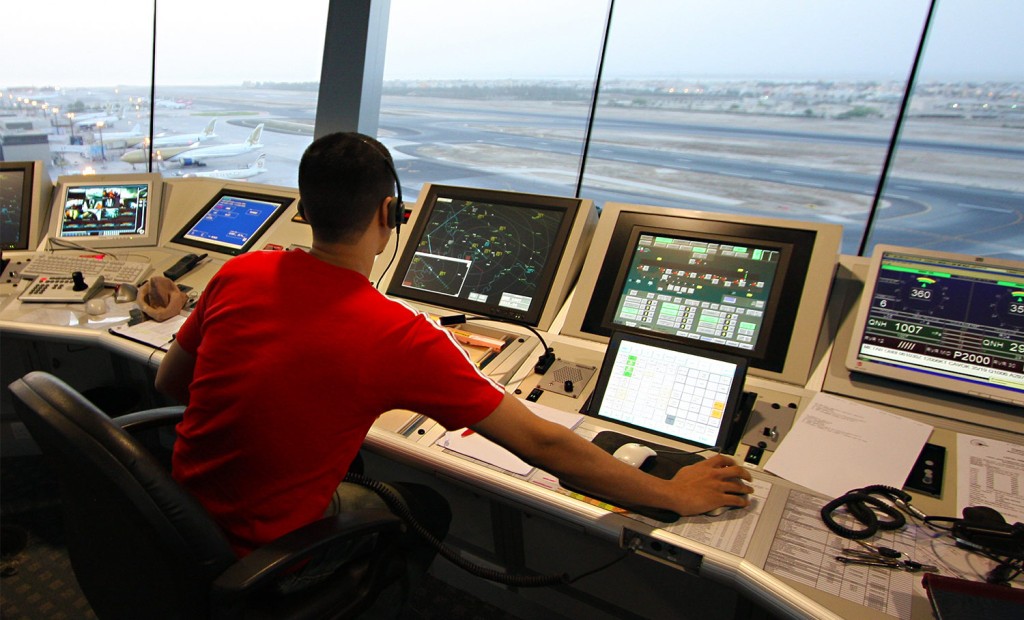
Nigeria’s aviation sector may be on the verge of critical reforms as the Nigerian Air Traffic Controllers’ Association raises fresh concerns over safety and operational efficiency, calling for immediate intervention to strengthen the country’s airspace management system.
In a detailed statement jointly signed by NATCA President, Edino Ilemona Amos, and General Secretary, Umar Fahad, the association highlighted a range of challenges affecting air traffic controllers, while emphasizing that resolving them would significantly enhance aviation safety and service delivery nationwide.
The association drew attention to ageing Communication, Navigation, and Surveillance (CNS) infrastructure, noting that modernising these systems would greatly improve operational reliability and reduce the burden on controllers.
According to NATCA, upgrading critical infrastructure presents an opportunity to align Nigeria’s aviation industry with global best practices.
It also underscored the importance of continuous training and manpower development, describing them as vital investments needed to sustain growth in an increasingly complex aviation environment.
NATCA expressed optimism that with proper planning, Nigeria can build a stronger pipeline of highly skilled controllers to meet rising air traffic demand.
The statement further highlighted welfare-related issues, including delayed claims, outdated professional allowances, and prolonged career stagnation.
Addressing these concerns, the association said, would boost morale, improve efficiency, and reinforce the professionalism that defines air traffic control operations.
Referencing a recent fire incident at Murtala Muhammed International Airport, NATCA commended the resilience and dedication of controllers who ensured continuity of operations under difficult circumstances, while stressing the need for improved workplace safety standards across control towers.
The association also proposed innovative workforce solutions, including structured post-retirement engagement for experienced controllers, which it said would help bridge manpower gaps and preserve institutional knowledge within the system.
While acknowledging ongoing efforts by the Federal Government and aviation authorities, NATCA called for sustained engagement and timely reforms to secure the future of Nigeria’s aviation sector.
Industry stakeholders say the development signals a renewed push toward strengthening safety frameworks, with experts noting that proactive reforms could position Nigeria as a leading aviation hub in Africa.
Airspace
NAMA Highlights Welfare Reforms, Moves to Clear Retirees’ Benefits
NAMA’s Managing Director and Chief Executive, Engr. Farouk -Ahmed Umar

The Nigerian Airspace Management Agency (NAMA) has reaffirmed its commitment to staff welfare and the settlement of outstanding retirees’ benefits, stating that significant progress has been made under the leadership of its Managing Director, Engr. Farouk Ahmed Umar.
The agency made the clarification in a statement issued by the Director of Public Affairs and Consumer Protection, Dr. Abdullahi Musa, in response to recent public comments concerning retirees’ entitlements and allegations against the management.
According to NAMA, the issue of unpaid retirees’ benefits predates the current administration and stems from longstanding institutional challenges linked to pension administration, policy implementation gaps and public-sector bureaucratic processes.
The agency, however, stressed that renewed efforts to address the matter began under the present management, with Engr. Farouk securing the necessary approvals and directing relevant departments to commence processes aimed at settling the outstanding obligations.
NAMA explained that the disbursement of such entitlements must comply with statutory requirements, including documentation, budgetary provisions, administrative verification and government approvals.
While acknowledging the concerns of retirees, the agency maintained that the delays should not be interpreted as neglect, noting that due process remains essential in the management of public funds.
Beyond retirees’ welfare, NAMA highlighted what it described as landmark staff-focused reforms implemented by the current administration. These include the successful implementation of the agency’s Staff Conditions of Service in full, a long-standing demand by workers that previous administrations were unable to achieve.
The agency also disclosed that a new salary structure had recently been approved and implemented, resulting in improved remuneration, enhanced welfare packages and increased staff morale across the organisation.
According to the statement, the administration has further invested in human capacity development through expanded local and international training opportunities, improved working conditions and sustained engagement with both serving and retired personnel.
NAMA said the reforms have contributed to greater institutional stability, enhanced operational efficiency and improved service delivery within Nigeria’s aviation sector.
The agency also rejected allegations suggesting the diversion of public resources for personal religious activities, describing such claims as false and unfounded.
It reiterated that NAMA remains committed to professionalism, inclusiveness and national unity, stressing that religion has no place in administrative decision-making within the agency.
The statement further noted that under Engr. Farouk’s stewardship, NAMA has continued to strengthen navigational infrastructure, improve operational safety systems, develop technical manpower and maintain compliance with international aviation standards.

According to the agency, these achievements have earned recognition from stakeholders across the aviation industry and underscore the management’s commitment to institutional transformation and staff welfare.
AIRPORTS
FG Moves to Upgrade Airspace Surveillance as NAMA Flags TRACON Concerns
Permanent Secretary Mahmoud Adam Kambari (middle) with NAMA Managing Director Engr. Farouk Ahmed Umar and senior officials during a strategic meeting on upgrading Nigeria’s TRACON radar infrastructure.

Nigeria may soon witness a major upgrade of its airspace surveillance infrastructure as the Federal Government renews its commitment to strengthening aviation safety following concerns raised by the Nigerian Airspace Management Agency (NAMA) over ageing radar systems.
The Managing Director of NAMA, Engr. Farouk Ahmed Umar, disclosed that the Total Radar Coverage of Nigeria (TRACON) system, a critical component of the nation’s air navigation services, is due for modernization after years of operation.
Speaking during a familiarisation visit by the Permanent Secretary of the Ministry of Aviation and Aerospace Development, Mahmoud Adam Kambari, Engr. Farouk explained that the TRACON system, deployed between 2008 and 2010, has served the country effectively but is now approaching the end of its technological lifecycle.
He noted that globally, aviation technology continues to evolve, making upgrades essential to maintain compliance with International Civil Aviation Organisation (ICAO) standards and ensure seamless air traffic management.
The TRACON project, commissioned in 2001 as a multi-billion-naira safety initiative, provides comprehensive radar surveillance across Nigeria through a network of nine radar sites, enabling real-time tracking and coordination of aircraft.
Despite the current limitations, Farouk highlighted ongoing efforts and strategic plans by NAMA to sustain operations while preparing for system upgrades.
He also pointed to broader challenges such as funding constraints, rising operational costs, and the need for enhanced manpower and training.
In response, Permanent Secretary Mahmoud Adam Kambari reaffirmed the Federal Government’s commitment to supporting aviation agencies and ensuring the continued safety and efficiency of Nigeria’s airspace.
Kambari emphasized the importance of collaboration across agencies and announced plans to strengthen coordination through regular top management meetings involving key stakeholders in the aviation sector.
He further assured that staff welfare, training, and timely promotions would be prioritised to boost morale and productivity, noting that a motivated workforce is critical to achieving operational excellence.
“We will continue to support all agencies to succeed, ensuring that Nigeria’s aviation industry remains a key economic driver and a hub of global connectivity,” Kambari said.
He also commended Engr. Farouk Ahmed Umar for his leadership, describing him as a seasoned professional guiding the agency through a critical phase.

The renewed focus on upgrading Nigeria’s surveillance systems underscores the government’s broader commitment to aligning the aviation sector with global best practices and sustaining its strong performance in ICAO evaluations.
Airspace
FG Flags Off NAMA HQ, ATM Centre in Abuja
The Minister of Aviation and Aerospace Development, Festus Keyamo flanked by the MD NAMA and others during the flagging off of the constructions in Abuja

The Federal Government has officially flagged off the construction of a new Corporate Headquarters and Air Traffic Management (ATM) Centre for the Nigerian Airspace Management Agency (NAMA) in Abuja, marking a major milestone in Nigeria’s aviation modernization agenda.
The groundbreaking ceremony, held Thursday at the Nnamdi Azikiwe International Airport, was performed by the Minister of Aviation and Aerospace Development, Festus Keyamo.
In a statement signed by NAMA’s Director of Public Affairs and Consumer Protection, Dr. Abdullahi Musa, the Minister described the project as “a declaration of intent and a tangible demonstration of our unwavering commitment to modernizing the critical infrastructure that underpins the safety, efficiency, and growth of Nigerian aviation.”
Keyamo said the new complex would consolidate the agency’s administrative and operational functions into a purpose-built facility befitting its national importance.
“For too long, our agencies have operated in silos and in structures that do not reflect their national significance. With this new headquarters, we are creating a conducive environment that fosters innovation, enhances collaboration, and boosts morale among aviation professionals,” he stated.
According to him, the facility will integrate executive management offices with a state-of-the-art ATM Centre, enhancing operational efficiency, safety oversight, and real-time response capabilities. He stressed that the project is being executed in strict compliance with the Public Procurement Act 2007 through a transparent and competitive bidding process.
“There will be no compromise on specifications or delivery benchmarks,” the Minister assured, adding that the contractor would be held to the highest standards of quality and timelines.
Earlier, NAMA Managing Director, Engr. Ahmed Umar Farouk, described the occasion as a historic turning point for the agency. He recalled that since its establishment in 1999, NAMA operated its administrative headquarters from Lagos for over two decades before relocation to Abuja began in 2020.
“For the past six years, our staff have operated from temporary facilities in Abuja, yet they have continued to deliver safe and reliable air navigation services. Today, we take a definitive step toward providing them with a world-class facility,” Farouk said.
He disclosed that the new ATM Centre would centralize Nigeria’s airspace management by merging the existing Area Control Centres in Lagos and Kano into a single hub in Abuja, creating what he termed a cohesive “One Flight Information Region (FIR)” for the country.
“From this location, NAMA will exercise consolidated oversight of Nigeria’s airspace. A unified radar view reduces coordination risks during sector handovers and enhances overall situational awareness,” he explained.
Farouk noted that the new system would deploy cutting-edge automation to optimize flight paths, reduce redundancies, improve fuel efficiency for airlines, and lower long-term operational costs.
The facility will accommodate 15 to 16 departments and include a 200-seat conference hall, library, registry, executive suites, and staff welfare amenities such as rest facilities for air traffic controllers, a daycare centre, recreational areas, a drivers’ lounge, standby power systems, water treatment plant, multiple security posts, and expanded parking spaces.
He also called for sustained federal funding to implement NAMA’s proposed Dual Surveillance System, designed to support both civil air traffic management and military command-and-control operations.
“This is not merely a technological upgrade; it is a strategic investment in securing our sovereign airspace and strengthening coordination between civil aviation and national defense institutions,” Farouk added.

Keyamo Positions Lagos as Africa’s Next Aviation Hub

Nigeria Among Costliest Markets for Airlines, IATA Seeks Tax Cuts

Aviation Stakeholders Rally Youth for Industry’s Future at Lagos Summit

Gateway International Airport Takes Off as Ogun Joins Nigeria’s Air Map

Nigeria, UAE Firm Sign Landmark Cargo Information Deal

₦100m Land Deal: Air Peace Backs Onyema’s Claim on Anambra Airport
-
 Aviation8 months ago
Gateway International Airport Takes Off as Ogun Joins Nigeria’s Air Map
-
 Aviation9 months ago
Nigeria, UAE Firm Sign Landmark Cargo Information Deal
-
 Airlines8 months ago
₦100m Land Deal: Air Peace Backs Onyema’s Claim on Anambra Airport
-
 Airlines9 months ago
UK Partnership Opens Heathrow, Gatwick Gates for Air Peace – Onyema
-

 Airlines8 months ago
High Airfares, Hot Hotels: Nigeria’s Travel Paradox
-

 AIRPORTS9 months ago
MMA2 Named Nigeria’s Best Cargo Airport, Jibodu Honored
-

 Airlines8 months ago
Aborted Take-off: Air Peace Assures Passengers of Safety on Abuja–Asaba Flight
-

 Aviation8 months ago
NCAA Hosts Sixth CODEVMET-AFI Steering Committee Meeting in Abuja