
AIRPORTS
Significant Communication System Loss Disrupts Lagos Airspace Operations – NAMA MD
MD/CEO NAMA, Engr. Farouk Ahmed; Manager, Airspace NAMA, Mr. Sunday Jiboye; Director of Electronic Engineering Services, Mrs. Theresa Iheanachor during the Inspection of the Temporary Site for NAMA Mobile Control Tower for the Damaged at Murtala Muhammed International Airport in Ikeja Lagos.


Nigeria’s aviation sector suffered a major setback on Monday following a fire outbreak at Terminal I of the Murtala Muhammed International Airport (MMIA), which resulted in a significant loss of communication capability and disruption of critical air traffic services, according to the Managing Director of the Nigerian Airspace Management Agency (NAMA), Farouk Ahmed Umar.
Umar disclosed this after inspecting the damaged facility, explaining that the blaze destroyed key air-to-ground communication infrastructure, forcing the temporary suspension of inbound flights into Lagos airspace.
Air-to-ground communication is a core pillar of aviation safety, enabling real-time coordination between aircraft and Air Traffic Controllers through Very High Frequency (VHF) radio systems, as well as High Frequency (HF) and satellite links for long-range operations.
The NAMA chief said the fire originated from the server room on the first floor and spread vertically, severely damaging communication and navigation systems essential for air traffic management.
“The agency recorded a significant loss of communication capability, alongside disruptions to other critical air traffic services,” Umar said, adding that the extent of the damage made it necessary to suspend inbound aircraft operations into Lagos at the time of the incident.
He noted that swift intervention by NAMA’s Director of Operations and engineering teams helped stabilize the situation and prevent further escalation.
The incident also trapped 14 personnel including air traffic controllers and engineers on the ninth floor of the control tower after smoke blocked escape routes. They were later rescued with the assistance of a construction crane while the fire was being contained.
Umar said NAMA engineers promptly switched to backup communication systems sourced from other locations, while controllers were temporarily relocated to the Fire Tower, a secondary facility, allowing aerodrome and approach services to resume later in the evening.
As part of recovery measures, civil works are underway to deploy a mobile control tower at the airfield. The unit is expected to be fully operational within 48 hours and will provide more robust communication support than the temporary backup systems currently in use.
Although the terminal building was already scheduled for demolition under a N712 billion reconstruction project, the fire destroyed billions of naira worth of operational equipment. The Nigerian Meteorological Agency (NiMET) office was also completely destroyed, including critical weather-monitoring equipment.
Umar commended NAMA personnel who remained at their duty posts during the emergency, describing their actions as courageous and professional.
“Some of them were supposed to run and leave their posts, but they stayed to salvage the situation,” he said.
He assured the flying public that Nigeria’s airspace remains safe, despite the disruption.

“We are highly professional and ready to provide air traffic control. Safety remains our top priority,” Umar stated, adding that the agency is taking steps to further strengthen its systems following the incident.
AIRPORTS
FAAN, Air Force Forge Stronger Alliance to Secure Nigeria’s Airports
FAAN Managing Director, Mrs. Olubunmi Kuku and Air Vice Marshal Japhet Ekwuribe, Commander of the National Air Defence Corps during the visits to FAAN headquarters Lagos on Tuesday

Nigeria’s aviation security architecture is set for a major boost as the Federal Airports Authority of Nigeria (FAAN) and the Nigerian Air Force move to deepen collaboration in safeguarding the nation’s airports.
FAAN Managing Director, Mrs. Olubunmi Kuku, made this clear during a high-level engagement with the Commander of the National Air Defence Corps, Air Vice Marshal Japhet Ekwuribe, in Lagos, where both institutions reaffirmed their commitment to tighter operational synergy.
At the heart of the renewed partnership is a shared determination to stay ahead of evolving security threats within airport environments.
Kuku stressed that modern aviation security demands more than isolated efforts, highlighting the need for intelligence sharing, coordinated strategies, and sustained inter-agency cooperation.
“We are dealing with dynamic security challenges that require strong partnerships and proactive coordination,” she said, noting that FAAN remains committed to working closely with the Air Force on airside patrols, surveillance, and sensitive flight operations.
She also raised concern over increasing cases of land encroachment around airport perimeters, describing it as a critical risk to aviation infrastructure that requires urgent and collective action.
In response, Air Vice Marshal Ekwuribe commended FAAN’s leadership for its forward-thinking approach, describing the collaboration as a strategic step toward strengthening surveillance and rapid response capabilities across Nigeria’s airports.
“This engagement provides an opportunity to reinforce institutional ties and improve operational effectiveness in tackling shared security priorities,” he said.
Both parties agreed to develop practical frameworks that will enhance coordination, improve monitoring systems, and ensure swift responses to potential threats.


The renewed alliance signals a proactive shift in Nigeria’s aviation security posture, one that prioritizes collaboration, vigilance, and resilience in protecting critical national assets.
AIRPORTS
Nigeria Defends Aviation Charges, Says Costs Reflect Sector Reforms
Mr. Henry Agbebire-Director of Public Affairs and Consumer Protection-Federal Airports Authority of Nigeria

Nigeria has pushed back against claims of excessive aviation charges, arguing that current pricing reflects long-overdue reforms rather than inefficiency or overpricing.
Reacting to recent concerns raised by the International Air Transport Association (IATA), the Federal Airports Authority of Nigeria (FAAN) says the country’s aviation charges must be understood within the context of decades of underinvestment and ongoing sector transformation.
In a detailed policy response, Director of Public Affairs and Consumer Protection at FAAN, Henry Agbebire, said the narrative portraying Nigeria as an expensive aviation market is “technically correct but strategically incomplete.”
“The real issue is not simply ‘high charges.’ It is why those charges exist,” Agbebire stated.
IATA had classified Nigeria among countries with aviation charges above global averages—a trend seen across Africa, where fees are estimated to be about 15 percent higher than global benchmarks. However, FAAN insists that focusing solely on pricing ignores deeper structural realities.
According to Agbebire, many of Nigeria’s recent tariff adjustments are not new burdens but corrections of long-standing underpricing. “You cannot run a 21st-century aviation system on 2002 pricing,” he said, noting that several charges remained unchanged for nearly two decades despite inflation and rising operational costs.
He pointed out that even revised tariffs remain competitive. For instance, cargo charges increased from ₦7 to ₦20 per kilogram still fall below inflation-adjusted values.
Beyond statutory charges, FAAN highlighted other major cost drivers often overlooked in global assessments. These include sharp increases in jet fuel prices—by as much as 300 percent—and foreign exchange constraints that once left up to $850 million in airline funds trapped in the country.
“These factors, spanning fuel, forex, and logistics, often outweigh statutory charges in determining ticket prices,” Agbebire explained.
He further emphasized that aviation development comes with unavoidable financial realities. “There is no version of aviation development that is both cheap and world-class,” he said.
Despite the challenges, FAAN maintained that Nigeria is actively reforming its aviation ecosystem. Government interventions in fuel pricing, efforts to improve cost transparency, and ongoing infrastructure upgrades are all part of a broader strategy to enhance competitiveness.
Agbebire stressed that aviation charges should be viewed as investments rather than mere costs. “If higher charges fund safer airports, modern infrastructure, improved passenger experience, and global compliance, then they are not merely costs; they are investments,” he said.
He concluded that Nigeria’s aviation sector is undergoing a necessary transition—one aimed at long-term sustainability and growth.
“The real story is not that Nigeria is expensive,” Agbebire added. “The real story is that Nigeria is paying the price of transformation.”

After more than two decades of legal battles and stalled aviation progress, Nigeria has finally cleared one of its most stubborn infrastructure roadblocks.
In a decisive breakthrough, the Federal Government has reached a historic settlement with Bi-Courtney Aviation Services Limited over the long-contested Murtala Muhammed Airport Terminal 2 (MM2) concession, bringing an end to a dispute that has lingered for over 20 years.
The agreement, brokered by Aviation Minister Festus Keyamo and approved by the Federal Executive Council (FEC) in Abuja, delivers sweeping concessions on both sides in what officials describe as a “win-win” resolution with immediate economic impact.
At the heart of the deal is Bi-Courtney’s decision to forgo its N132 billion Supreme Court judgment debt against the Federal Government. The company has also relinquished its exclusivity rights tied to the MM2 concession and handed back control of the Murtala Muhammed Airport Terminal 1 (MM1).
In exchange, the Federal Government has restored Bi-Courtney’s rights to complete and operate its long-delayed hotel and conference centre project within the airport axis under a revenue-sharing framework.
The agreement goes beyond dispute resolution—it resets the commercial architecture of Lagos aviation. Plans are already underway to relocate regional flight operations to MM2, supported by apron expansion to handle increased aircraft movement. This is expected to unlock immediate revenue streams for the government while maximizing the underutilized terminal’s capacity.
Industry observers say the deal removes long-standing legal and operational bottlenecks that have hindered major aviation projects, including the proposed Lekki International Airport.
The settlement also aligns with broader sector reforms, notably plans to establish a private-sector-driven aircraft leasing company aimed at improving Nigerian airlines’ access to modern fleets under competitive terms.
Minister Keyamo praised the spirit of compromise shown by all parties, noting that the agreement reflects a renewed commitment to investment-friendly policies and sustainable aviation growth.
The resolution was further strengthened by the collaboration between Keyamo and Bi-Courtney Chairman Wale Babalakin, whose shared professional background and alignment on national interest helped drive negotiations to a successful close.

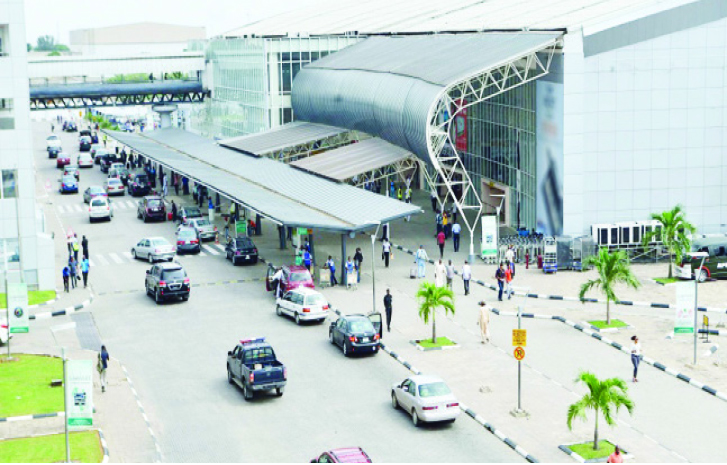
With this deal, Nigeria not only ends a costly legal chapter but opens a new runway for aviation expansion, anchored on cooperation, efficiency, and long-term value creation.

Jet A1 Crisis Sparks Safety Fears in Aviation Sector

Safety First: Air Peace Delays London Flight Over Technical Check

FAAN, Air Force Forge Stronger Alliance to Secure Nigeria’s Airports

Gateway International Airport Takes Off as Ogun Joins Nigeria’s Air Map

Nigeria, UAE Firm Sign Landmark Cargo Information Deal

High Airfares, Hot Hotels: Nigeria’s Travel Paradox
-
 Aviation7 months ago
Gateway International Airport Takes Off as Ogun Joins Nigeria’s Air Map
-
 Aviation8 months ago
Nigeria, UAE Firm Sign Landmark Cargo Information Deal
-
 Airlines7 months ago
High Airfares, Hot Hotels: Nigeria’s Travel Paradox
-

 Airlines8 months ago
UK Partnership Opens Heathrow, Gatwick Gates for Air Peace – Onyema
-

 AIRPORTS8 months ago
MMA2 Named Nigeria’s Best Cargo Airport, Jibodu Honored
-

 Airlines7 months ago
₦100m Land Deal: Air Peace Backs Onyema’s Claim on Anambra Airport
-

 Airlines7 months ago
Aborted Take-off: Air Peace Assures Passengers of Safety on Abuja–Asaba Flight
-

 Aviation7 months ago
NCAA Hosts Sixth CODEVMET-AFI Steering Committee Meeting in Abuja