
Business
Tourism Adds $760m to Nigeria’s Economy via Aviation – IATA


The aviation sector is emerging as one of Nigeria’s strongest economic drivers, with international tourists alone contributing $760.2 million to the economy annually, according to the International Air Transport Association (IATA).
In its new report, The Value of Air Transport to Nigeria’s Economy, IATA noted that beyond passenger services, aviation fuels tourism and commerce. Aviation-enabled tourism alone adds $454.1 million to GDP and supports more than 66,000 jobs nationwide.
The broader aviation industry contributes $2.5 billion annually to Nigeria’s GDP and sustains over 217,000 jobs. Domestic airlines account for $449.7 million of this impact, providing 29,900 direct jobs, while airports, air navigation services, and civil aviation manufacturing add another $252.4 million and 9,600 jobs.
Despite these gains, Nigeria’s international air connectivity has declined. IATA reported a 21 per cent drop in links with regions outside Africa since 2014, and only one per cent of international arrivals use Nigeria as a connecting hub.
Nonetheless, demand for international travel remains strong. Of the 2.1 million international passenger departures recorded in 2023, 38 per cent were to Europe, 23 per cent to other African countries, and 18 per cent to North America.
IATA’s Regional Vice President for Africa and the Middle East, Kamil Alawadhi, stressed the sector’s social and economic role, describing aviation as “a powerful engine for development.”
He also noted that airfares have become more competitive, with real ticket prices dropping by 43 per cent between 2011 and 2023. However, affordability is still an obstacle, as the average Nigerian must work 37.6 days to purchase a ticket.
While the figures underscore aviation’s value, they also point to the need for Nigeria to strengthen its role as a regional hub for travel and tourism.
Airlines
More Airlines, Same Airports, Bigger Crisis
From left, Chairman, League of Airport and Aviation Correspondent, (LAAC), Mr. Idris Suleiman, Former FAAN MD, Richard Aisuogbogun, Chairman, Airpeace Airlines, Dr. Allen Onyema, M/D, Top Brass, Capt. Iyayi and Ag. COO/Head, Aeronautical and Cargo Services, Public Affairs and Public Consumer, MMA-2, Ikeja Lagos Remi Jibodu during the 30th Annual Conference of LAAC held at Providence Hotel GRA Ikeja Lagos. PHOTO ISAAC JIMOH AYODELE.

*Operators raise alarm over ramp congestion, bird strikes and rising costs
*AON says 54 charges are stifling airline competitiveness
Nigeria’s aviation industry may be heading for a major capacity crisis as the number of airline operators continues to grow without a corresponding expansion of airport infrastructure, industry stakeholders have warned.
The warning came at the 30th annual conference of the League of Aviation and Airport Correspondents (LAAC) in Lagos, where airline operators raised concerns over the ability of existing airports to accommodate the growing number of carriers and aircraft entering the market.
Vice Chairman of the Airline Operators of Nigeria (AON) and Chairman of Air Peace, Allen Onyema, said Nigerian airlines currently contend with about 54 different taxes, levies and charges, which he described as a major obstacle to the profitability and competitiveness of the sector.
But beyond the financial burden, the operators raised concerns about whether Nigeria’s airport infrastructure is keeping pace with the expansion of the airline industry.
The AON spokesperson and Chairman of United Nigeria Airlines, Prof. Obiora Okonkwo, questioned the continued issuance of Airline Operating Certificates (AOCs) when available airport facilities are already under pressure.
Okonkwo disclosed that while it took him between two and three years to obtain an AOC, some new operators were now obtaining theirs in about six months.
He said increased competition was desirable but warned that new airlines would put additional pressure on already congested airport facilities.
“More AOCs are being issued, and perhaps five more will be issued by year’s end. More competition is fine, no problem. But where is the infrastructure to accommodate these additional aircraft?” he asked.
The United Nigeria Airlines chairman cited a recent experience in which one of his aircraft remained on the tarmac for about 30 minutes because passengers could not disembark due to ramp congestion.
His concern was that the situation could become more severe if more airlines acquire aircraft without corresponding improvements in airport infrastructure and airspace capacity.
“I wonder if we have enough airspace,” he added.
The infrastructure concerns are compounded by operational hazards, particularly bird strikes, which Okonkwo said were causing significant damage to airline operations.
He disclosed that one of his airline’s Embraer E190 aircraft had remained grounded for 13 days following a bird strike, despite repairs and replacement of damaged components.
“Today, I have an aircraft, E-190. This is the 13th day of AOG (aircraft on ground) due to bird strike. We bought new blades and fixed them,” he said.
Okonkwo said the financial impact was particularly painful for airlines that had borrowed money to acquire aircraft.
“Imagine having borrowed 30% of funds from the bank to acquire these beautiful aircraft, only to wake up and face a bird strike. It happens continuously within one month. It is very painful,” he said.
He expressed frustration over what he described as inadequate measures by the Federal Airports Authority of Nigeria (FAAN) to effectively address the bird-strike menace.
The airline executive also raised another growing concern—the treatment of airline workers during flight disruptions.
He recounted an incident involving a United Nigeria flight that returned to Lagos after heavy rain affected operations at Kano Airport. According to him, some passengers refused to disembark from the aircraft after it returned to Lagos, resulting in a difficult situation for the airline and its workers.
Okonkwo warned that protecting aviation personnel must be given greater attention, particularly during disruptions when passengers can become aggressive.
“If we cannot protect airline workers, who are somebody’s wives, children, sisters, and brothers, then when there is any flight disruption, what happens? Staff disappear because nobody wants to be harmed,” he said.
Meanwhile, Onyema said the industry’s infrastructure and operational challenges were being worsened by the high number of charges imposed on airlines.
According to him, Nigerian airlines pay about 54 different charges, a burden he said undermines their ability to compete effectively with foreign carriers.
“One thing I want to mention is that there are many charges. If I were to list them, there are about 54 that airlines pay,” Onyema said.
He also called attention to an ECOWAS agreement reportedly providing for a 25 per cent reduction in taxes across West Africa, saying the provision had yet to be implemented.
Onyema expressed optimism that direct engagement between airline operators and President Bola Tinubu could produce significant reforms in the sector.
He recalled the removal of the four per cent Free-on-Board customs duty after he raised concerns about its impact on airlines, describing the development as an example of what could happen when government responds to industry concerns.
The operators also raised concerns about the impact of official pronouncements on investor confidence and the reputation of Nigeria’s aviation industry.
Okonkwo urged government officials, particularly political appointees responsible for public communication, to acquire sufficient knowledge of aviation before making statements on the sector.
He argued that poorly informed statements could damage confidence in an industry already struggling with significant operational and financial pressures.
The concerns raised at the LAAC conference point to a deeper challenge confronting Nigerian aviation: the sector is seeking more airlines and greater competition, but its infrastructure, regulatory framework and operating environment may not yet be expanding at the same pace.

Mr Ayodele Olatiregun, Director, Finance & Accounts, FAAN during the LAAC 30th Annual Conference themed: Towards Sustainable Aviation Industry: Balancing Government Revenue Demands with Sector Growth held in Ikeja, Lagos on Thursday
Unless the gap between airline growth and infrastructure capacity is urgently addressed, increased competition could produce congestion and operational bottlenecks rather than the improved connectivity and service quality expected from a growing aviation market.
Airlines
Airlines, Labour Clash Over N5% TSC
The AON spokesperson and Chairman of United Nigeria Airlines, Prof. Obiora Okonkwo

*Okonkwo reveals 30% waiver, cites soaring fuel costs
*ATSSSAN insists airlines cannot withhold statutory levy
A fresh battle over billions of naira in statutory aviation revenue erupted at the 30th annual conference of the League of Aviation and Airport Correspondents (LAAC) in Lagos, as domestic airline operators and aviation unions engaged in a heated confrontation over the controversial five per cent Ticket Sales Charge (TSC).
The dispute centred on whether airlines, already struggling with escalating operating costs, can withhold or delay remittance of the levy, which is collected from passengers and transferred to government aviation agencies.
The sharp exchange exposed the widening fault line between financially pressured airlines and organised labour, which insists that statutory aviation charges cannot be treated as negotiable obligations.
Speaking for the Airline Operators of Nigeria (AON), Executive Chairman of United Nigeria Airlines, Prof. Obiora Okonkwo, said airlines had previously met their statutory financial obligations but began experiencing difficulties as operating costs surged.
Okonkwo, who spoke on the conference theme, “Towards a Sustainable Aviation Industry: Balancing Government Revenue Demands with Sector Growth,” attributed the payment challenges largely to the dramatic increase in aviation fuel prices.
He said the price of aviation fuel rose to about N3,300, following what he described as the Gulf crisis, putting further pressure on already cash-strapped airlines.
According to him, AON was the first to formally approach the Federal Government over the burden of regulatory charges and seek relief for operators.
“Before February this year, there were no payment problems. All airlines were paying. The AON issue only became a problem because of the Gulf crisis. AON was the first to cry out. We wrote to the President, explaining that we could no longer pay these charges,” he said.
Okonkwo disclosed that the Federal Government subsequently granted airlines a 30 per cent waiver on the charges.
He explained that following the waiver, airline operators held several meetings with the NCAA and the Ministry of Aviation to agree on a structured repayment plan for outstanding obligations.
He said the NCAA subsequently requested that airlines pay 10 per cent of their legacy debts within an agreed period, with the balance to be paid in instalments, while individual airlines were expected to meet with the authority’s Director of Finance.
But the operators’ position triggered a strong reaction from organised labour.
Secretary-General of the Air Transport Services Senior Staff Association of Nigeria (ATSSSAN), Francis Akinjole, rejected any suggestion that the five per cent TSC was subject to negotiation by airlines.
Akinjole described the operators’ position as “mischievous”, insisting that the levy was established by law and could only be changed through the appropriate legislative process.
“We heard them very well. They are saying the five per cent TSC is not justifiable, but it is not the making of the DG NCAA or the Minister. That payment was established by an Act; so they know where to go,” he said.
“They are just trying to find what does not exist to stop what already exists. They are being very, very mischievous.”
The union leader maintained that financial difficulties could not give airlines the right to determine which statutory obligations they would comply with.
“This is an Act; it is the law. You cannot say that because things are hard for you, you will then choose which law to obey,” Akinjole said.
He argued that any attempt to discontinue the levy would require the appropriate legislative process, including a public hearing.
The unions further warned that non-remittance of the TSC could have serious implications for aviation safety and the welfare of workers across the sector.
They maintained that airlines are merely collection agents for the levy, which is paid by passengers and belongs to the government’s aviation safety and regulatory system.
The confrontation has now brought the long-running dispute over outstanding statutory remittances into sharper focus, with the competing demands of airline survival, government revenue and aviation safety becoming increasingly difficult to reconcile.
For an industry already battling high fuel costs, foreign exchange pressures and other operational challenges, the TSC controversy presents another major test of the Federal Government’s ability to balance revenue collection with the financial survival of domestic airlines.

The explosive exchange at the LAAC conference may therefore have opened a new chapter in the dispute, with pressure mounting on aviation authorities to broker a lasting solution before the disagreement further strains relations between operators, regulators and organised labour

Uber’s decision to end its operations in Nigeria after 12 years has put fresh focus on the sustainability of the country’s e-hailing industry, with rising operating costs, intense competition and pressure on drivers emerging as key concerns.
The global ride-hailing company announced that it would wind down its Nigerian operations effective September 2, 2026, following what it described as a thorough review of its business.
Uber, which launched in Lagos in 2014, did not give specific reasons for its withdrawal in the notice to drivers but apologised for the disruption the decision could cause.
The company said its Help Centre would remain available until September 23 to assist customers with final account-related enquiries and indicated that its immediate priority was supporting drivers, riders and local team members through the transition.
The development has raised concerns over the livelihoods of drivers who relied on the platform, although industry stakeholders expect many of them to move to competing services.
An economist and lecturer at Olabisi Onabanjo University, Prof. Sheriffdeen Tella, said the exit could affect employment but was unlikely to have a significant impact on the wider economy, as some affected drivers would migrate to other platforms.
Lagos State Chairman of the Amalgamated Union of App-based Transporters of Nigeria (AUATON), Jaiyesimi Azeez, however, described the development as a signal for a broader review of the operating environment for app-based transport businesses and workers.
Azeez said the immediate concern was the livelihood of drivers who had invested heavily in vehicles, fuel, maintenance and technology to provide services through e-hailing platforms.
He also warned that the departure of one of the major players could affect competition, fares and the range of choices available to passengers.
According to him, the Federal and Lagos State governments, regulators, operators, driver unions, riders and fleet owners should engage in a stakeholders’ dialogue to examine the implications of the exit and develop policies that would support a sustainable e-hailing ecosystem.
The pressure on drivers has also been linked to the rising cost of operating petrol-powered vehicles.
An Uber driver, Tobi Ladipo, said the economics of ride-hailing had become increasingly difficult for drivers using petrol vehicles, as fuel and maintenance costs rose while fares remained under competitive pressure.
Ladipo said the disparity between petrol and CNG costs had become an important factor in determining drivers’ profitability, adding that some drivers had moved to rival platforms in search of better returns.
He said converting a conventional vehicle such as a Toyota Corolla to CNG could cost between N800,000 and N1 million, making the transition difficult for drivers already dealing with high operating expenses.
The exit has also drawn responses from rival operators.
Bolt Nigeria said it had no plans to leave the Nigerian market, with its Public Relations Manager, Femi Adeyemo, saying the company continued to see significant opportunities in the country.
Lagride also said it was expanding its Nigerian operations rather than following Uber’s decision.
The company’s Public Relations Director, Ifeanyi Abraham, said Lagride had recently introduced 400 new vehicles and drivers into the market and expected demand to increase during the final quarter and festive season.
He also said the company was interested in working with state governments on mobility programmes, leveraging its partnership with CIG Motors for vehicle supply, technology, fleet management and driver operations.
Beyond the immediate effect on Uber drivers, Azeez said the development provided an opportunity to strengthen indigenous mobility technology companies, provided they addressed longstanding concerns over fares, commissions and operating costs.
He urged stakeholders to use the transition to examine how drivers could earn sustainable incomes while e-hailing platforms remained commercially viable.

Uber’s departure from Nigeria follows more than a decade of operations in the country and leaves competing platforms to serve a market where affordability, driver earnings and operating costs remain central to the future of app-based mobility.

More Airlines, Same Airports, Bigger Crisis

Airlines, Labour Clash Over N5% TSC

LAAC Moves to Balance Aviation Revenue, Growth

Air Peace Expands Domestic Flight Schedule

Gateway International Airport Takes Off as Ogun Joins Nigeria’s Air Map

₦100m Land Deal: Air Peace Backs Onyema’s Claim on Anambra Airport
-
 Airlines3 months ago
Air Peace Expands Domestic Flight Schedule
-
 Aviation11 months ago
Gateway International Airport Takes Off as Ogun Joins Nigeria’s Air Map
-
 Airlines11 months ago
₦100m Land Deal: Air Peace Backs Onyema’s Claim on Anambra Airport
-

 Aviation12 months ago
Nigeria, UAE Firm Sign Landmark Cargo Information Deal
-

 Airlines11 months ago
High Airfares, Hot Hotels: Nigeria’s Travel Paradox
-
 Airlines12 months ago
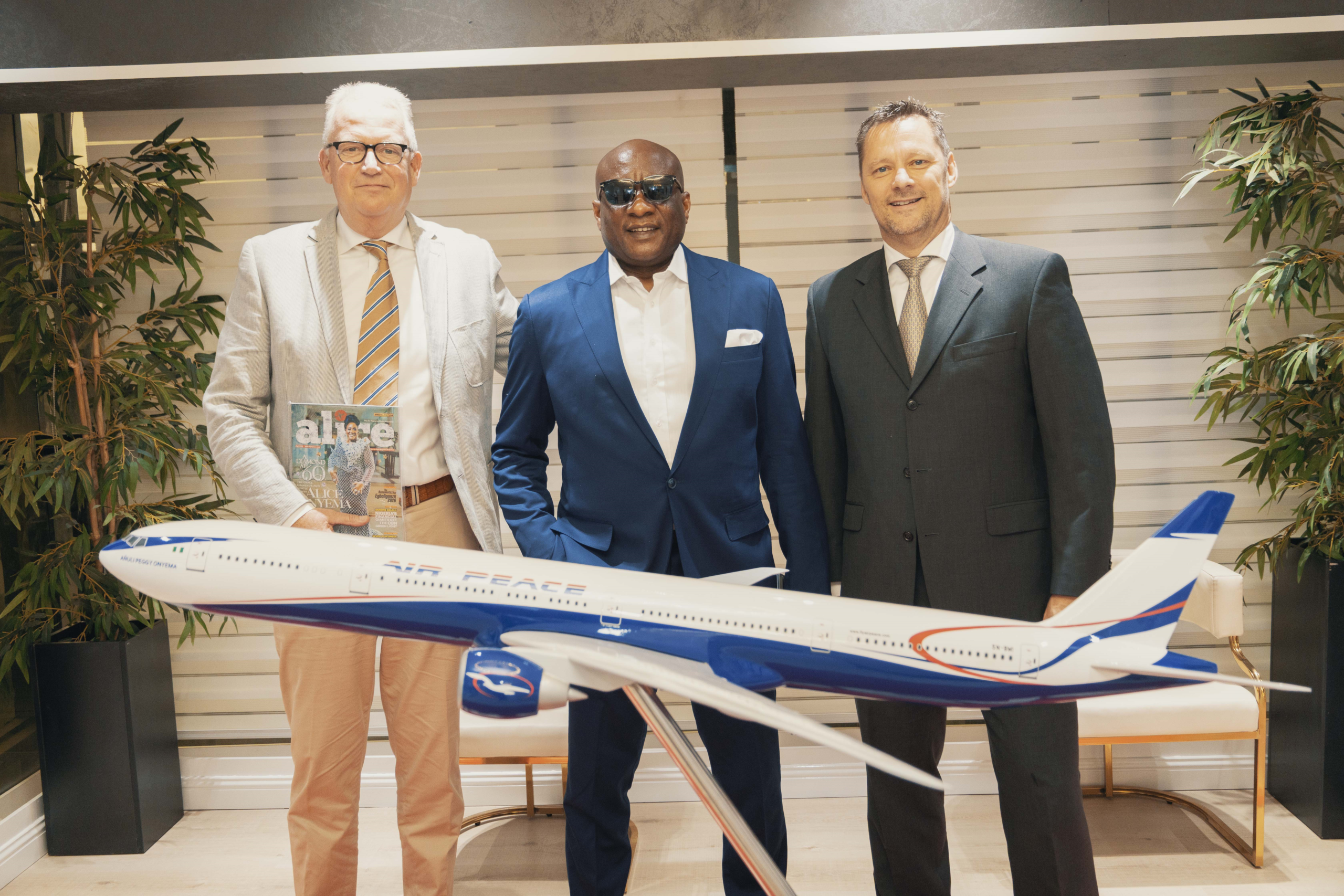
UK Partnership Opens Heathrow, Gatwick Gates for Air Peace – Onyema
-

 AIRPORTS12 months ago
MMA2 Named Nigeria’s Best Cargo Airport, Jibodu Honored
-

 Airlines11 months ago
Aborted Take-off: Air Peace Assures Passengers of Safety on Abuja–Asaba Flight