
News
Abuja–Kaduna Train Derailment: NSIB Releases Preliminary Report


The Nigerian Safety Investigation Bureau (NSIB) has published its preliminary report on the recent train derailment along the Abuja–Kaduna rail corridor, providing early insights into the August 26, 2025, incident that raised concerns about rail safety in the country.
The accident involved train number AK1, operated by the Nigerian Railway Corporation (NRC), with locomotive registration CDD5c2 2701. The derailment occurred at about 11:09 a.m. at Km 49, near Asham Station in Kagarko Local Government Area of Kaduna State, shortly after the train had passed a manually operated switch point.
The passenger train, which departed Abuja’s Idu Station at 9:45 a.m. en route to Rigasa Station, Kaduna, was carrying 618 people, including NRC crew members, security operatives, and service staff. The forward locomotive and adjoining coaches veered off the track and overturned.
According to NSIB, 21 passengers sustained varying degrees of injuries but, fortunately, no fatalities were recorded.
In a statement issued by Mrs. Bimbo Olawumi Oladeji, Director of Public Affairs and Family Assistance at NSIB, the Bureau confirmed that initial findings and safety recommendations are contained in the preliminary report, now available on its official website.

“The preliminary report represents early findings and is subject to further analysis. The final report will provide detailed conclusions and additional recommendations to enhance rail safety in Nigeria,” Oladeji said.
The NSIB emphasized that its investigation is aimed at improving safety standards and preventing future occurrences, not apportioning blame.

The Nigeria Civil Aviation Authority (NCAA) has introduced a comprehensive eight-pillar regulatory framework aimed at strengthening economic oversight of Nigeria’s aviation industry, promoting fair competition and protecting consumers without discouraging investment.
Director-General of the NCAA unveiled the framework while presenting a paper titled “Taming Natural Monopoly” at the Airport Business Summit and Expo (ABSE) 2026 held at the NIGAV Centre in Lagos.
He said the initiative reflects the Authority’s commitment to ensuring that natural monopolies, which are common in aviation due to the enormous capital required to develop critical infrastructure, operate in the public interest.
According to the NCAA boss, monopoly itself is not the challenge, but the abuse of market power.
“Natural monopolies are necessary in aviation but require effective regulation to prevent abuse of market power,” he said, describing a natural monopoly as a market where a single provider can efficiently deliver services at lower cost than multiple competing firms.
He explained that Nigeria’s aviation sector continues to grapple with high operating costs, infrastructure limitations, multiple charges, limited competition and consumer complaints, making stronger economic regulation necessary to sustain industry growth.
The Director-General noted that the Civil Aviation Act (CAA), 2022 and the Nigeria Civil Aviation Regulations (Nig.CARs), 2023 provide the legal authority for the NCAA to regulate airline licensing, market access, tariffs, consumer protection, competition and access to aviation infrastructure.
He said the regulatory framework aligns with International Civil Aviation Organization (ICAO) standards while balancing commercial viability with public interest.
“Our regulatory approach must balance commercial viability with public interest, ensuring that monopoly operators do not abuse their position,” he stated.
The eight regulatory pillars cover Economic Licensing, Consumer Protection, Tariff and Charges Approval, Economic Oversight, Competition and Market Access, Aerodrome Certification, Air Navigation Service Provider Licensing, and Enforcement and Penalties.
According to him, the framework is designed to guarantee transparent licensing processes, fair competition, cost-related and non-discriminatory tariffs, quality service delivery, operational reliability and effective enforcement of regulatory provisions.
He stressed that under the new approach, monopoly operators would not be allowed to unilaterally determine charges, while passenger rights, refunds, accessibility and service quality would receive greater regulatory attention.
Looking ahead, the NCAA plans to establish a dedicated Economic Regulation Unit, strengthen oversight of airport concessions and public-private partnerships, implement price-cap and revenue-cap models, enforce non-discriminatory market access, introduce service-level agreements and publish industry performance dashboards.
The Director-General expressed confidence that the reforms would create a predictable investment climate, improve transparency, strengthen airline competitiveness and enhance passenger confidence.
He maintained that Nigeria already possesses the legal instruments needed to regulate monopoly behaviour effectively and pledged that the Authority would apply the regulations proactively to ensure fairness, efficiency and accountability across the aviation sector.
“A competitive aviation industry is not achieved by eliminating monopoly, but by regulating monopoly in the public interest,” he said.
The Federal Airports Authority of Nigeria (FAAN) has unveiled plans to introduce a biometric passenger verification system, V-Pass, aimed at transforming domestic air travel by speeding up passenger processing, strengthening airport security and reducing reliance on physical identity documents.
The facial recognition platform, developed in partnership with M/S Verxid Technologies Limited, will provide travellers with a secure digital identity that enables seamless verification at key airport checkpoints before accessing restricted areas and boarding aircraft.
The initiative was reviewed during a strategic meeting between FAAN and Verxid Technologies Limited, where both organisations discussed deployment strategies, security measures and implementation plans designed to improve passenger experience across Nigeria’s domestic airports.
According to a statement signed by FAAN’s Director of Public Affairs and Consumer Protection, Henry Agbebire, the meeting focused on ensuring the successful deployment of the digital identity platform while maintaining the highest standards of aviation security.
FAAN’s Director of Commercial and Business Development, Ms Adebola, described the project as another milestone in the Authority’s digital transformation programme, saying the introduction of V-Pass underscores FAAN’s commitment to deploying innovative technology that enhances passenger facilitation and aviation security.
She explained that Nigerian passengers will complete a one-time enrolment using their National Identification Number (NIN) and facial biometric capture, while foreign travellers will register with their international passports through Optical Character Recognition (OCR) and biometric authentication.
Once enrolled, passengers will undergo biometric verification before entering restricted airport areas and again before boarding their flights, a dual-authentication process designed to eliminate impersonation, identity fraud and unauthorised access.
The system will feature electronic gates and self-service kiosks to automate passenger processing, while trained FAAN personnel will be available to assist travellers where necessary.
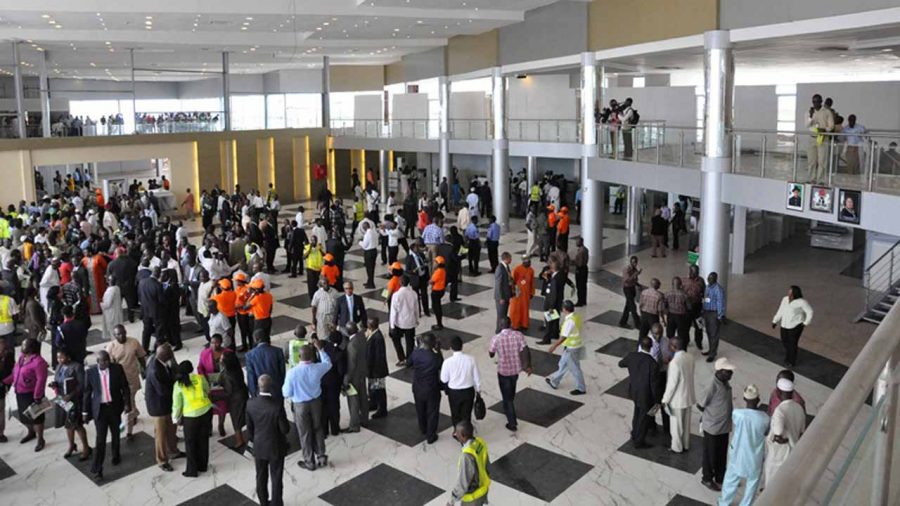
FAAN said first-time enrolment is expected to take about one minute, while subsequent facial verification will be completed in less than 30 seconds, significantly reducing queues and improving passenger movement within airport terminals.
Beyond passenger processing, the platform will provide airlines with secure digital access to flight schedules, passenger manifests and boarding statistics, while FAAN’s Central Management System will enable real-time monitoring of passenger movement, operational analytics and future integration with other airport management systems.
The Authority assured passengers that data privacy remains a top priority, noting that the platform fully complies with the Nigeria Data Protection Regulation (NDPR). It added that no passenger information will be stored on self-service kiosks or handheld verification devices.
Ahead of nationwide deployment, FAAN and Verxid Technologies Limited will commence a comprehensive public awareness campaign through television, radio, social media, airport public address systems and airline advisories to educate passengers on the operation and benefits of the new platform.
A live Proof of Concept demonstration and technical site assessment will also be conducted before the system is fully rolled out across the country’s domestic airports.
FAAN said the initiative forms a key part of its broader digital transformation agenda and is expected to deliver smarter, safer and more efficient passenger processing while aligning Nigeria’s domestic airports with evolving global standards in aviation security and passenger facilitation.

Leading automobile manufacturers, transport regulators and key government agencies have confirmed participation in the 2026 Nigeria Auto Industry Summit (NAISU), reinforcing industry support for Nigeria’s transition to electric vehicles (EVs) and Compressed Natural Gas (CNG)-powered transportation.
The summit, organised by the Nigeria Auto Journalists Association (NAJA) in collaboration with the National Automotive Design and Development Council (NADDC), will hold on Thursday, July 30, 2026, at the Radisson Hotel, Ikeja, Lagos.
Major automotive companies that have confirmed participation include Weststar Associates Limited, Toyota (Nigeria) Limited, Jetour Nigeria, Carloha Nigeria, Simba Group, Cedric Masters Group, Coscharis Motors and Lanre Shittu Motors.
The event is also expected to attract policymakers, investors, financial institutions, fleet operators, technology providers and other stakeholders in Nigeria’s automotive industry.
The Corps Marshal of the Federal Road Safety Corps (FRSC), Shehu Mohammed, will deliver the keynote address on road safety, regulation and the deployment of electric and CNG-powered vehicles in Nigeria.
Also confirmed as guest speakers are the Director-General of the National Automotive Design and Development Council (NADDC), Joseph Osanipin, and the Chairman/Chief Executive Officer of the Presidential Initiative on Compressed Natural Gas and Electric Vehicles (Pi-CNG and EV), Ismaeel Ahmed.
The speakers are expected to provide insights into the Federal Government’s automotive industrialisation agenda, clean mobility policies and ongoing initiatives aimed at accelerating the adoption of alternative fuel vehicles across the country.
The 2026 summit is themed “Nigeria’s Clean Mobility Future: The EV and CNG Journey Under the Bola Tinubu Administration.”
Chairman of the 2026 Auto Summit Planning Committee, Rasheed Bisiriyu, said the event comes at a critical period as Nigeria intensifies efforts to reduce transportation costs, lower carbon emissions and encourage greater investment in cleaner mobility solutions.
According to him, the summit will bring together government officials, automotive manufacturers, regulators, energy experts and transport stakeholders to review ongoing reforms and develop practical strategies for advancing the country’s clean mobility agenda.
Bisiriyu said discussions would focus on expanding EV charging infrastructure and CNG refuelling stations, promoting local vehicle assembly, improving consumer awareness, attracting private sector investment and strengthening the regulatory framework needed to support sustainable transportation.
He added that the summit is designed to move beyond policy discussions by generating practical recommendations capable of accelerating Nigeria’s transition to cleaner mobility.
NAJA Chairman, Theodore Opara, said the annual summit has become one of Nigeria’s foremost automotive policy dialogue platforms, bringing together public and private sector stakeholders to address critical issues affecting the industry’s growth.
He stressed that achieving Nigeria’s clean mobility objectives requires collaboration among regulators, manufacturers, energy providers, transport operators, safety agencies and consumers.
Organisers expressed confidence that the summit would generate actionable recommendations to support the Federal Government’s drive to deepen investment in alternative fuel technologies, strengthen local automotive manufacturing, improve transport sustainability and position Nigeria as a leading player in Africa’s emerging clean mobility ecosystem.

NCAA Maps Out Eight-Pillar Aviation Strategy

FAAN Rolls Out Biometric V-Pass for Faster, Safer Domestic Air Travel

FLIDAN Pushes Stronger Flight Dispatch Standards to Boost Aviation Safety

Air Peace Expands Domestic Flight Schedule

Gateway International Airport Takes Off as Ogun Joins Nigeria’s Air Map

Nigeria, UAE Firm Sign Landmark Cargo Information Deal
-
 Airlines1 month ago
Air Peace Expands Domestic Flight Schedule
-
 Aviation10 months ago
Gateway International Airport Takes Off as Ogun Joins Nigeria’s Air Map
-
 Aviation10 months ago
Nigeria, UAE Firm Sign Landmark Cargo Information Deal
-

 Airlines10 months ago
₦100m Land Deal: Air Peace Backs Onyema’s Claim on Anambra Airport
-
 Airlines10 months ago
UK Partnership Opens Heathrow, Gatwick Gates for Air Peace – Onyema
-

 Airlines10 months ago
High Airfares, Hot Hotels: Nigeria’s Travel Paradox
-

 AIRPORTS10 months ago
MMA2 Named Nigeria’s Best Cargo Airport, Jibodu Honored
-

 Airlines10 months ago
Aborted Take-off: Air Peace Assures Passengers of Safety on Abuja–Asaba Flight