
Airlines
ASRTI Proposes Fuel Reform to Cut Airfares
President ARTSI-Air Commodore (rtd) -Ademola Onitiju


The Aviation Safety Roundtable Initiative (ASRTI) has called on the Federal Government to adopt a crude allocation programme for local refiners as a long-term solution to the high cost of aviation fuel and rising domestic airfares in Nigeria.
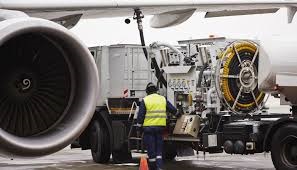
In a statement issued on June 1, 2026, ASRTI President, Air Commodore (rtd.) Ademola Onitiju, said the escalating price of Jet A1 fuel remains the biggest challenge confronting domestic airlines, with fuel costs accounting for nearly half of total airline operating expenses.
According to him, Jet A1 prices have remained between ₦1,650 and ₦2,037 per litre, forcing airlines to increase ticket prices and placing air travel beyond the reach of many Nigerians.
The aviation advocacy group argued that previous government interventions, including the reported ₦60 billion invoice discount granted to airlines, have not translated into lower fuel prices, reduced airline indebtedness or cheaper fares for passengers.
ASRTI stated that sectors linked to aviation, including cargo logistics, tourism and hospitality, have also not recorded significant gains from the intervention.
To address the challenge, the group proposed a Fuel-for-Stability Programme that would allocate crude oil directly to local refiners for the production of aviation fuel.
According to the organisation, the initiative would establish a predictable supply chain, stabilise fuel pricing and significantly reduce airlines’ operating costs.
Onitiju said the objective is not necessarily to achieve a specific fuel price but to create a sustainable pricing framework capable of supporting lower airfares, higher passenger traffic and stronger airline profitability.
He noted that reduced fares would encourage more Nigerians to travel by air, leading to market expansion, improved load factors and increased revenue across the aviation value chain.
The ASRTI president stressed that deliberate government policies aimed at lowering operating costs would strengthen airlines, aviation agencies, concessionaires and other service providers within the industry.
He cited countries such as India, Turkey, Indonesia and Brazil as examples of nations that transformed their aviation sectors through stable fuel supply systems, affordability-focused reforms and policies designed to stimulate passenger growth.
While commending the Federal Government for initiatives aimed at restoring aircraft lessors’ confidence in Nigeria and promoting local aircraft maintenance capabilities, ASRTI urged policymakers to adopt broader market-shaping reforms that will drive sustainable growth.
The organisation maintained that a stable and affordable aviation fuel regime would enhance the competitiveness of Nigeria’s aviation sector, support economic growth and make air travel accessible to a larger segment of the population.
ASRTI said its proposal offers a cost-effective path to industry-wide recovery and sustainable development while reducing the financial burden on government.
Airlines
More Airlines, Same Airports, Bigger Crisis
From left, Chairman, League of Airport and Aviation Correspondent, (LAAC), Mr. Idris Suleiman, Former FAAN MD, Richard Aisuogbogun, Chairman, Airpeace Airlines, Dr. Allen Onyema, M/D, Top Brass, Capt. Iyayi and Ag. COO/Head, Aeronautical and Cargo Services, Public Affairs and Public Consumer, MMA-2, Ikeja Lagos Remi Jibodu during the 30th Annual Conference of LAAC held at Providence Hotel GRA Ikeja Lagos. PHOTO ISAAC JIMOH AYODELE.

*Operators raise alarm over ramp congestion, bird strikes and rising costs
*AON says 54 charges are stifling airline competitiveness
Nigeria’s aviation industry may be heading for a major capacity crisis as the number of airline operators continues to grow without a corresponding expansion of airport infrastructure, industry stakeholders have warned.
The warning came at the 30th annual conference of the League of Aviation and Airport Correspondents (LAAC) in Lagos, where airline operators raised concerns over the ability of existing airports to accommodate the growing number of carriers and aircraft entering the market.
Vice Chairman of the Airline Operators of Nigeria (AON) and Chairman of Air Peace, Allen Onyema, said Nigerian airlines currently contend with about 54 different taxes, levies and charges, which he described as a major obstacle to the profitability and competitiveness of the sector.
But beyond the financial burden, the operators raised concerns about whether Nigeria’s airport infrastructure is keeping pace with the expansion of the airline industry.
The AON spokesperson and Chairman of United Nigeria Airlines, Prof. Obiora Okonkwo, questioned the continued issuance of Airline Operating Certificates (AOCs) when available airport facilities are already under pressure.
Okonkwo disclosed that while it took him between two and three years to obtain an AOC, some new operators were now obtaining theirs in about six months.
He said increased competition was desirable but warned that new airlines would put additional pressure on already congested airport facilities.
“More AOCs are being issued, and perhaps five more will be issued by year’s end. More competition is fine, no problem. But where is the infrastructure to accommodate these additional aircraft?” he asked.
The United Nigeria Airlines chairman cited a recent experience in which one of his aircraft remained on the tarmac for about 30 minutes because passengers could not disembark due to ramp congestion.
His concern was that the situation could become more severe if more airlines acquire aircraft without corresponding improvements in airport infrastructure and airspace capacity.
“I wonder if we have enough airspace,” he added.
The infrastructure concerns are compounded by operational hazards, particularly bird strikes, which Okonkwo said were causing significant damage to airline operations.
He disclosed that one of his airline’s Embraer E190 aircraft had remained grounded for 13 days following a bird strike, despite repairs and replacement of damaged components.
“Today, I have an aircraft, E-190. This is the 13th day of AOG (aircraft on ground) due to bird strike. We bought new blades and fixed them,” he said.
Okonkwo said the financial impact was particularly painful for airlines that had borrowed money to acquire aircraft.
“Imagine having borrowed 30% of funds from the bank to acquire these beautiful aircraft, only to wake up and face a bird strike. It happens continuously within one month. It is very painful,” he said.
He expressed frustration over what he described as inadequate measures by the Federal Airports Authority of Nigeria (FAAN) to effectively address the bird-strike menace.
The airline executive also raised another growing concern—the treatment of airline workers during flight disruptions.
He recounted an incident involving a United Nigeria flight that returned to Lagos after heavy rain affected operations at Kano Airport. According to him, some passengers refused to disembark from the aircraft after it returned to Lagos, resulting in a difficult situation for the airline and its workers.
Okonkwo warned that protecting aviation personnel must be given greater attention, particularly during disruptions when passengers can become aggressive.
“If we cannot protect airline workers, who are somebody’s wives, children, sisters, and brothers, then when there is any flight disruption, what happens? Staff disappear because nobody wants to be harmed,” he said.
Meanwhile, Onyema said the industry’s infrastructure and operational challenges were being worsened by the high number of charges imposed on airlines.
According to him, Nigerian airlines pay about 54 different charges, a burden he said undermines their ability to compete effectively with foreign carriers.
“One thing I want to mention is that there are many charges. If I were to list them, there are about 54 that airlines pay,” Onyema said.
He also called attention to an ECOWAS agreement reportedly providing for a 25 per cent reduction in taxes across West Africa, saying the provision had yet to be implemented.
Onyema expressed optimism that direct engagement between airline operators and President Bola Tinubu could produce significant reforms in the sector.
He recalled the removal of the four per cent Free-on-Board customs duty after he raised concerns about its impact on airlines, describing the development as an example of what could happen when government responds to industry concerns.
The operators also raised concerns about the impact of official pronouncements on investor confidence and the reputation of Nigeria’s aviation industry.
Okonkwo urged government officials, particularly political appointees responsible for public communication, to acquire sufficient knowledge of aviation before making statements on the sector.
He argued that poorly informed statements could damage confidence in an industry already struggling with significant operational and financial pressures.
The concerns raised at the LAAC conference point to a deeper challenge confronting Nigerian aviation: the sector is seeking more airlines and greater competition, but its infrastructure, regulatory framework and operating environment may not yet be expanding at the same pace.

Mr Ayodele Olatiregun, Director, Finance & Accounts, FAAN during the LAAC 30th Annual Conference themed: Towards Sustainable Aviation Industry: Balancing Government Revenue Demands with Sector Growth held in Ikeja, Lagos on Thursday
Unless the gap between airline growth and infrastructure capacity is urgently addressed, increased competition could produce congestion and operational bottlenecks rather than the improved connectivity and service quality expected from a growing aviation market.
Airlines
Airlines, Labour Clash Over N5% TSC
The AON spokesperson and Chairman of United Nigeria Airlines, Prof. Obiora Okonkwo

*Okonkwo reveals 30% waiver, cites soaring fuel costs
*ATSSSAN insists airlines cannot withhold statutory levy
A fresh battle over billions of naira in statutory aviation revenue erupted at the 30th annual conference of the League of Aviation and Airport Correspondents (LAAC) in Lagos, as domestic airline operators and aviation unions engaged in a heated confrontation over the controversial five per cent Ticket Sales Charge (TSC).
The dispute centred on whether airlines, already struggling with escalating operating costs, can withhold or delay remittance of the levy, which is collected from passengers and transferred to government aviation agencies.
The sharp exchange exposed the widening fault line between financially pressured airlines and organised labour, which insists that statutory aviation charges cannot be treated as negotiable obligations.
Speaking for the Airline Operators of Nigeria (AON), Executive Chairman of United Nigeria Airlines, Prof. Obiora Okonkwo, said airlines had previously met their statutory financial obligations but began experiencing difficulties as operating costs surged.
Okonkwo, who spoke on the conference theme, “Towards a Sustainable Aviation Industry: Balancing Government Revenue Demands with Sector Growth,” attributed the payment challenges largely to the dramatic increase in aviation fuel prices.
He said the price of aviation fuel rose to about N3,300, following what he described as the Gulf crisis, putting further pressure on already cash-strapped airlines.
According to him, AON was the first to formally approach the Federal Government over the burden of regulatory charges and seek relief for operators.
“Before February this year, there were no payment problems. All airlines were paying. The AON issue only became a problem because of the Gulf crisis. AON was the first to cry out. We wrote to the President, explaining that we could no longer pay these charges,” he said.
Okonkwo disclosed that the Federal Government subsequently granted airlines a 30 per cent waiver on the charges.
He explained that following the waiver, airline operators held several meetings with the NCAA and the Ministry of Aviation to agree on a structured repayment plan for outstanding obligations.
He said the NCAA subsequently requested that airlines pay 10 per cent of their legacy debts within an agreed period, with the balance to be paid in instalments, while individual airlines were expected to meet with the authority’s Director of Finance.
But the operators’ position triggered a strong reaction from organised labour.
Secretary-General of the Air Transport Services Senior Staff Association of Nigeria (ATSSSAN), Francis Akinjole, rejected any suggestion that the five per cent TSC was subject to negotiation by airlines.
Akinjole described the operators’ position as “mischievous”, insisting that the levy was established by law and could only be changed through the appropriate legislative process.
“We heard them very well. They are saying the five per cent TSC is not justifiable, but it is not the making of the DG NCAA or the Minister. That payment was established by an Act; so they know where to go,” he said.
“They are just trying to find what does not exist to stop what already exists. They are being very, very mischievous.”
The union leader maintained that financial difficulties could not give airlines the right to determine which statutory obligations they would comply with.
“This is an Act; it is the law. You cannot say that because things are hard for you, you will then choose which law to obey,” Akinjole said.
He argued that any attempt to discontinue the levy would require the appropriate legislative process, including a public hearing.
The unions further warned that non-remittance of the TSC could have serious implications for aviation safety and the welfare of workers across the sector.
They maintained that airlines are merely collection agents for the levy, which is paid by passengers and belongs to the government’s aviation safety and regulatory system.
The confrontation has now brought the long-running dispute over outstanding statutory remittances into sharper focus, with the competing demands of airline survival, government revenue and aviation safety becoming increasingly difficult to reconcile.
For an industry already battling high fuel costs, foreign exchange pressures and other operational challenges, the TSC controversy presents another major test of the Federal Government’s ability to balance revenue collection with the financial survival of domestic airlines.

The explosive exchange at the LAAC conference may therefore have opened a new chapter in the dispute, with pressure mounting on aviation authorities to broker a lasting solution before the disagreement further strains relations between operators, regulators and organised labour
Airlines
Ibom Air Hits 10-Aircraft Fleet, Nears 5m Passengers
Ibom Air’s newly delivered Airbus A220-300 after arriving at Victor Attah International Airport, Uyo, from the Airbus assembly facility in Mirabel, Canada.

Ibom Air has expanded its active fleet to 10 aircraft with the delivery of a brand-new Airbus A220-300, as the Akwa Ibom-owned airline moves closer to crossing the five-million passenger milestone.
The aircraft, the third Airbus A220-300 delivered directly from the Airbus assembly facility in Mirabel, Canada, was received at Victor Attah International Airport, Uyo, with a traditional water cannon salute.
The latest addition brings Ibom Air’s fleet to seven Bombardier CRJ-900s and three Airbus A220-300s, strengthening the carrier’s capacity to restore domestic flight frequencies and expand its regional operations.
Akwa Ibom State Governor, Pastor Umo Eno, said the airline had so far transported 4,953,512 passengers on 65,152 scheduled flights, putting it on course to surpass five million passengers before the end of September 2026.
“With 4,953,512 passengers safely carried across 65,152 scheduled flights to date, Ibom Air is on track to cross the 5 million passenger landmark before the end of this month,” Eno said.
He disclosed that five of the airline’s 10 aircraft were acquired under his administration as part of efforts to match the carrier’s route network with growing regional demand.
Ibom Air currently operates to seven domestic destinations and one regional destination, Accra, Ghana, but is targeting expansion to 12 destinations and 15 routes by 2027.
The planned expansion includes a new domestic connection and regional services to Douala in Cameroon, Libreville in Gabon and Malabo in Equatorial Guinea.
Chairman of Ibom Air, Mfon Udom, said the new A220-300 would enable the airline to immediately restore its full domestic flight schedule while supporting its planned expansion across Africa.
According to him, the carrier will restore three daily flights on the Uyo-Lagos and Uyo-Abuja routes, while Lagos-Abuja operations will return to seven daily frequencies.
“Phase one of our regional expansion will connect Uyo directly to Douala, Libreville, and Malabo,” Udom said, adding that the airline’s continental reach would grow as it receives more aircraft from its 10-unit order through direct purchases and lease-purchase arrangements.
The fleet expansion is also expected to deepen Ibom Air’s contribution to the state economy, with operational data showing that more than N60 billion has been injected into Akwa Ibom through the airline’s commercial activities.
The airline currently employs 753 full-time staff, of whom 478, representing 64 per cent, are indigenes of Akwa Ibom. Its operations are also estimated to support about 2,000 indirect jobs across the state.
Governor Eno said the state was equally investing in aviation human capital, noting that 14 of Ibom Air’s 30 pilots are Akwa Ibom indigenes, while 16 of its 40 aircraft engineers are from the state.
He added that 10 additional pilots were undergoing simulator training in Addis Ababa, Ethiopia, while another 10 aviation specialists were undergoing training at the Nigerian College of Aviation Technology (NCAT), Zaria.
Eno also commended Aviation and Aerospace Development Minister, Festus Keyamo, SAN, and the Federal Government for granting Victor Attah International Airport international airport status.
Special Adviser to the governor on Aviation and Airport Development, Uwem Ekanem, said the airline formed part of a broader aviation ecosystem involving the state’s commercial Maintenance, Repair and Overhaul (MRO) facility and the upgraded international terminal.
Ekanem said the state was developing an “Aerotropolis” designed to generate foreign exchange, boost tourism and air cargo operations, and develop high-skilled aviation professionals.
He also dismissed concerns over alleged monopoly at Victor Attah International Airport, saying the facility remained open to all commercial operators.
According to him, Air Peace is scheduled to begin operations at the airport in September, while discussions are ongoing with ValuJet.
The latest aircraft was received by a crew comprising Captain Tijani Shaddad, Senior First Officer Akaninyene Bassey and Senior First Officer Idongesit Okono.

Ibom Air Chief Pilot, Ruth Adebanwo, said the Airbus A220-300’s fuel efficiency, reduced noise footprint and lower carbon emissions made it suitable for the airline’s next phase of expansion.

More Airlines, Same Airports, Bigger Crisis

Airlines, Labour Clash Over N5% TSC

LAAC Moves to Balance Aviation Revenue, Growth

Air Peace Expands Domestic Flight Schedule

Gateway International Airport Takes Off as Ogun Joins Nigeria’s Air Map

₦100m Land Deal: Air Peace Backs Onyema’s Claim on Anambra Airport
-
 Airlines3 months ago
Air Peace Expands Domestic Flight Schedule
-
 Aviation11 months ago
Gateway International Airport Takes Off as Ogun Joins Nigeria’s Air Map
-
 Airlines11 months ago
₦100m Land Deal: Air Peace Backs Onyema’s Claim on Anambra Airport
-

 Aviation12 months ago
Nigeria, UAE Firm Sign Landmark Cargo Information Deal
-

 Airlines11 months ago
High Airfares, Hot Hotels: Nigeria’s Travel Paradox
-
 Airlines12 months ago
UK Partnership Opens Heathrow, Gatwick Gates for Air Peace – Onyema
-

 AIRPORTS12 months ago
MMA2 Named Nigeria’s Best Cargo Airport, Jibodu Honored
-

 Airlines11 months ago
Aborted Take-off: Air Peace Assures Passengers of Safety on Abuja–Asaba Flight