
Airspace
FG Flags Off NAMA HQ, ATM Centre in Abuja
The Minister of Aviation and Aerospace Development, Festus Keyamo flanked by the MD NAMA and others during the flagging off of the constructions in Abuja


The Federal Government has officially flagged off the construction of a new Corporate Headquarters and Air Traffic Management (ATM) Centre for the Nigerian Airspace Management Agency (NAMA) in Abuja, marking a major milestone in Nigeria’s aviation modernization agenda.
The groundbreaking ceremony, held Thursday at the Nnamdi Azikiwe International Airport, was performed by the Minister of Aviation and Aerospace Development, Festus Keyamo.
In a statement signed by NAMA’s Director of Public Affairs and Consumer Protection, Dr. Abdullahi Musa, the Minister described the project as “a declaration of intent and a tangible demonstration of our unwavering commitment to modernizing the critical infrastructure that underpins the safety, efficiency, and growth of Nigerian aviation.”
Keyamo said the new complex would consolidate the agency’s administrative and operational functions into a purpose-built facility befitting its national importance.
“For too long, our agencies have operated in silos and in structures that do not reflect their national significance. With this new headquarters, we are creating a conducive environment that fosters innovation, enhances collaboration, and boosts morale among aviation professionals,” he stated.
According to him, the facility will integrate executive management offices with a state-of-the-art ATM Centre, enhancing operational efficiency, safety oversight, and real-time response capabilities. He stressed that the project is being executed in strict compliance with the Public Procurement Act 2007 through a transparent and competitive bidding process.
“There will be no compromise on specifications or delivery benchmarks,” the Minister assured, adding that the contractor would be held to the highest standards of quality and timelines.
Earlier, NAMA Managing Director, Engr. Ahmed Umar Farouk, described the occasion as a historic turning point for the agency. He recalled that since its establishment in 1999, NAMA operated its administrative headquarters from Lagos for over two decades before relocation to Abuja began in 2020.
“For the past six years, our staff have operated from temporary facilities in Abuja, yet they have continued to deliver safe and reliable air navigation services. Today, we take a definitive step toward providing them with a world-class facility,” Farouk said.
He disclosed that the new ATM Centre would centralize Nigeria’s airspace management by merging the existing Area Control Centres in Lagos and Kano into a single hub in Abuja, creating what he termed a cohesive “One Flight Information Region (FIR)” for the country.
“From this location, NAMA will exercise consolidated oversight of Nigeria’s airspace. A unified radar view reduces coordination risks during sector handovers and enhances overall situational awareness,” he explained.
Farouk noted that the new system would deploy cutting-edge automation to optimize flight paths, reduce redundancies, improve fuel efficiency for airlines, and lower long-term operational costs.
The facility will accommodate 15 to 16 departments and include a 200-seat conference hall, library, registry, executive suites, and staff welfare amenities such as rest facilities for air traffic controllers, a daycare centre, recreational areas, a drivers’ lounge, standby power systems, water treatment plant, multiple security posts, and expanded parking spaces.
He also called for sustained federal funding to implement NAMA’s proposed Dual Surveillance System, designed to support both civil air traffic management and military command-and-control operations.

“This is not merely a technological upgrade; it is a strategic investment in securing our sovereign airspace and strengthening coordination between civil aviation and national defense institutions,” Farouk added.
Airspace
ATSSSAN Backs NAMA Push for Higher TSC, Aviation Clearance Revenue
Outgoing Chairman Comrade Wole Dada (left) handing over to Comrade Ekip Ekip Eso, during the inauguration of the branch’s new executive in Lagos

The Air Transport Services Senior Staff Association of Nigeria (ATSSSAN), NAMA Branch, has pledged to support efforts by the Nigerian Airspace Management Agency (NAMA) to secure improved revenue allocation from the Ticket Sales Charge (TSC) and Aviation Height Clearance to strengthen its operational capacity.
The newly inaugurated executive of the union also pledged to promote industrial harmony, protect workers’ welfare and sustain constructive engagement with management to improve the agency’s performance.
The commitments were made by the new branch chairman, Comrade Ekip Ekip Eso, during the inauguration of the executive at NAMA headquarters annex in Lagos.
In a statement signed by NAMA’s Director of Public Affairs and Consumer Protection, Dr Abdullahi Musa, Eso said the new leadership would pursue responsible unionism, accountability and policies that promote members’ welfare and the development of Nigeria’s aviation industry.
He said adequate and sustainable funding was essential for NAMA to maintain critical air navigation infrastructure, strengthen operational capacity and discharge its statutory responsibility of managing Nigeria’s airspace.
According to him, the union would pursue constructive advocacy and engage relevant government authorities and industry stakeholders, alongside sister unions, to support the agency’s position on improved revenue allocation.
Eso said the new executive recognised the responsibility entrusted to it and would discharge its mandate with dedication, fairness and accountability.
He also commended members and stakeholders who supported the branch during its delegate conference in Jos, particularly the ATSSSAN National President, Comrade John Ogbe, for promoting dialogue and reconciliation that helped restore peace and mutual understanding within the union.
The chairman urged members to sustain the renewed unity in the association, noting that collective progress required mutual respect, cooperation and commitment to common objectives.
On workers’ welfare, he pledged that the executive would prioritise timely payment of entitlements, equitable career advancement, professional training, safe working conditions and sustained engagement with management.
He also called on NAMA management to intensify efforts towards securing the urgent approval and implementation of the agency’s new Conditions of Service, describing the document as important to addressing workers’ welfare and employment-related concerns.

The new executive said it would maintain a cooperative relationship with management while ensuring that the legitimate interests of members remained adequately protected.
Airspace
NAMA Director Bags Doctoral Fellowship Award
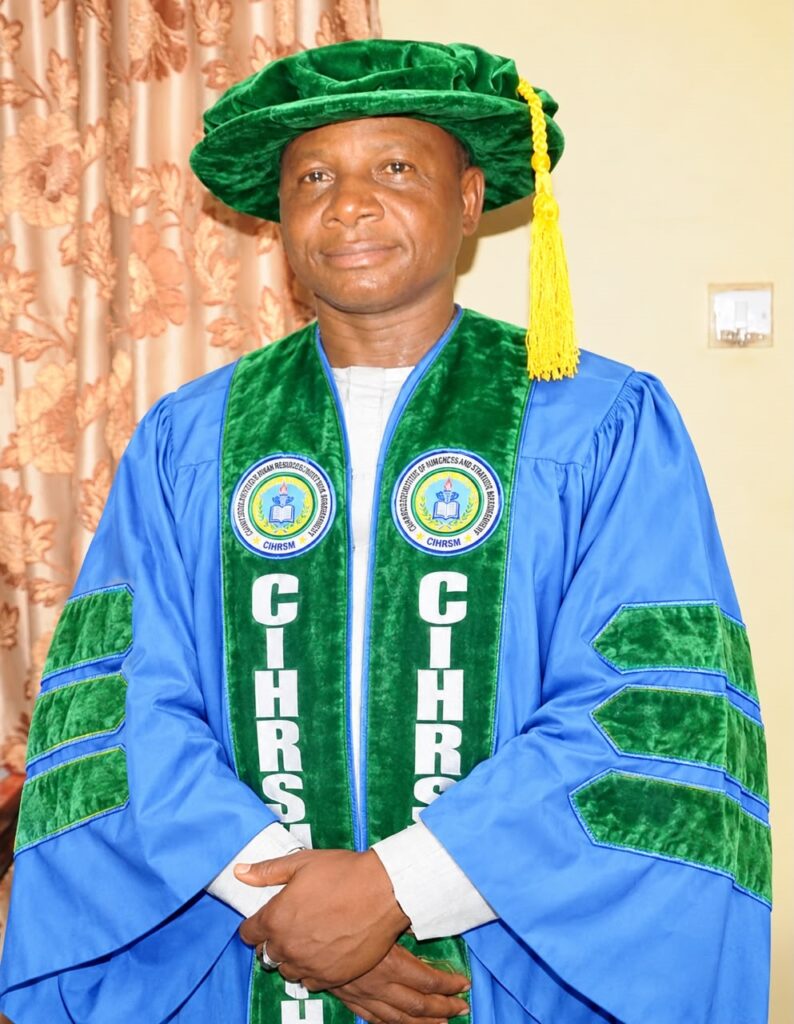
NAMA Director, Public Affairs and Consumer Protection, Dr. Abdullahi Musa, receiving his Doctoral Fellowship recognition from the Chartered Institute of Human Resources and Strategic Management (CIHRSM) at the induction ceremony in Lagos.

The Director, Public Affairs and Consumer Protection of the Nigerian Airspace Management Agency (NAMA), Dr. Abdullahi Musa, has been conferred with the Doctoral Fellowship of the Chartered Institute of Human Resources and Strategic Management (CIHRSM).
Musa received the prestigious professional recognition at an induction ceremony held recently in Lagos, with the institute citing his contributions to public service, human capital development, strategic management and nation-building.
In a statement signed by the Assistant General Manager, Public Affairs, Mr. Stephen Onabe, NAMA said the recognition underscored Musa’s professional contributions to strategic communication, public administration and institutional information management.
The Registrar of CIHRSM, Dr. Minna Abell, said the fellowship represented the institute’s highest membership cadre, adding that Musa’s distinguished background as a scholar and administrator qualified him for the honour.
Abell highlighted Musa’s diverse experience in governance, leadership, public administration and strategic management, noting that these had positively influenced his responsibilities as NAMA’s spokesperson.
He said Musa had applied his academic research and scholarly experience to the strategic management of critical information at NAMA, ensuring that information dissemination within the agency remained strategic, effective, educative and proactive.
“In his current role, Musa has applied the depth of his academic research and scholarly experience to the strategic management of critical information, ensuring that information dissemination within the agency is strategic, effective, educative and proactive,” Abell said.
According to him, Musa’s approach had strengthened the communication of NAMA’s mandate, activities and interventions to stakeholders and the flying Nigerian public.
CIHRSM is a professional institution dedicated to advancing human resource development and strategic management through professional education, research, training and knowledge sharing.
The institute promotes ethical leadership, professionalism, integrity and excellence, which it said provided the context for Musa’s recognition.
Airspace
NAMA: Safety Forced Removal of Lagos CAT III ILS
Director of Safety, Electronic and Engineering Services (DSEES), NAMA. Engineer Teresa Ihenachor,

The Nigerian Airspace Management Agency (NAMA) has said the Category III Instrument Landing System (CAT III ILS) installed at the Murtala Muhammed International Airport (MMIA), Lagos, was removed because of persistent failures that raised safety concerns.
The agency’s Director of Safety, Electronic and Engineering Services (DSEES), Teresa Ihenachor, who disclosed this in Lagos, said NAMA did not abandon the equipment as alleged, stressing that its removal was a safety-driven decision after repeated attempts to restore its reliability failed.
Ihenachor spoke on the sidelines of the 30th Annual Conference of the League of Airport and Aviation Correspondents (LAAC) in Lagos.
She said the Lagos CAT III ILS had a history of unserviceability before she assumed office, adding that she personally supervised more than seven repairs of the system within a short period, but the equipment continued to develop faults.
“We did not abandon anything. It was removed for safety,” Ihenachor said.
According to her, the equipment was highly sensitive to its operating environment and continued to produce unreliable performance even after it had been downgraded from CAT III to CAT II.
She explained that the problem was not simply the ILS itself but the absence of the supporting infrastructure and environmental conditions required for CAT III operations in Nigeria.
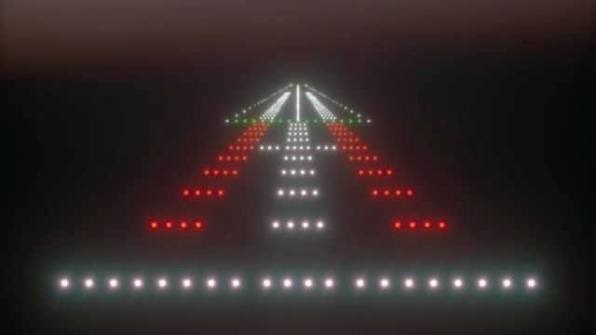
Ihenachor specifically pointed to the condition of airfield lighting at the Lagos airport, which she said remained at CAT I, making the deployment of a CAT III ILS incompatible with the existing infrastructure.
“Our airfield lighting is still on CAT I. Most of our equipment are downgraded to CAT II. So, having CAT III with the airfield lighting at CAT I is very difficult,” she said.
She added that even after the Lagos system was downgraded to CAT II, it failed to operate optimally, forcing the agency to consider the safety implications of keeping an unreliable navigational aid at one of the country’s busiest airports.
Ihenachor said the frequent failures became a concern because an ILS is expected to provide reliable guidance to aircraft, particularly during poor visibility and other conditions requiring precision approach support.
She said NAMA consequently obtained permission from the supervising ministry to remove the problematic equipment and install a new CAT II ILS that was available for another station.
“So, I wrote, I took permission from them because of the safety nature. So, I installed a brand new ILS, this NORMARC CAT II which is functioning up to now,” she said.
The DSEES said the replacement CAT II system has continued to function reliably, with the agency addressing the power-related challenges through the use of a solar power system.
She maintained that the CAT III equipment had not been rendered useless, explaining that the systems could still be deployed at other airports where their operational requirements could be met.
According to her, the CAT III system at Abuja was also downgraded to CAT II because of the same limitations, while plans were being considered to redeploy some of the equipment to other airports.
“The one in Abuja, it’s not functioning, but it’s downgraded. And you imagine,” she said, adding that equipment could be deployed to locations such as Calabar where there is a need for ILS.
Ihenachor stressed that CAT III operations require more than the installation of the ILS equipment, noting that supporting facilities such as appropriate airfield lighting, stable power supply and other associated technical requirements must be available.
She said NAMA had addressed the power challenge but noted that airfield lighting was under the responsibility of the Federal Airports Authority of Nigeria (FAAN).
“The bottom line is CAT III cannot function in Nigeria due to non-compliance with the environmental requirements. Not only environmental, there’s an associated requirement that it needs. Like I told you, airfield lighting,” she said.
The NAMA director advised that the supporting infrastructure should be upgraded before the deployment of CAT III ILS equipment, arguing that acquiring sophisticated equipment without first adapting the airport environment to its requirements could undermine its effectiveness.
She said the experience with the Lagos installation demonstrated the importance of matching navigational equipment with the infrastructure and environmental conditions of the airport where it would be deployed.
Ihenachor also defended NAMA’s response to the fire incident that affected the airport’s control tower facilities earlier in the year, saying the agency quickly deployed a mobile control tower and adapted it to meet its operational requirements.
She said NAMA installed additional facilities in the mobile tower because the equipment, as supplied, did not contain everything required for its operations.
According to her, the agency later identified a power shortfall caused by the additional equipment it had installed and subsequently upgraded the power capacity.
She said the agency also subjected the facility to a safety assessment before air traffic controllers were allowed to return to the tower.
Ihenachor said the agency had additionally deployed mobile radio transceiver equipment as a safety backup, allowing air traffic controllers to communicate with and control aircraft when necessary.
She stressed that safety considerations remained central to NAMA’s decisions on navigational and air traffic management equipment.
The clarification comes amid public questions over the status of the CAT III ILS systems acquired for Lagos and Abuja. NAMA has separately disputed reports that the systems cost ₦7.58 billion, stating that the approved contract for the supply and installation of CAT III-capable ILS and Distance Measuring Equipment for the two airports was ₦1.188 billion.

Versat Deepens EXEED’s Push into Nigerian Auto Market

Onyema Hails Fidelity Bank for Repaying $400m Eurobond

CIBN Confers Honorary Fellowship on FAAN MD, Onabanjo-Kuku

Air Peace Expands Domestic Flight Schedule

Lufthansa Group to Bring Eurowings to Nigeria in 2027

Gateway International Airport Takes Off as Ogun Joins Nigeria’s Air Map
-
 Airlines5 months ago
Air Peace Expands Domestic Flight Schedule
-
 Airlines2 months ago
Lufthansa Group to Bring Eurowings to Nigeria in 2027
-
 Aviation1 year ago
Gateway International Airport Takes Off as Ogun Joins Nigeria’s Air Map
-

 Airlines1 year ago
₦100m Land Deal: Air Peace Backs Onyema’s Claim on Anambra Airport
-

 Aviation1 year ago
Nigeria, UAE Firm Sign Landmark Cargo Information Deal
-

 Airlines1 year ago
High Airfares, Hot Hotels: Nigeria’s Travel Paradox
-

 AIRPORTS1 year ago
MMA2 Named Nigeria’s Best Cargo Airport, Jibodu Honored
-
 Airlines1 year ago
UK Partnership Opens Heathrow, Gatwick Gates for Air Peace – Onyema