
Airlines
NSIB Issues Initial Findings on Asaba Aircraft Incident
A Bombardier Challenger 601-3A aircraft involved in the June 10, 2026 Asaba Airport


The Nigerian Safety Investigation Bureau (NSIB) has issued the preliminary report into the June 10 serious aircraft incident at Asaba Airport, providing the first official account of the occurrence while confirming that all seven occupants escaped without injury.
The report relates to the Bombardier Challenger 601-3A aircraft, registration N989BC, operated by VMO Aero Limited, during an Instrument Flight Rules (IFR) flight from Murtala Muhammed International Airport, Lagos, to Asaba Airport.
According to the report, the aircraft abandoned its first approach before commencing a second approach to Runway 11. The flight crew informed investigators that the aircraft’s navigation systems indicated it was properly established on the published RNAV Runway 11 approach.
The aircraft, however, landed on a paved roadway under construction near the airport instead of the intended runway. The aircraft had four crew members and three passengers on board, all of whom escaped unhurt.
According to a statement signed by the Director of Public Affairs and Family Assistance of NSIB, Mrs. Funke Adebayo-Arowojobe, the aircraft was shut down after the landing to allow passengers to disembark safely before it was inspected. It subsequently departed the roadway and returned to Murtala Muhammed International Airport, Lagos, without further reported operational abnormalities. A subsequent examination identified damage to the left nose-wheel assembly.
The Bureau said investigators have retrieved and downloaded data from both the Cockpit Voice Recorder (CVR) and Flight Data Recorder (FDR) at its Transport Safety Laboratory in Abuja. It added that the preliminary report draws from flight crew interviews, witness accounts, Air Traffic Control records, operational documents, aircraft inspections and recorder data, while technical examinations and detailed analysis continue.
NSIB noted that the report presents only factual information established during the early phase of the investigation, alongside initial findings and immediate safety recommendations. It emphasized that no conclusions have yet been reached on the causes or contributing factors of the incident.
The Bureau said it will publish a final report containing its analysis, conclusions and any further safety recommendations after completing the investigation in line with ICAO Annex 13 standards.
Airlines
FLIDAN Pushes Stronger Flight Dispatch Standards to Boost Aviation Safety
Flight Dispatcher on duty

The Flight Dispatchers Association of Nigeria (FLIDAN) has reaffirmed its commitment to strengthening aviation safety and operational efficiency by advocating improved training, stronger operational control centres and the implementation of global standards across Nigeria’s aviation industry.
The commitment was made by the President of FLIDAN while declaring open the Association’s 2026 Annual Conference, which brought together representatives of the Federal Ministry of Aviation and Aerospace Development, the Nigerian Civil Aviation Authority (NCAA), airlines, aviation agencies, Approved Aviation Training Organizations (AATOs), industry partners and other stakeholders.
Speaking on the conference theme, “Safety and Efficiency: The Flight Dispatcher’s Role,” the FLIDAN President described flight dispatchers as indispensable partners in airline operational control whose expertise directly influences every safe departure, efficient flight plan, informed operational decision and successful arrival.
He noted that as global aviation continues to evolve through technological advancement, increasing regulatory requirements, environmental considerations and rising passenger expectations, flight dispatchers must continuously improve their knowledge, competence and professionalism.
According to him, safety remains the foundation of aviation, while efficiency ensures that resources are deployed wisely without compromising safe flight operations.
He stressed that the conference was designed to serve as a platform for knowledge sharing, collaboration, innovation and professional development, enabling participants to examine emerging operational challenges, exchange ideas and develop practical solutions capable of strengthening flight operations across Nigeria.
The FLIDAN President commended the Federal Ministry of Aviation and Aerospace Development for providing policy leadership that continues to support the growth and sustainability of the aviation sector.
He also applauded the NCAA for its commitment to effective safety oversight, regulatory excellence and support for professional development within the industry.
The Association further acknowledged the contributions of airlines, Approved Aviation Training Organizations, airport operators, aviation service providers and other stakeholders working to improve aviation safety and operational efficiency nationwide.
Reaffirming FLIDAN’s long-term vision, the President said the Association would continue to champion improved training for flight dispatchers, stronger Operations Control Centres, competency-based development programmes, implementation of International Civil Aviation Organization (ICAO) standards and greater recognition of the strategic role played by flight dispatchers within the aviation ecosystem.
He urged stakeholders to ensure that recommendations from the conference translate into concrete improvements within airlines, Operations Control Centres, regulatory institutions and training organisations.
The FLIDAN President specifically called for the implementation of ICAO Document 10106, stronger Safety Management Systems, wider adoption of modern operational technologies and competency-based training to further improve safety and operational efficiency across the Nigerian aviation industry.
He reminded participants that every operational decision made by a flight dispatcher carries the responsibility of protecting lives, improving efficiency and strengthening public confidence in air transportation.
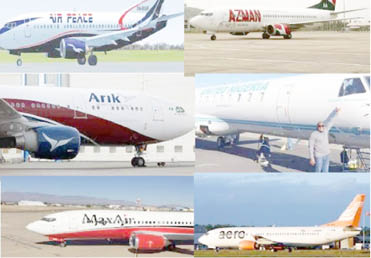
The conference was officially declared open with a call on participants to actively contribute ideas, share professional experiences and build stronger collaborations that will further enhance Nigeria’s aviation safety record.
Airlines
Final 308 Return as Air Peace Completes Evacuation Mission
Evacuated Nigerians disembark from the final Air Peace flight from South Africa at MMIA, Lagos.

The Federal Government’s humanitarian evacuation of stranded Nigerians from South Africa has been successfully completed, with Air Peace returning the final batch of 308 citizens to Lagos, bringing the total number evacuated during the operation to 1,393.
The last evacuation flight landed at the Murtala Muhammed International Airport (MMIA), Lagos, on Wednesday at 11:28 a.m., marking the end of five dedicated evacuation flights operated by Nigeria’s largest airline.
The returnees were welcomed by the Chairman/Chief Executive Officer of the Nigerians in Diaspora Commission (NiDCOM), Hon. Dr. Abike Dabiri-Erewa, and senior immigration officials on behalf of the Federal Government.
Speaking during the reception, Dabiri-Erewa conveyed President Bola Ahmed Tinubu’s message of solidarity to the returnees and assured them of the government’s continued support for their reintegration.
She praised Air Peace and its Chairman, Dr. Allen Onyema, for their contribution to the humanitarian exercise, describing the airline’s participation as another demonstration of its commitment to national service.
The evacuation operation, coordinated by the Federal Government in partnership with Air Peace, was carried out using the airline’s Boeing 777-200 aircraft across five missions.
According to the airline, the successful operation underscores the importance of public-private collaboration in responding to humanitarian emergencies and ensuring the safety of Nigerians abroad.
Air Peace stated that beyond transporting passengers, the evacuation reunited families and provided relief to citizens affected by the security situation in South Africa.
The carrier also noted that it has now undertaken more than 20 humanitarian and evacuation missions since it began operations, supporting emergency response efforts in Nigeria and across the African continent.
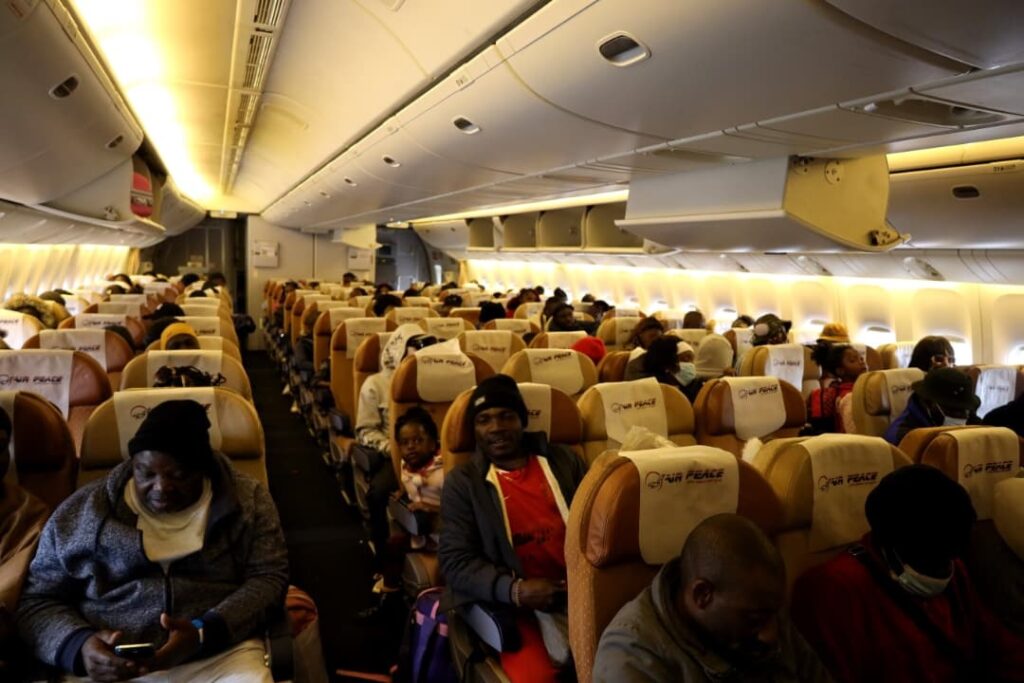
The airline reaffirmed its commitment to partnering with the government on humanitarian interventions and continuing to provide support whenever national emergencies arise.
Airlines
NAHCO Collision Disrupts Air Peace Operations
An Air Peace Airbus A320 damaged after a NAHCO baggage conveyor belt vehicle struck its engine at Murtala Muhammed Airport, Lagos.
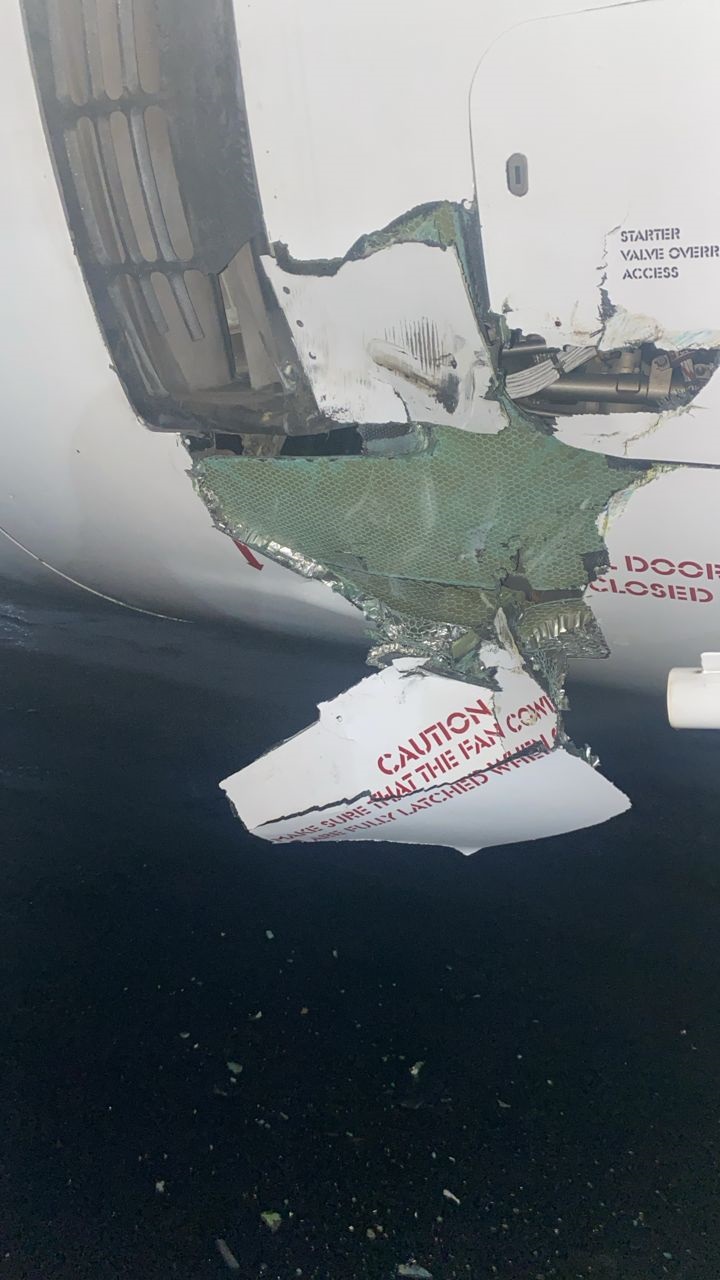
Flight operations on the Air Peace network have been disrupted after a ground handling vehicle belonging to the Nigerian Aviation Handling Company (NAHCO) collided with one of the airline’s Airbus A320 aircraft at the Murtala Muhammed Airport Terminal 1 (MMA1), Lagos.
Air Peace confirmed that the incident occurred shortly after Flight P47427 arrived from Kano and passengers had safely disembarked from the aircraft.
According to the airline, a NAHCO baggage conveyor belt vehicle struck the aircraft’s engine, causing extensive damage and rendering the Airbus A320 unserviceable.
In a statement issued by its management, Air Peace said the damaged aircraft had been scheduled to operate several flights across its domestic network in the coming days, adding that the incident would inevitably affect flight operations.
The airline warned that the unexpected development would lead to delays on several scheduled services, while some flights could be cancelled as it works to adjust its fleet and minimise operational disruptions.
Air Peace apologised to passengers whose travel plans may be affected, assuring them that its operations and customer service teams have been mobilised to provide alternative travel arrangements and necessary assistance where possible.
The airline said it is working closely with the ground handling company and relevant aviation authorities to determine the circumstances surrounding the incident and ensure measures are put in place to prevent a recurrence.

It reiterated that the safety of its passengers, crew and equipment remains its highest priority and thanked customers for their patience, understanding and continued support as it manages the operational challenges arising from the incident.

NCAA Maps Out Eight-Pillar Aviation Strategy

FAAN Rolls Out Biometric V-Pass for Faster, Safer Domestic Air Travel

FLIDAN Pushes Stronger Flight Dispatch Standards to Boost Aviation Safety

Air Peace Expands Domestic Flight Schedule

Gateway International Airport Takes Off as Ogun Joins Nigeria’s Air Map

Nigeria, UAE Firm Sign Landmark Cargo Information Deal
-
 Airlines1 month ago
Air Peace Expands Domestic Flight Schedule
-
 Aviation10 months ago
Gateway International Airport Takes Off as Ogun Joins Nigeria’s Air Map
-
 Aviation10 months ago
Nigeria, UAE Firm Sign Landmark Cargo Information Deal
-

 Airlines10 months ago
₦100m Land Deal: Air Peace Backs Onyema’s Claim on Anambra Airport
-
 Airlines10 months ago
UK Partnership Opens Heathrow, Gatwick Gates for Air Peace – Onyema
-

 Airlines10 months ago
High Airfares, Hot Hotels: Nigeria’s Travel Paradox
-

 AIRPORTS10 months ago
MMA2 Named Nigeria’s Best Cargo Airport, Jibodu Honored
-

 Airlines10 months ago
Aborted Take-off: Air Peace Assures Passengers of Safety on Abuja–Asaba Flight