
Local News
Tinubu Links $1trn Economy to Efficient Transport System
Tinubu Links $1trn Economy to Efficient Transport System


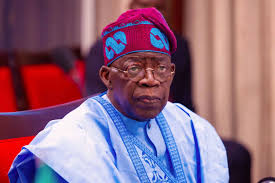
President Bola Tinubu has said Nigeria’s ambition to build a $1 trillion economy depends on an efficient transportation system, warning that poor connectivity could limit the country’s economic competitiveness.
Tinubu said an effective transport network was essential to the growth of every sector, as it connects businesses to markets, facilitates trade and links communities to economic opportunities.
The President spoke at the opening of the eighth National Transport Conference of the Chartered Institute of Transport Administration of Nigeria (CIOTA), themed “Integrated Multimodal Transport Systems for Sustainable Development of Nigeria.”
Represented by the Supervising Minister and Permanent Secretary of the Ministry of Transportation, Olufunsho Olusosun Adebiyi, Tinubu described the conference theme as timely and urgent, noting that transportation was fundamental to economic activities.
He said an efficient transport system connects farms to markets, factories to consumers, seaports to hinterlands and businesses to opportunities, while linking Nigerian communities to the wider African and global economies.
The President commended CIOTA for its role in advancing transportation administration, saying the increasing complexity of Nigeria’s transport system had made professional regulation and effective management essential.
He noted that the country was moving beyond separate road, rail, maritime and aviation operations towards an interconnected transport economy involving inland waterways, seaports, airports, logistics hubs, mass transit systems, intelligent transport systems and digital platforms.
Tinubu said the Federal Government recognised CIOTA as an important partner in developing the professional capacity, standards, ethics and discipline required to manage a modern transportation system.
He stressed that investments in infrastructure must be matched by professional competence, integrity, innovation and accountability to ensure that the facilities deliver their full economic value.
Under the Renewed Hope Agenda, he said his administration had prioritised transportation infrastructure as a major driver of economic growth, national integration, job creation and investment.
“A road that does not connect effectively to a rail terminal, seaport, airport, inland port or logistics centre does not deliver its full economic value,” Tinubu said.
Lagos State Governor, Babajide Sanwo-Olu, also called for improved integration among Nigeria’s transport modes, saying the country’s challenge was not a shortage of roads, railways, ports, airports or waterways, but inadequate connections between them.
Represented by his Special Adviser on Transportation, Sola Giwa, the governor said poor coordination was contributing to delays in freight movement and passenger journeys.
He cited the example of a container that could clear a seaport in one day but spend another week travelling by road to the hinterland, describing the situation as a consequence of weak integration.
Sanwo-Olu also noted that commuters arriving by train at Agbado could still struggle to complete the final leg of their journeys because of inadequate connections with other transport services.
He said Lagos, with more than 20 million residents and limited land for further road expansion, could not overcome congestion simply by widening roads.
According to him, the solution lies in transporting more people in fewer vehicles across different modes, with convenient connections between them.
The governor acknowledged that Lagos had yet to achieve full transport integration but said the state had learnt important lessons from its interventions across the different modes.
Earlier, CIOTA President, Prince Segun Obayendo, said the conference was intended to challenge existing practices, redefine the future of Nigerian transportation and strengthen partnerships among government, professionals, investors, operators and transport users.
Obayendo, who described the event as his fourth and final National Transport Conference as CIOTA president, said Nigeria could not unlock its full economic potential without a safe, efficient, professionally administered, adequately financed and properly integrated transport system.
He said previous conferences had addressed transportation safety and security, infrastructure development, governance reforms and the need to reposition the sector for global competitiveness.
According to him, the current conference brings these concerns together, emphasising that infrastructure, technology and investment require effective governance, professional skills and coordination to deliver their intended benefits.
He urged stakeholders to move from identifying challenges to implementing solutions and replace isolated projects with integrated systems capable of supporting a modern and investment-ready transport economy.
At the event, the Oniru of Iruland, Oba Abdulwasiu Omogbolahan Lawal, was awarded a fellowship of the institute, while Tinubu was among 10 recipients of honorary fellowship awards.
The Managing Director of Planet Projects Limited, Biodun Otunla, delivered the keynote address, while the Alara of Ilara-Epe Kingdom, Oba Olufolarin Ogunsanwo, chaired the opening ceremony.
Local News
NIWA Orders Quarterly Boat Checks, Targets 80% Cut in Accidents
National-Inland-Waterways-Authority-NIWA
The National Inland Waterways Authority (NIWA) has introduced quarterly safety inspections for smaller boats operating on Lagos waterways as part of a drive to reduce boat accidents by 80 per cent, warning that non-compliant vessels will be impounded.
The authority said the inspections would help identify defects arising from frequent use and exposure to water, while stricter enforcement of registration and safety requirements would compel operators to meet established standards.
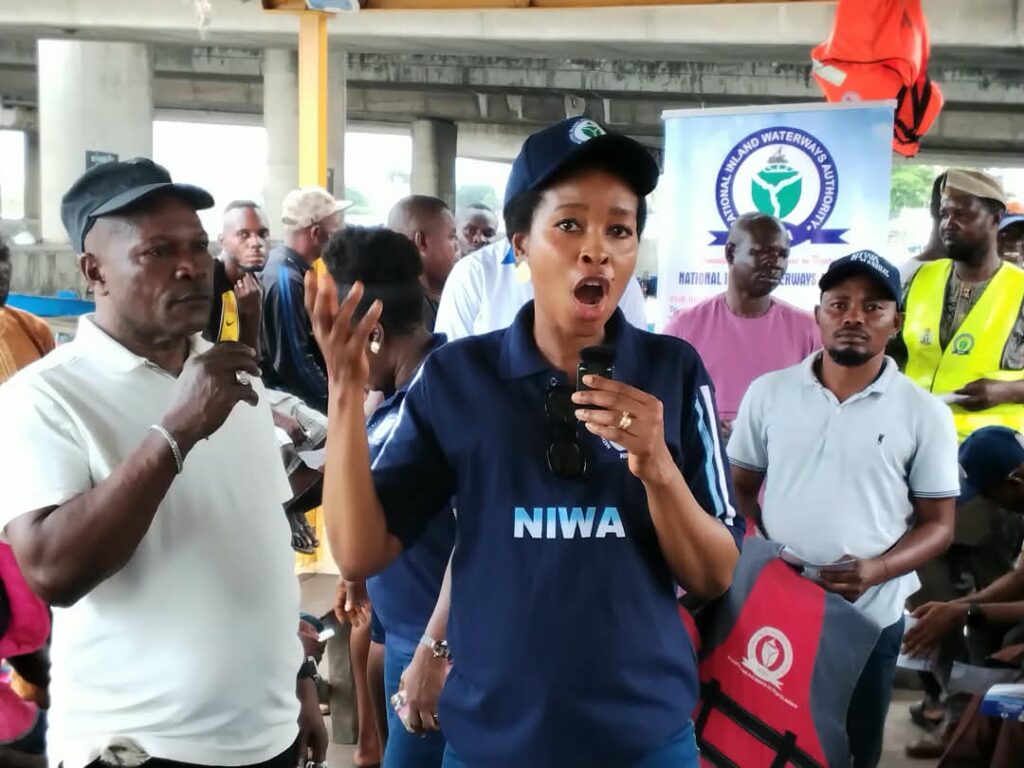
NIWA Lagos Area Manager, Engineer Sarat Braimah, disclosed this on Tuesday during a sensitisation campaign for boat operators and passengers at Liverpool Jetty, Lagos. She was represented by the Head of the Marine Department, NIWA Lagos, Elsie Egwuatu.
Braimah said the authority was strengthening enforcement and public education to address preventable accidents on inland waterways, identifying human error as a major factor in incidents involving boats.
She warned operators who had failed to register their vessels or comply with mandatory inspections to meet the requirements or face sanctions, noting that they had been given sufficient time to regularise their operations.
The NIWA official also urged boat captains to avoid night operations, overloading and navigating under the influence of alcohol, warning that such practices exposed passengers and crew members to danger.
She stressed that wearing life jackets must be a priority for both passengers and operators, adding that compliance with safety procedures was essential to preventing avoidable loss of lives.
On boat captain licensing, Braimah defended the N95,000 training fee, describing it as a one-time payment for the technical knowledge and skills required to operate vessels safely. She said subsequent licence renewals cost N16,500 and are required every three years.
She called on operators to obtain the necessary certifications and comply with all regulatory requirements to avoid penalties.
Beyond vessel safety, Braimah condemned the dumping of refuse into waterways and the construction of toilets over them, warning that such practices undermined environmental sanitation and the sustainability of inland water transportation.
She disclosed that NIWA had begun an initiative to provide waste bins at jetties, with plans to extend the facilities across its waterways network to discourage indiscriminate waste disposal.
The sensitisation exercise forms part of the authority’s engagement with waterways users across Lagos, including operators and passengers around Liverpool, Ipakodo and Marina jetties.
Braimah urged members of the public and other stakeholders to report unsafe practices and regulatory violations, saying cooperation between the authority and waterways users would strengthen compliance and enforcement.
She said regular vessel inspections, sustained safety awareness and stricter adherence to regulations remained central to NIWA’s target of reducing accidents and improving safety across Nigeria’s inland waterways.
Airlines
United Nigeria Airlines Targets January Cargo Flights at Ekiti
United Nigeria Airlines Fleet

United Nigeria Airlines (UNA) plans to commence commercial cargo operations at Ekiti Airport in January 2027, with daily passenger services also in the pipeline as the state government advances infrastructure upgrades.
The airline’s Chairman, Prof. Obiora Okonkwo, announced the plan on Monday during the commissioning of Reeve Energy Limited’s aviation fuel tank farm at the airport, saying the carrier was ready to support the movement of agricultural produce and other goods from Ekiti to markets across Nigeria and, eventually, overseas.
Okonkwo said the airline would be ready to commence cargo services once the state government was prepared to begin commercial exports from the airport. He pledged that United Nigeria Airlines would be the first carrier to lift commercial cargo from the facility when operations begin.
“By January next year, we will activate a cargo section of our flights so that we can work out a deal. As soon as you are ready to start exporting cargo from here, whether to other parts of Nigeria or beyond, we will be ready,” he said.
He added that the airline intended to introduce daily passenger flights to Ekiti, subject to the completion of ongoing airport infrastructure improvements.
The airline chairman described the commissioning of the fuel tank farm as an important development that would support flight operations and provide a foundation for future expansion at the airport.
Okonkwo said reliable aviation fuel supply was particularly important to the airline, which he described as Nigeria’s second-largest consumer of aviation fuel after Air Peace.
He explained that the Ekiti State Government selected United Nigeria Airlines for the partnership after assessing the operational capacity and fleet strength of domestic airlines, rather than following an application or lobbying process by the carrier.
According to him, the airline had sustained its commitment to the state by maintaining services even during periods of low passenger demand.
Ekiti State Governor, Biodun Oyebanji, said his administration was committed to completing the airport’s ongoing infrastructure projects by the end of 2026 to improve its operational capacity and attract further private-sector investment.
Oyebanji said the planned improvements included an upgrade of the airport’s Instrument Landing System (ILS) and the installation of aerodrome ground lighting to support operations beyond daylight hours.
He put the estimated cost of the ground lighting project at more than ₦10 billion, adding that the completed system would enable aircraft to land at the airport at any time, subject to applicable operational and regulatory requirements.
The governor also disclosed that the state government was pursuing an Independent Power Producer arrangement to ensure a reliable electricity supply for the airport and reduce dependence on external power sources.
He commended Reeve Energy Limited for investing in the state and reaffirmed his administration’s commitment to providing an enabling environment for businesses.
The planned cargo service could open additional routes for Ekiti’s agricultural produce and other goods, while the proposed daily passenger flights would improve the state’s air connectivity. Their implementation will depend on cargo-export readiness, infrastructure completion and the relevant operational requirements.
Aviation
AAAU, NCAT Seek Digital Overhaul of Aviation Training
The Acting Vice-Chancellor of the African Aviation and Aerospace University (AAAU), Dr Mustapha Abdullahi, and the Rector of the Nigerian College of Aviation Technology (NCAT), Dr Ismaila Danjuma, at the second international conference organised by AAAU’s Department of Aviation Business in Abuja.
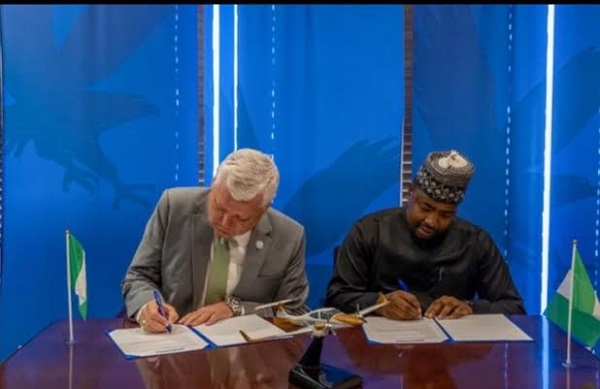
The African Aviation and Aerospace University (AAAU) and the Nigerian College of Aviation Technology (NCAT) have called for a shift towards digital-focused aviation training, warning that traditional methods alone may not adequately prepare professionals for emerging industry challenges.
The institutions said stronger research, innovation and collaboration among training institutions, regulators and industry operators were necessary to equip Africa’s aviation workforce with the skills required to manage technological changes and evolving safety demands.
The call was made on Tuesday at the second international conference organised by AAAU’s Department of Aviation Business in Abuja, where stakeholders examined the future of aviation education amid digital transformation and changing industry requirements.
The Acting Vice-Chancellor of AAAU, Dr Mustapha Abdullahi, said the university was committed to advancing knowledge, influencing policy and promoting research in aviation, aerospace and environmental science.
Abdullahi described the conference as evidence of the institution’s commitment to research and intellectual development, despite being in its formative years. He also acknowledged NCAT’s support, saying collaboration between the institutions could strengthen professional training and aviation capacity development across Africa.
NCAT Rector, Dr Ismaila Danjuma, said aviation training institutions must adapt their programmes to technological innovation, changing regulatory frameworks, emerging safety and security requirements, and evolving passenger expectations.
He noted that Africa’s growing population, rising air traffic and regional integration initiatives, including the African Continental Free Trade Area (AfCFTA) and the Single African Air Transport Market (SAATM), were increasing the demands on the continent’s aviation sector.
According to Danjuma, training institutions must strengthen research, encourage innovation and promote continuous professional development while building closer relationships with universities, regulators and aviation operators.
He stressed that the competence of pilots, aircraft engineers, air traffic controllers, flight dispatchers, safety inspectors, managers and regulators remained critical to aviation safety, operational efficiency and the industry’s long-term sustainability.
Danjuma said NCAT had trained aviation professionals for Nigeria and other African countries for more than 60 years, with its recognition as an International Civil Aviation Organisation Regional Training Centre of Excellence with Platinum status reflecting its contribution to aviation capacity development.
He, however, said the college was focused on preparing professionals not only for existing responsibilities but also for emerging technological and operational challenges.
“We must move from training for current tasks to training for emerging challenges and opportunities,” he said.
The rector also called for research findings and academic discussions to translate into practical improvements in industry operations and policy, stressing that aviation education must evolve alongside the sector it serves.
The Minister of Aviation and Aerospace Development, Festus Keyamo, reaffirmed the Federal Government’s commitment to developing the industry, with digital transformation and sustainability identified as important priorities for Africa’s multimodal transport system.
Keyamo, represented by the ministry’s Deputy Director of Planning, Research and Statistics, Shittu Ayodeji, said preparing the sector for future demands required attention to technological advancement and sustainable development.
The conference highlighted the need for stronger institutional partnerships and updated training approaches to ensure Africa’s aviation workforce can respond effectively to emerging technologies, regulatory changes and increasing operational demands.

FG Pushes Gulf of Guinea Policy to Curb Illegal Fishing

NIWA Orders Quarterly Boat Checks, Targets 80% Cut in Accidents

Ebola Alert: FAAN Strengthens Airport Vigilance, Urges Calm

Air Peace Expands Domestic Flight Schedule

Lufthansa Group to Bring Eurowings to Nigeria in 2027

Gateway International Airport Takes Off as Ogun Joins Nigeria’s Air Map
-
 Airlines4 months ago
Air Peace Expands Domestic Flight Schedule
-
 Airlines2 months ago
Lufthansa Group to Bring Eurowings to Nigeria in 2027
-
 Aviation1 year ago
Gateway International Airport Takes Off as Ogun Joins Nigeria’s Air Map
-

 Airlines1 year ago
₦100m Land Deal: Air Peace Backs Onyema’s Claim on Anambra Airport
-

 Aviation1 year ago
Nigeria, UAE Firm Sign Landmark Cargo Information Deal
-

 Airlines1 year ago
High Airfares, Hot Hotels: Nigeria’s Travel Paradox
-
 Airlines1 year ago
UK Partnership Opens Heathrow, Gatwick Gates for Air Peace – Onyema
-

 AIRPORTS1 year ago
MMA2 Named Nigeria’s Best Cargo Airport, Jibodu Honored