
Business
Uber Exit Tests Nigeria’s E-Hailing Market


Uber’s decision to end its operations in Nigeria after 12 years has put fresh focus on the sustainability of the country’s e-hailing industry, with rising operating costs, intense competition and pressure on drivers emerging as key concerns.
The global ride-hailing company announced that it would wind down its Nigerian operations effective September 2, 2026, following what it described as a thorough review of its business.
Uber, which launched in Lagos in 2014, did not give specific reasons for its withdrawal in the notice to drivers but apologised for the disruption the decision could cause.
The company said its Help Centre would remain available until September 23 to assist customers with final account-related enquiries and indicated that its immediate priority was supporting drivers, riders and local team members through the transition.
The development has raised concerns over the livelihoods of drivers who relied on the platform, although industry stakeholders expect many of them to move to competing services.
An economist and lecturer at Olabisi Onabanjo University, Prof. Sheriffdeen Tella, said the exit could affect employment but was unlikely to have a significant impact on the wider economy, as some affected drivers would migrate to other platforms.
Lagos State Chairman of the Amalgamated Union of App-based Transporters of Nigeria (AUATON), Jaiyesimi Azeez, however, described the development as a signal for a broader review of the operating environment for app-based transport businesses and workers.
Azeez said the immediate concern was the livelihood of drivers who had invested heavily in vehicles, fuel, maintenance and technology to provide services through e-hailing platforms.
He also warned that the departure of one of the major players could affect competition, fares and the range of choices available to passengers.
According to him, the Federal and Lagos State governments, regulators, operators, driver unions, riders and fleet owners should engage in a stakeholders’ dialogue to examine the implications of the exit and develop policies that would support a sustainable e-hailing ecosystem.
The pressure on drivers has also been linked to the rising cost of operating petrol-powered vehicles.
An Uber driver, Tobi Ladipo, said the economics of ride-hailing had become increasingly difficult for drivers using petrol vehicles, as fuel and maintenance costs rose while fares remained under competitive pressure.
Ladipo said the disparity between petrol and CNG costs had become an important factor in determining drivers’ profitability, adding that some drivers had moved to rival platforms in search of better returns.
He said converting a conventional vehicle such as a Toyota Corolla to CNG could cost between N800,000 and N1 million, making the transition difficult for drivers already dealing with high operating expenses.
The exit has also drawn responses from rival operators.
Bolt Nigeria said it had no plans to leave the Nigerian market, with its Public Relations Manager, Femi Adeyemo, saying the company continued to see significant opportunities in the country.
Lagride also said it was expanding its Nigerian operations rather than following Uber’s decision.
The company’s Public Relations Director, Ifeanyi Abraham, said Lagride had recently introduced 400 new vehicles and drivers into the market and expected demand to increase during the final quarter and festive season.
He also said the company was interested in working with state governments on mobility programmes, leveraging its partnership with CIG Motors for vehicle supply, technology, fleet management and driver operations.
Beyond the immediate effect on Uber drivers, Azeez said the development provided an opportunity to strengthen indigenous mobility technology companies, provided they addressed longstanding concerns over fares, commissions and operating costs.
He urged stakeholders to use the transition to examine how drivers could earn sustainable incomes while e-hailing platforms remained commercially viable.

Uber’s departure from Nigeria follows more than a decade of operations in the country and leaves competing platforms to serve a market where affordability, driver earnings and operating costs remain central to the future of app-based mobility.
Airlines
Onyema Hails Fidelity Bank for Repaying $400m Eurobond
Chairman, Air Peace Airlines – Dr. Allen Onyema
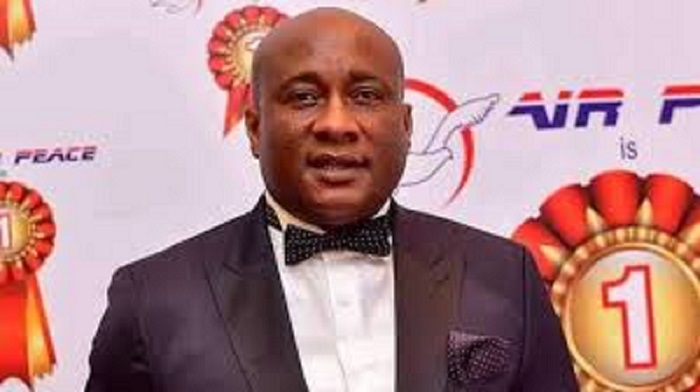
The Chairman and Chief Executive Officer of Air Peace, Dr. Allen Onyema, has commended Fidelity Bank Plc for successfully repaying its $400 million Eurobond at maturity, describing the achievement as evidence of the bank’s financial strength and sound management.
Onyema particularly applauded the bank for financing the repayment entirely from its internal liquidity after meeting its obligations throughout the five-year tenure of the Eurobond.
In a congratulatory message issued on behalf of the Board, Management and Staff of Air Peace Limited, the airline chief attributed the achievement to the strategic leadership of Fidelity Bank’s Managing Director and Chief Executive Officer, Dr. Nneka Onyeali-Ikpe.
He noted that the bank’s successful repayment of the Eurobond, alongside its completion of the recapitalisation exercise ahead of the Central Bank of Nigeria’s stipulated deadline, demonstrated its commitment to sound corporate governance and sustainable financial management.
Onyema also highlighted the importance of financially strong banking institutions to the growth of capital-intensive sectors such as aviation, where access to financing is critical for fleet expansion, operational sustainability and industry development.
He stressed that resilient financial institutions and strong partnerships with indigenous businesses were essential to strengthening Nigeria’s economic competitiveness and supporting national development.
The Air Peace chairman congratulated Onyeali-Ikpe, the bank’s Board, Management and staff on the achievement, expressing confidence in the institution’s capacity to record greater milestones.
He also reaffirmed Air Peace’s goodwill towards Fidelity Bank, wishing the financial institution continued growth, stability and greater accomplishments in Nigeria’s banking industry.
Aviation
Nigeria, Russia Move to Replace 59-Year-Old Air Pact
Nigeria’s Minister of Aviation and Aerospace Development, Festus Keyamo, with members of the Nigerian delegation at the bilateral aviation meeting with Russian officials in Moscow
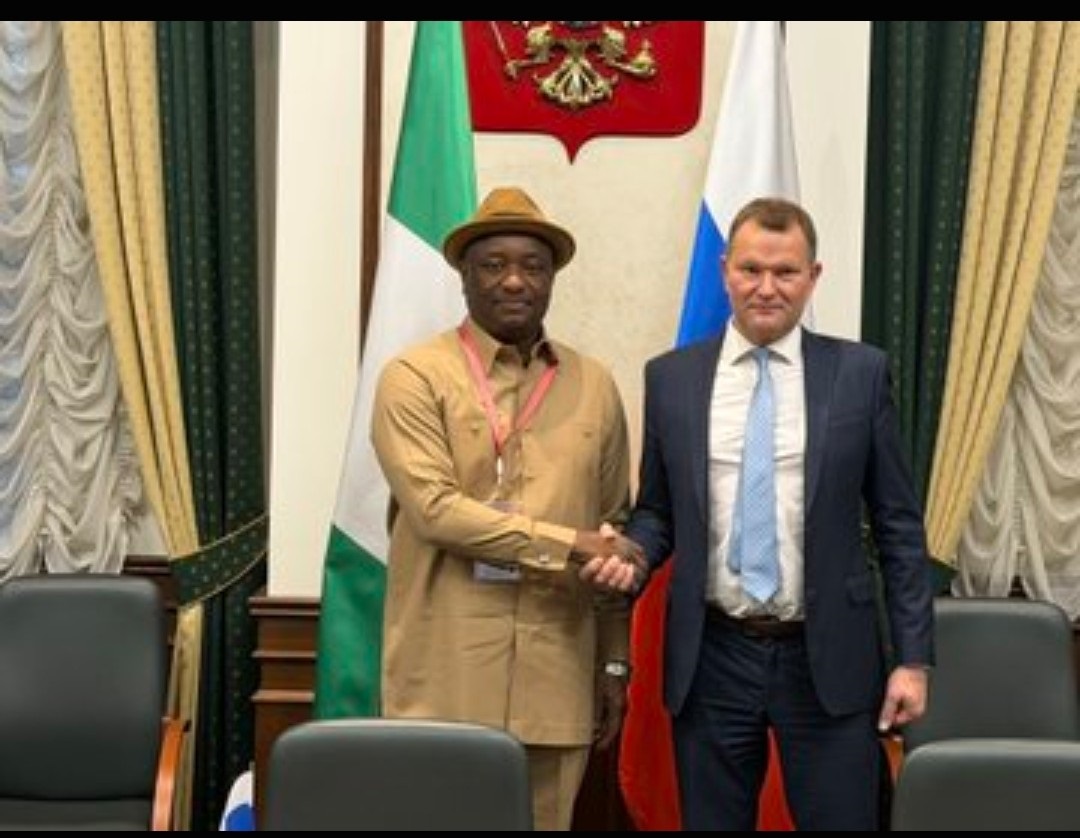
Nigeria and Russia have agreed to renegotiate their 59-year-old Bilateral Air Services Agreement (BASA), with both countries setting April 2027 as the deadline for concluding negotiations and signing a new agreement.
The decision followed a high-level bilateral meeting led by the Minister of Aviation and Aerospace Development, Festus Keyamo, SAN, and Russia’s State Secretary and Deputy Minister of Transport, Dmitry Stanislavovich Zverev, on the sidelines of the Third Russia-Africa Summit in Moscow.
The proposed renegotiation is aimed at replacing the existing agreement, which dates back to 1967, with a modern framework that reflects current developments and emerging opportunities in international aviation.
The development was disclosed in a statement signed by Tunde Moshood, Special Adviser on Media and Communications to the Minister of Aviation and Aerospace Development.
Both countries agreed that negotiations would be concluded within six months, with the new agreement scheduled for signing in Saint Petersburg, Russia, in April 2027.
To ensure that the deadline is met, Nigeria and Russia have constituted their respective negotiating teams to begin work immediately on the proposed agreement.
The revised BASA is expected to strengthen air transport relations between both countries, improve connectivity, promote institutional collaboration and create opportunities for mutually beneficial engagement between their aviation industries.
Beyond the renegotiation of the air services agreement, the meeting also considered other areas of potential cooperation between Nigeria and Russia, with both sides expressing readiness to explore opportunities that could deepen bilateral relations in aviation and related sectors.
The Nigerian delegation included the Director-General of the Nigerian Civil Aviation Authority (NCAA), Capt. Chris Najomo; the Registrar of the Nigerian College of Aviation Technology (NCAT), Dr. Danjuma Adamu Ismaila; and directors from the Federal Ministry of Aviation and Aerospace Development and the NCAA.
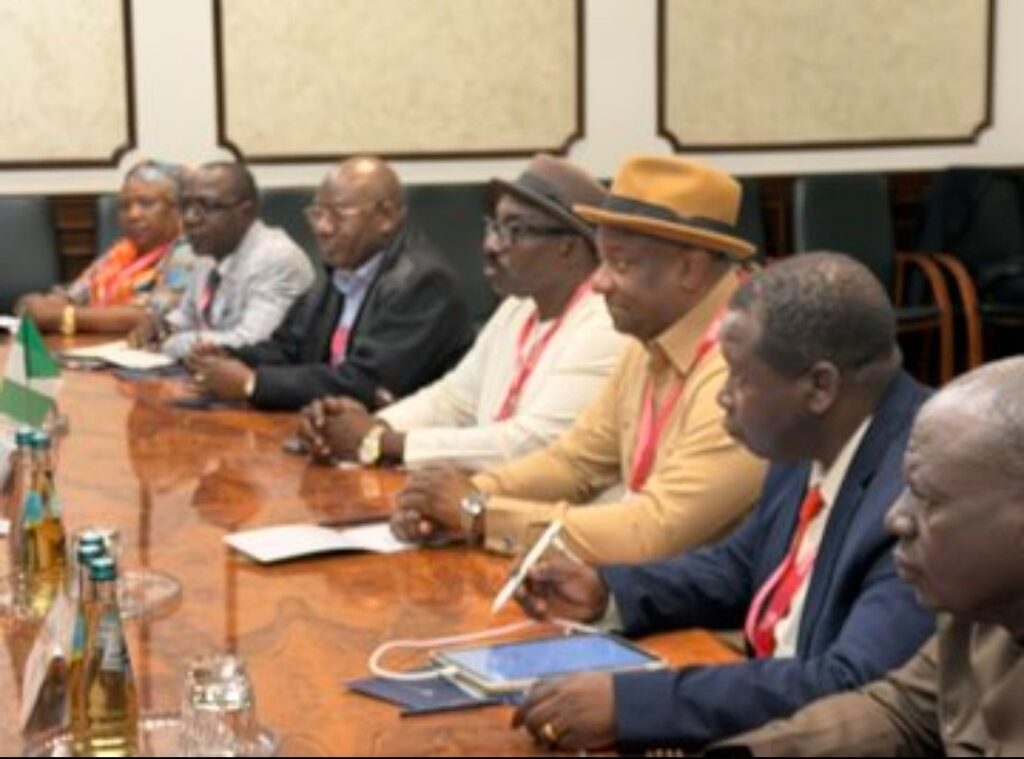
The meeting forms part of Nigeria’s efforts to strengthen international aviation partnerships and update existing bilateral frameworks to reflect changing industry realities.
AIRPORTS
Babalakin Hails Tinubu Over MMA2 Dispute Settlement
Chairman of Bi-Courtney Aviation Services Limited (BASL), Dr. Wale Babalakin, (SAN) in handshake with the Aviation Minister – Mr. Festus Keyamo (SAN) in Abuja
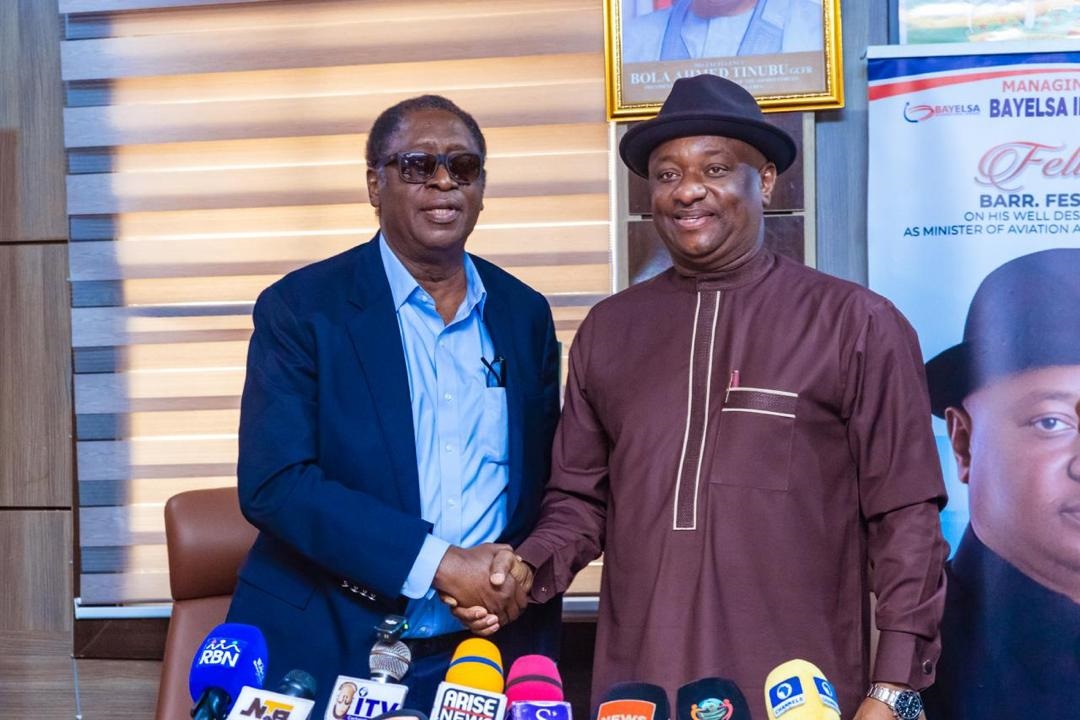
…Pledges quality jobs for Nigerians
The Chairman of Bi-Courtney Aviation Services Limited (BASL), Dr. Wale Babalakin, SAN, has commended President Bola Tinubu for facilitating the settlement of the more than 18-year dispute surrounding the Murtala Muhammed Airport Terminal Two (MMA2), describing the agreement as a victory for Nigeria.
Babalakin gave the commendation at the signing ceremony involving the Federal Government, the Federal Airports Authority of Nigeria (FAAN), Bi-Courtney Limited and Stabilini Visinoni Limited, following the resolution of the longstanding disagreement.
He credited the President’s intervention, facilitated through the Minister of Aviation and Aerospace Development, Festus Keyamo, SAN, with helping to resolve the impasse.
“This is not a win for us alone; it is a win for Nigerians,” Babalakin said, while expressing appreciation to the President, the minister and Nigerians who had followed the dispute over the years.
The development is expected to provide a basis for renewed cooperation among the parties and create opportunities for further infrastructure development and expanded operations at MMA2.
In a statement signed by the Head of Corporate Communications, Bi-Courtney Aviation Services Limited, Mrs. Ajoke Yinka-Olawuyi, the company said the settlement also addresses outstanding issues arising from the parties’ longstanding commercial relationship, including matters relating to the General Aviation Terminal (GAT), which remained under FAAN’s control and operation.
The agreement incorporates reciprocal concessions and revised obligations, providing a framework for the parties to move forward.
Babalakin said the resolution sends a positive signal to investors that longstanding disputes between government and private businesses can be resolved through dialogue and constructive engagement.
He noted that prolonged uncertainty could discourage long-term investment, adding that the settlement presents an opportunity to strengthen confidence in Nigeria’s investment environment.
The agreement is also expected to facilitate progress on key projects at MMA2, including the proposed Hotel and Conference Centre and the commencement of regional flight operations.
According to Babalakin, completing the hotel and conference facility would provide accommodation and meeting facilities for business travellers, corporate organisations and other airport users, while creating employment opportunities in construction, engineering, hospitality and facility management.
The planned regional flight operations, alongside the proposed expansion of the airport apron, are also expected to create opportunities for skilled employment and commercial growth.
Babalakin assured stakeholders that Bi-Courtney would fulfil its obligations under the agreement and work with the relevant parties to implement its provisions.
“We will not disappoint the President, the Ministry of Aviation and Aerospace Development, FAAN or Nigerians,” he said.

He added that the settlement offered an opportunity to strengthen cooperation, advance infrastructure development and realise MMA2’s full potential.

Versat Deepens EXEED’s Push into Nigerian Auto Market

Onyema Hails Fidelity Bank for Repaying $400m Eurobond

CIBN Confers Honorary Fellowship on FAAN MD, Onabanjo-Kuku

Air Peace Expands Domestic Flight Schedule

Lufthansa Group to Bring Eurowings to Nigeria in 2027

Gateway International Airport Takes Off as Ogun Joins Nigeria’s Air Map
-
 Airlines5 months ago
Air Peace Expands Domestic Flight Schedule
-
 Airlines2 months ago
Lufthansa Group to Bring Eurowings to Nigeria in 2027
-
 Aviation1 year ago
Gateway International Airport Takes Off as Ogun Joins Nigeria’s Air Map
-

 Airlines1 year ago
₦100m Land Deal: Air Peace Backs Onyema’s Claim on Anambra Airport
-

 Aviation1 year ago
Nigeria, UAE Firm Sign Landmark Cargo Information Deal
-

 Airlines1 year ago
High Airfares, Hot Hotels: Nigeria’s Travel Paradox
-

 AIRPORTS1 year ago
MMA2 Named Nigeria’s Best Cargo Airport, Jibodu Honored
-
 Airlines1 year ago
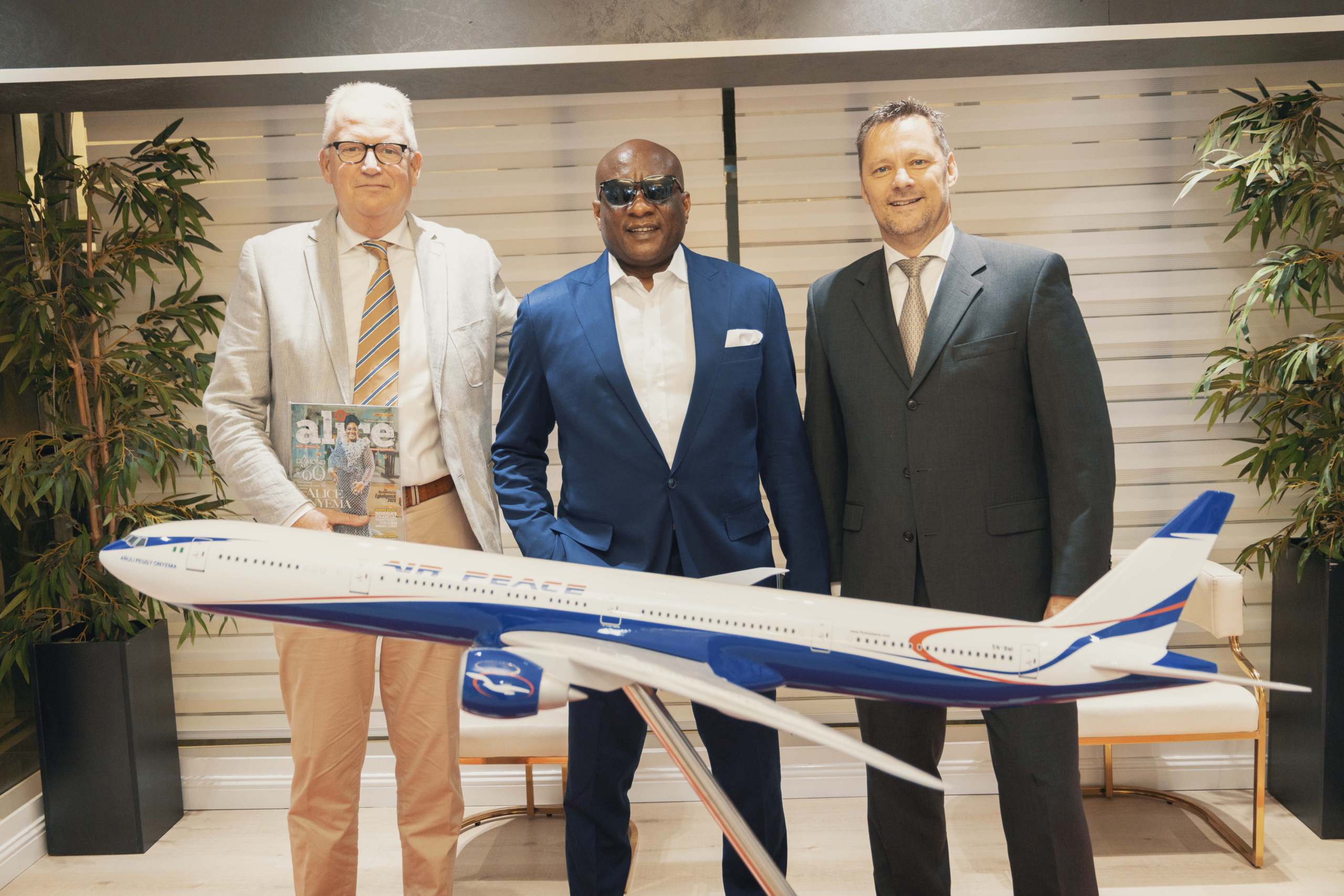
UK Partnership Opens Heathrow, Gatwick Gates for Air Peace – Onyema