
Uncategorized
Why Air Traffic Controllers May Soon Retire at 65
Aviation Minister – Festus Keyamo flanked by the agencies directors during NATCA annual event in Abuja on Tuesday

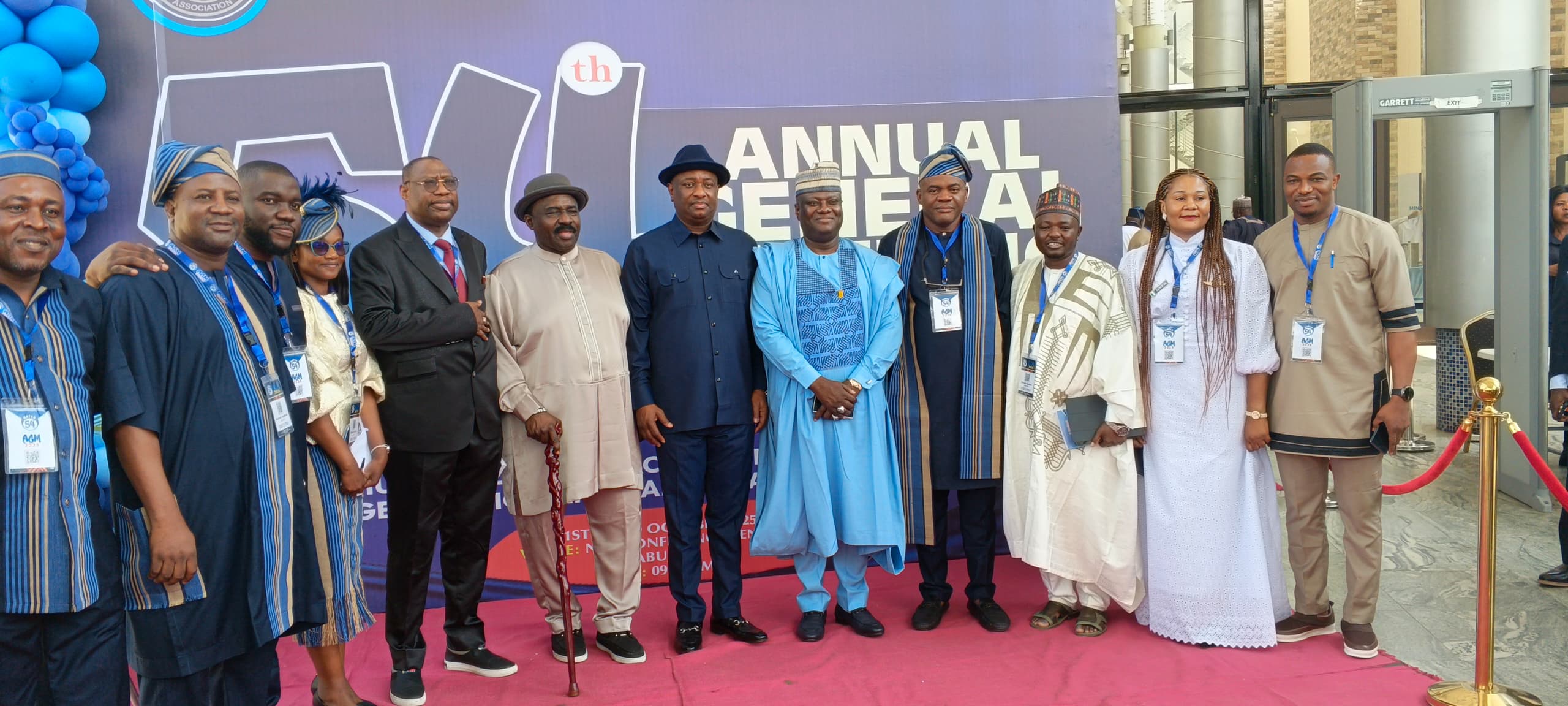
The Federal Government is set to increase the retirement age for Air Traffic Controllers (ATCs) in Nigeria as part of measures to tackle the growing manpower gap in the aviation industry.
Minister of Aviation and Aerospace Development, Festus Keyamo (SAN), made the disclosure on Tuesday during the opening of the 54th Annual General Meeting of the Nigerian Air Traffic Controllers Association (NATCA) held in Abuja.
Keyamo said the government will push for an upward review to retain experienced hands in service, noting that the aviation sector needs to maximize available expertise while preparing the next generation of controllers.
“I’m convinced that this is a matter worth pursuing. If pilots are allowed to fly till 65, Air Traffic Controllers should also be allowed to serve till that age,” he said.
The minister described NATCA as the “apple of the eye of aviation,” assuring members of government’s commitment to their welfare and operational efficiency.
Earlier, NATCA President, Amos Edino, decried the declining number of air traffic controllers, blaming mass retirements, migration abroad, and inter-agency transfers for the workforce shortage.
He warned that by 2030, the manpower gap could widen to 70% if proactive steps are not taken, emphasizing the need for an upward review of the retirement age to 65 years.
Edino, however, highlighted some achievements in the sector, including the international training of over 150 controllers in key aviation systems such as PBN, CPDLC, and UTM Airspace Integration.

He also disclosed that more than 300 controllers benefited from the first-ever local training programs initiated by NAMA, while the long-awaited salary adjustment for controllers was implemented in September 2025.
“This landmark achievement should be extended to other agencies housing controllers, to ensure fairness and equal recognition across the aviation sector,” Edino added.
The 54th AGM, themed “The Human Edge: Capacity Building in the Next Generation Air Traffic Management,” focused on strategies for addressing manpower gaps, improving safety, and sustaining Nigeria’s air navigation services.

Leading automobile manufacturers, transport regulators and key government agencies have confirmed participation in the 2026 Nigeria Auto Industry Summit (NAISU), reinforcing industry support for Nigeria’s transition to electric vehicles (EVs) and Compressed Natural Gas (CNG)-powered transportation.
The summit, organised by the Nigeria Auto Journalists Association (NAJA) in collaboration with the National Automotive Design and Development Council (NADDC), will hold on Thursday, July 30, 2026, at the Radisson Hotel, Ikeja, Lagos.
Major automotive companies that have confirmed participation include Weststar Associates Limited, Toyota (Nigeria) Limited, Jetour Nigeria, Carloha Nigeria, Simba Group, Cedric Masters Group, Coscharis Motors and Lanre Shittu Motors.
The event is also expected to attract policymakers, investors, financial institutions, fleet operators, technology providers and other stakeholders in Nigeria’s automotive industry.
The Corps Marshal of the Federal Road Safety Corps (FRSC), Shehu Mohammed, will deliver the keynote address on road safety, regulation and the deployment of electric and CNG-powered vehicles in Nigeria.
Also confirmed as guest speakers are the Director-General of the National Automotive Design and Development Council (NADDC), Joseph Osanipin, and the Chairman/Chief Executive Officer of the Presidential Initiative on Compressed Natural Gas and Electric Vehicles (Pi-CNG and EV), Ismaeel Ahmed.
The speakers are expected to provide insights into the Federal Government’s automotive industrialisation agenda, clean mobility policies and ongoing initiatives aimed at accelerating the adoption of alternative fuel vehicles across the country.
The 2026 summit is themed “Nigeria’s Clean Mobility Future: The EV and CNG Journey Under the Bola Tinubu Administration.”
Chairman of the 2026 Auto Summit Planning Committee, Rasheed Bisiriyu, said the event comes at a critical period as Nigeria intensifies efforts to reduce transportation costs, lower carbon emissions and encourage greater investment in cleaner mobility solutions.
According to him, the summit will bring together government officials, automotive manufacturers, regulators, energy experts and transport stakeholders to review ongoing reforms and develop practical strategies for advancing the country’s clean mobility agenda.
Bisiriyu said discussions would focus on expanding EV charging infrastructure and CNG refuelling stations, promoting local vehicle assembly, improving consumer awareness, attracting private sector investment and strengthening the regulatory framework needed to support sustainable transportation.
He added that the summit is designed to move beyond policy discussions by generating practical recommendations capable of accelerating Nigeria’s transition to cleaner mobility.
NAJA Chairman, Theodore Opara, said the annual summit has become one of Nigeria’s foremost automotive policy dialogue platforms, bringing together public and private sector stakeholders to address critical issues affecting the industry’s growth.
He stressed that achieving Nigeria’s clean mobility objectives requires collaboration among regulators, manufacturers, energy providers, transport operators, safety agencies and consumers.
Organisers expressed confidence that the summit would generate actionable recommendations to support the Federal Government’s drive to deepen investment in alternative fuel technologies, strengthen local automotive manufacturing, improve transport sustainability and position Nigeria as a leading player in Africa’s emerging clean mobility ecosystem.
Uncategorized
United Nigeria Targets UK, US, West Africa Expansion
Chief Commercial Officer of the airline, Adedayo Olawuyi

…Says it is now Nigeria’s second-largest carrier
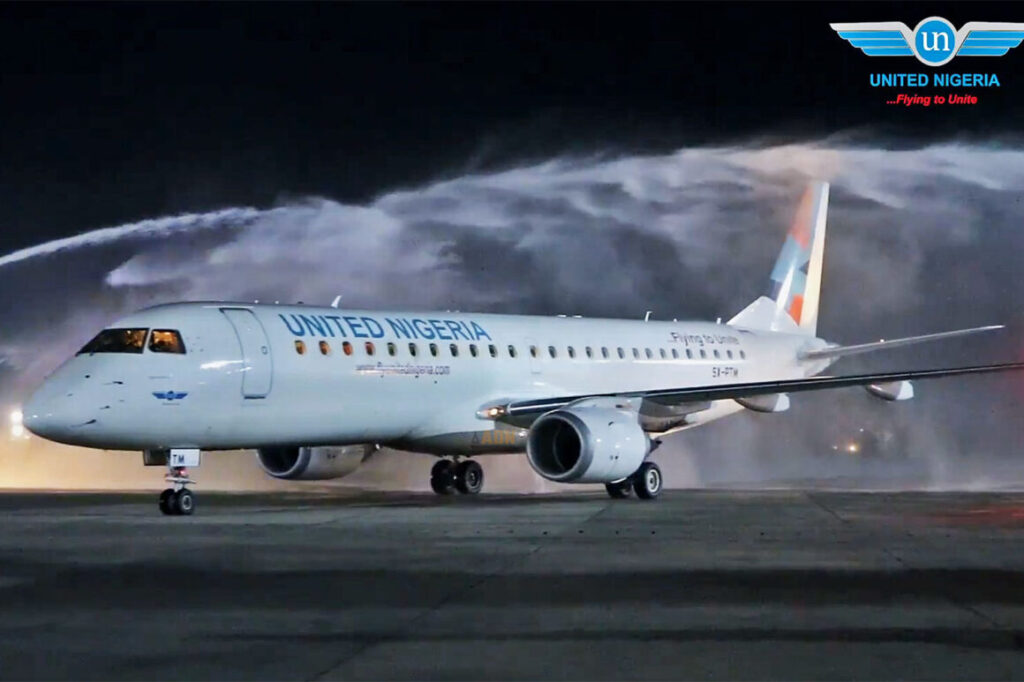
United Nigeria Airlines has unveiled an ambitious expansion plan that will see it launch services to several West African countries, Europe, North America and the Middle East within the next two years, as part of efforts to strengthen Nigeria’s presence in regional and international aviation.
Chief Commercial Officer of the airline, Adedayo Olawuyi, disclosed this during an interactive session with aviation journalists, saying the carrier is already processing regulatory approvals and aircraft acquisitions to support the expansion.
According to him, United Nigeria, which currently operates domestic services to 15 destinations and daily flights to Accra, Ghana, intends to extend operations to Monrovia, Banjul, Dakar, Abidjan and Conakry in the short term before expanding to Douala, Libreville and Johannesburg.
Beyond Africa, Olawuyi said the airline has also commenced processes to begin operations to the United Kingdom, the United States, Canada, Turkey, Dubai and Saudi Arabia over the next six to 24 months, subject to aircraft deliveries and regulatory approvals.
He added that the airline’s planned partnership with Guinea-Bissau to establish a national carrier would further deepen its footprint across West Africa.
To support the expansion, Olawuyi said United Nigeria is pursuing interline and code-share agreements with domestic and foreign airlines, noting that collaboration remains essential to accessing highly competitive international markets.
“You can’t do anything by yourself. If you want to go far, you go together,” he said, adding that discussions with several airlines were at advanced stages.
The airline executive argued that stronger Nigerian carriers were needed to reduce the dominance of foreign airlines on international routes, saying passengers travelling within West Africa currently endure multiple connections because of the absence of direct Nigerian-operated services.
He said United Nigeria would deploy aircraft that match passenger demand on each route to ensure commercial sustainability while stimulating new markets through direct connectivity.
Olawuyi also revealed that the airline has become Nigeria’s second-largest carrier by passenger traffic and capacity, dismissing suggestions that it was merely closing in on the position.
“We are the second-largest airline by capacity and traffic in the country. Only one airline is bigger than us for now,” he stated.
He disclosed that the airline currently transports between 120,000 and 130,000 passengers monthly while strengthening its operational structures to sustain future growth.
According to him, domestic operations remain the airline’s priority because they provide the financial backbone needed to support regional and long-haul expansion.
The commercial chief acknowledged persistent operational challenges, particularly rising aviation fuel prices, bird strikes and inadequate airport infrastructure.
He described bird strikes as one of the airline’s most serious operational concerns, recalling a period when four different aircraft suffered bird strikes within four consecutive days, leading to flight disruptions, passenger compensation and aircraft repairs.
Olawuyi said the airline continues to work with the Federal Airports Authority of Nigeria to improve bird hazard management while maintaining transparent communication with passengers during delays and cancellations.
He also called for improved transit infrastructure at Nigerian airports, saying efficient hub operations would significantly enhance regional connectivity and strengthen Nigeria’s competitiveness against major African aviation hubs.
Despite the sharp rise in aviation fuel costs, from about ₦900 per litre in late 2024 to between ₦1,600 and ₦1,700 per litre currently, he said airlines had been unable to fully transfer the additional costs to passengers because of intense market competition.
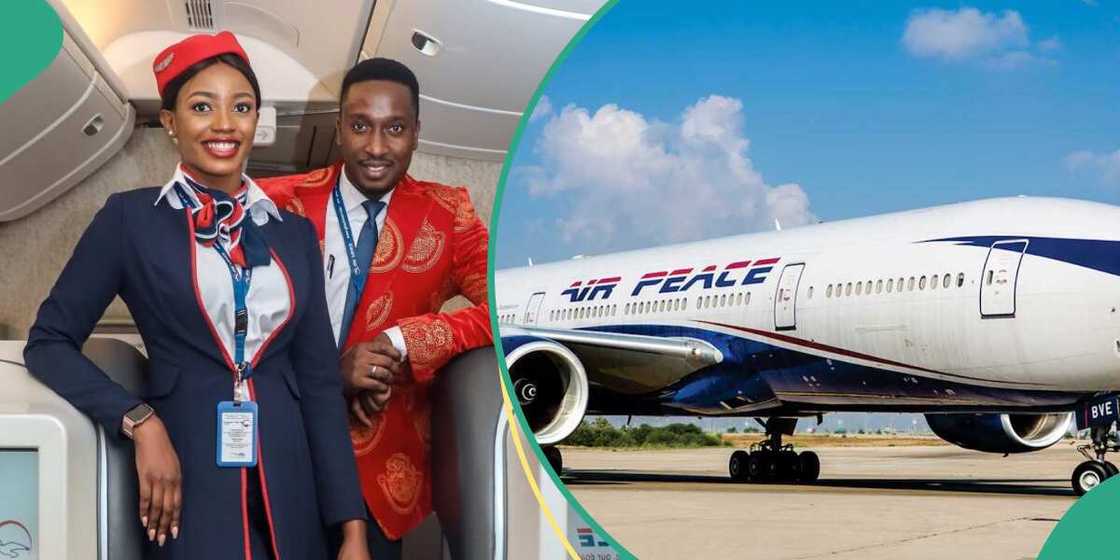
Air Peace has taken a significant step in its international growth journey after receiving approval from Brazilian aviation authorities to operate scheduled flights to the South American country.
The approval clears the path for what could become the first direct Nigeria-Brazil route operated by a Nigerian airline, dramatically reducing travel time between both countries to about seven hours.
Currently, journeys between Nigeria and Brazil often require multiple connections and can take nearly two days. Air Peace says direct flights would make travel easier for tourists, business travellers, investors and families while strengthening links between both nations.
The Brazilian authorization comes amid a wider expansion drive by the airline, which is pursuing approvals for flights to Toronto and New York and preparing to resume services to Jeddah and Guangzhou.
Air Peace is also planning to introduce flights to Manchester, adding another major destination to its international network.
The airline recently announced new routes to four African cities—Douala, Libreville, Bamako and Conakry—as part of efforts to improve connectivity across West and Central Africa.
Beyond passenger travel, the proposed Brazil route is expected to boost cargo operations and support growing trade relations between Nigeria and South America.
With an expanding route network spanning Africa, Europe, the Caribbean and potentially South America and North America, Air Peace is steadily positioning itself as one of Africa’s fastest-growing international airlines.

NCAA Maps Out Eight-Pillar Aviation Strategy

FAAN Rolls Out Biometric V-Pass for Faster, Safer Domestic Air Travel

FLIDAN Pushes Stronger Flight Dispatch Standards to Boost Aviation Safety

Air Peace Expands Domestic Flight Schedule

Gateway International Airport Takes Off as Ogun Joins Nigeria’s Air Map

Nigeria, UAE Firm Sign Landmark Cargo Information Deal
-
 Airlines1 month ago
Air Peace Expands Domestic Flight Schedule
-
 Aviation10 months ago
Gateway International Airport Takes Off as Ogun Joins Nigeria’s Air Map
-
 Aviation10 months ago
Nigeria, UAE Firm Sign Landmark Cargo Information Deal
-

 Airlines10 months ago
₦100m Land Deal: Air Peace Backs Onyema’s Claim on Anambra Airport
-
 Airlines10 months ago
UK Partnership Opens Heathrow, Gatwick Gates for Air Peace – Onyema
-

 Airlines10 months ago
High Airfares, Hot Hotels: Nigeria’s Travel Paradox
-

 AIRPORTS10 months ago
MMA2 Named Nigeria’s Best Cargo Airport, Jibodu Honored
-

 Airlines10 months ago
Aborted Take-off: Air Peace Assures Passengers of Safety on Abuja–Asaba Flight