
Aviation
Nigeria Soars to 91.4% Aviation Safety Rating After ICAO Audit
Director-General of NCAA, Capt. Chris Ona Najomo, and ICAO representatives, flanked by the Managing Director of FAAN, Mrs. Olubunmi Kuku, alongside directorates from FAAN, NCAA and other aviation agencies, during a group photograph at the close of the ICAO Coordinated Validation Mission in Abuja.


Nigeria’s aviation sector has recorded a major global milestone, surging to a 91.45 per cent safety rating following the latest audit by the International Civil Aviation Organization (ICAO).
The high score, announced at the close of the ICAO Coordinated Validation Mission (ICVM) in Abuja, marks a dramatic leap from the country’s previous 70.12 per cent rating recorded in 2023, firmly placing Nigeria above global safety benchmarks.
Director-General of Civil Aviation, Capt. Chris Ona Najomo, described the outcome as a strong validation of Nigeria’s commitment to aviation safety and regulatory excellence.
He noted that the ICVM audit serves as a critical independent assessment of the country’s oversight systems, identifying both strengths and areas for improvement.
“This process has provided a clear picture of where we stand globally, while also guiding our continuous improvement efforts,” Najomo said during the closing briefing.
The DGCA expressed confidence that the final validation of the audit results would reflect even greater improvements, citing the extensive corrective actions already implemented and the strong evidence submitted to ICAO.
Nigeria’s turnaround follows an aggressive reform drive after its 2023 audit shortfall, when the country fell below the global safety threshold. Authorities responded with detailed root cause analyses and the implementation of ICAO-approved Corrective Action Plans, which have now yielded measurable results.
Najomo commended ICAO auditors for their professionalism and assured that all recommendations would be fully implemented to sustain the upward trajectory.
He also credited the Federal Ministry of Aviation and Aerospace Development, led by Minister Festus Keyamo, for providing the policy support that enabled the successful audit outcome.
Key aviation agencies, including FAAN, NSIB, NiMet and NAMA, along with operators and technical teams, were recognised for their coordinated effort in achieving the milestone.

With this new rating, Nigeria strengthens its position as one of Africa’s leading aviation safety jurisdictions, boosting investor confidence and reinforcing public trust in the nation’s air transport system.
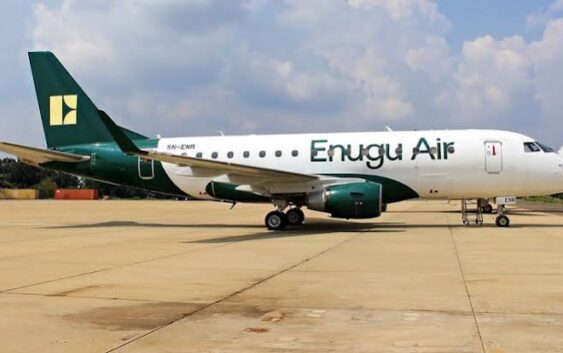
Enugu Air is set to reposition Enugu as a regional aviation gateway with the launch of direct flights from Akanu Ibiam International Airport to Douala, Cameroon, opening a new connection between South-Eastern Nigeria and Central Africa.
The new Enugu-Douala service, scheduled to commence on September 23, will operate twice weekly on Mondays and Wednesdays with an Embraer E170 aircraft.
Beyond connecting Nigeria and Cameroon, the airline said the new route is structured to make Enugu a convenient connecting point for passengers travelling from Lagos and Abuja to the Central African market.
Chief Operating Officer of Enugu Air, Ugonna Agubuokwu, said the new service would expand the role of Enugu in regional air travel by bringing businesses, families and commercial opportunities in Nigeria and Cameroon closer together.
“This is more than the introduction of a new route; it is about creating stronger connections between Nigeria and Cameroon and making regional travel more accessible, convenient and seamless for our passengers,” Agubuokwu said.
The airline said the new service would particularly provide traders and business travellers from the South-East with a direct alternative to travelling through Lagos before connecting to Cameroon or undertaking lengthy overland journeys.
Under the schedule, flights will depart Enugu at 12:45 p.m. and arrive at Douala International Airport at 1:45 p.m. The return flight will leave Douala at 2:30 p.m. and arrive in Enugu at 3:30 p.m.
Agubuokwu said the timing was deliberately designed to accommodate passengers connecting from Lagos and Abuja, potentially allowing travellers from the two major Nigerian cities to use Enugu as their gateway to Douala.
“The timing has been optimised so that passengers can conveniently connect from Lagos and Abuja. For business, for opportunity, and for the connections that matter, Africa is closer than you think,” he said.
The launch marks a shift in Enugu Air’s operations from an exclusively domestic network to regional services, with the airline seeking to extend the reach of its Enugu-based operations beyond Nigeria.
Its existing domestic network covers Lagos, Abuja, Port Harcourt, Kano, Asaba, Benin City, Owerri and Warri.
With the introduction of the Douala route, Enugu is expected to take on a new role within the airline’s network, serving not only passengers originating from the South-East but also travellers from other parts of Nigeria seeking access to Central and West African destinations.
The development is also expected to strengthen direct air connectivity between the South-East and Cameroon by providing an alternative to itineraries that require passengers to connect through Lagos or use road transportation for part of the journey.
The regional expansion forms part of the economic development agenda of Enugu State Governor, Peter Mbah, under which the state-backed airline has expanded its domestic operations and is now extending its network beyond Nigeria.
The Enugu-Douala route therefore represents the airline’s first step into regional operations and gives the South-East a direct international air connection to Cameroon from Enugu.
The new service is expected to support movement between the two markets for business, trade, family visits and other forms of regional travel while strengthening Enugu’s position within the wider African aviation network.
Airspace
NAMA: Safety Forced Removal of Lagos CAT III ILS
Director of Safety, Electronic and Engineering Services (DSEES), NAMA. Engineer Teresa Ihenachor,

The Nigerian Airspace Management Agency (NAMA) has said the Category III Instrument Landing System (CAT III ILS) installed at the Murtala Muhammed International Airport (MMIA), Lagos, was removed because of persistent failures that raised safety concerns.
The agency’s Director of Safety, Electronic and Engineering Services (DSEES), Teresa Ihenachor, who disclosed this in Lagos, said NAMA did not abandon the equipment as alleged, stressing that its removal was a safety-driven decision after repeated attempts to restore its reliability failed.
Ihenachor spoke on the sidelines of the 30th Annual Conference of the League of Airport and Aviation Correspondents (LAAC) in Lagos.
She said the Lagos CAT III ILS had a history of unserviceability before she assumed office, adding that she personally supervised more than seven repairs of the system within a short period, but the equipment continued to develop faults.
“We did not abandon anything. It was removed for safety,” Ihenachor said.
According to her, the equipment was highly sensitive to its operating environment and continued to produce unreliable performance even after it had been downgraded from CAT III to CAT II.
She explained that the problem was not simply the ILS itself but the absence of the supporting infrastructure and environmental conditions required for CAT III operations in Nigeria.
Ihenachor specifically pointed to the condition of airfield lighting at the Lagos airport, which she said remained at CAT I, making the deployment of a CAT III ILS incompatible with the existing infrastructure.
“Our airfield lighting is still on CAT I. Most of our equipment are downgraded to CAT II. So, having CAT III with the airfield lighting at CAT I is very difficult,” she said.
She added that even after the Lagos system was downgraded to CAT II, it failed to operate optimally, forcing the agency to consider the safety implications of keeping an unreliable navigational aid at one of the country’s busiest airports.
Ihenachor said the frequent failures became a concern because an ILS is expected to provide reliable guidance to aircraft, particularly during poor visibility and other conditions requiring precision approach support.
She said NAMA consequently obtained permission from the supervising ministry to remove the problematic equipment and install a new CAT II ILS that was available for another station.
“So, I wrote, I took permission from them because of the safety nature. So, I installed a brand new ILS, this NORMARC CAT II which is functioning up to now,” she said.
The DSEES said the replacement CAT II system has continued to function reliably, with the agency addressing the power-related challenges through the use of a solar power system.
She maintained that the CAT III equipment had not been rendered useless, explaining that the systems could still be deployed at other airports where their operational requirements could be met.
According to her, the CAT III system at Abuja was also downgraded to CAT II because of the same limitations, while plans were being considered to redeploy some of the equipment to other airports.
“The one in Abuja, it’s not functioning, but it’s downgraded. And you imagine,” she said, adding that equipment could be deployed to locations such as Calabar where there is a need for ILS.
Ihenachor stressed that CAT III operations require more than the installation of the ILS equipment, noting that supporting facilities such as appropriate airfield lighting, stable power supply and other associated technical requirements must be available.
She said NAMA had addressed the power challenge but noted that airfield lighting was under the responsibility of the Federal Airports Authority of Nigeria (FAAN).
“The bottom line is CAT III cannot function in Nigeria due to non-compliance with the environmental requirements. Not only environmental, there’s an associated requirement that it needs. Like I told you, airfield lighting,” she said.
The NAMA director advised that the supporting infrastructure should be upgraded before the deployment of CAT III ILS equipment, arguing that acquiring sophisticated equipment without first adapting the airport environment to its requirements could undermine its effectiveness.
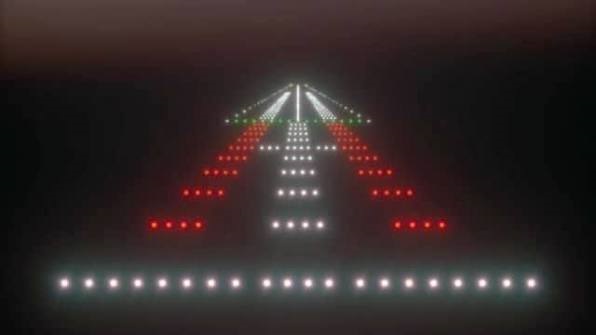
She said the experience with the Lagos installation demonstrated the importance of matching navigational equipment with the infrastructure and environmental conditions of the airport where it would be deployed.
Ihenachor also defended NAMA’s response to the fire incident that affected the airport’s control tower facilities earlier in the year, saying the agency quickly deployed a mobile control tower and adapted it to meet its operational requirements.
She said NAMA installed additional facilities in the mobile tower because the equipment, as supplied, did not contain everything required for its operations.
According to her, the agency later identified a power shortfall caused by the additional equipment it had installed and subsequently upgraded the power capacity.
She said the agency also subjected the facility to a safety assessment before air traffic controllers were allowed to return to the tower.
Ihenachor said the agency had additionally deployed mobile radio transceiver equipment as a safety backup, allowing air traffic controllers to communicate with and control aircraft when necessary.
She stressed that safety considerations remained central to NAMA’s decisions on navigational and air traffic management equipment.

The clarification comes amid public questions over the status of the CAT III ILS systems acquired for Lagos and Abuja. NAMA has separately disputed reports that the systems cost ₦7.58 billion, stating that the approved contract for the supply and installation of CAT III-capable ILS and Distance Measuring Equipment for the two airports was ₦1.188 billion.
Airlines
Air Peace: 85% of August Delays Caused by External Factors
Air_Peace,_5N-BQP,_Boeing_737-33R

Air Peace has disputed the Nigeria Civil Aviation Authority’s (NCAA) August 2026 flight disruption report, saying only 15 per cent of the delays it recorded during the month were caused by internal operational factors.
The airline said the remaining 85 per cent of its delays were triggered by external factors, including airport congestion, adverse weather, bird strikes, airport infrastructure limitations, industrial action and damage to its aircraft by a ground handling company.
Air Peace, in a statement signed by its Chief Operating Officer, Oluwatoyin Olajide, also challenged the accuracy of the NCAA’s reported flight volume, saying it operated 2,564 flights in August, rather than the 1,864 flights contained in the regulator’s report.
The airline said the omission of more than 700 flights from the NCAA’s data pool distorted the calculation of its operational performance and artificially increased its reported delay percentage.
According to Air Peace, an internal review of its August 2026 flight data showed that 391 flights were affected by internal factors, representing 15 per cent of the delays recorded during the month.
It said the internal delay factors were largely related to technical issues requiring unscheduled aircraft maintenance and fuel-related challenges.
The airline, however, said the overwhelming majority of the disruptions resulted from circumstances outside its control.
Air Peace identified airport congestion and traffic as the largest external contributor, accounting for more than 51 per cent of the external delays it experienced during the month.
According to the airline, aircraft were frequently held on the ground or placed in holding patterns because of congestion and airport capacity limitations.
It also cited bird strikes as a significant source of disruption, particularly the incident involving its aircraft, 5N-BYG, in Abuja.
Air Peace said the aircraft suffered damage to its inlet cowl after being struck by a bird, with the damage requiring about $1.8 million to repair.
The airline said the aircraft, which normally operates a minimum of eight sectors daily and carries about 1,000 passengers, was removed from service for more than a week before the damaged inlet cowl was replaced.
It said the withdrawal of the aircraft consequently affected subsequent flight rotations and contributed to operational disruptions.
Air Peace also attributed part of its August delays to airport facilities and infrastructure, saying deficiencies and unexpected breakdowns restricted seamless boarding and departure operations.
Adverse weather conditions during the month were another major factor cited by the airline, which said the rainy season resulted in mandatory safety holds and several flight diversions.
According to the airline, a single diversion could generate almost three hours of consequential delay as aircraft and crew rotations were affected.
Air Peace questioned how such delays could reasonably be attributed to the airline when they resulted from safety-related decisions arising from weather conditions.
The airline said it nevertheless continued to support affected passengers, including providing hotel accommodation for passengers disrupted by external circumstances, despite such interventions going beyond what it described as normal industry obligations.
Another major factor identified by Air Peace was industrial action involving aviation unions.
The airline said an unprecedented picketing of its operations by aviation union members disrupted its flights for more than 14 days following the industrial action that began on August 11.
It said the effects of the disruption continued beyond the initial period, resulting in flight cancellations, rescheduling and consequential delays.
Air Peace also disclosed that one of its aircraft was damaged by a ground handling company, resulting in the aircraft being removed from active operations for more than 14 days.
The airline said the cumulative impact of these external factors made it inaccurate to portray Air Peace as primarily responsible for the delays recorded during the month.
“Again, the narrative that Air Peace is primarily responsible for these delays is completely false. The majority of the delays experienced by our passengers were driven by external factors and completely outside of our control,” the airline said.
Air Peace also questioned the timing and methodology of the NCAA report, asking why the regulator began its monthly reporting series with August after publishing its first- and second-quarter reports on July 31.
The airline said there was no equivalent monthly data for July, yet the NCAA released detailed August airline delay figures just 13 days after the end of the month.
It argued that the speed of the August publication should have been accompanied by adequate disclosure of the extraordinary operational circumstances that affected the aviation sector during the month.
Air Peace said the report should have clearly identified the causes of delays attributed to individual airlines instead of presenting figures it considered inaccurate and capable of damaging the reputation of operators.
The airline urged the NCAA to review and audit its data collection methods to ensure that future reports accurately reflect airlines’ actual flight volumes and distinguish between internal operational delays and disruptions caused by external factors.
It said accurate attribution was important because airlines could not safely or logistically eliminate delays caused by airport congestion, inadequate infrastructure, adverse weather and other systemic challenges.
Air Peace said it had invested heavily in its fleet, crew availability, continuous training and maintenance protocols, adding that it remained committed to safety, improved on-time performance and passenger satisfaction.
The airline, however, acknowledged that it would continue to optimise its internal processes to reduce delays arising from factors within its control.
“We have restrained ourselves from making these facts public before now, but we have now been pushed beyond acceptable limits, hence the need to go public and state the facts the way they are,” Air Peace said.
The airline maintained that only 391 flights, representing 15 per cent of its August delays, should be attributed to internal operational factors and called on the NCAA to review the disputed figures and causal classifications.

Enugu Air Opens Enugu-Douala Regional Link

NAMA: Safety Forced Removal of Lagos CAT III ILS

Air Peace: 85% of August Delays Caused by External Factors

Air Peace Expands Domestic Flight Schedule

Lufthansa Group to Bring Eurowings to Nigeria in 2027

Gateway International Airport Takes Off as Ogun Joins Nigeria’s Air Map
-
 Airlines3 months ago
Air Peace Expands Domestic Flight Schedule
-
 Airlines4 weeks ago
Lufthansa Group to Bring Eurowings to Nigeria in 2027
-
 Aviation12 months ago
Gateway International Airport Takes Off as Ogun Joins Nigeria’s Air Map
-

 Airlines12 months ago
₦100m Land Deal: Air Peace Backs Onyema’s Claim on Anambra Airport
-

 Aviation12 months ago
Nigeria, UAE Firm Sign Landmark Cargo Information Deal
-

 Airlines12 months ago
High Airfares, Hot Hotels: Nigeria’s Travel Paradox
-
 Airlines12 months ago
UK Partnership Opens Heathrow, Gatwick Gates for Air Peace – Onyema
-

 AIRPORTS1 year ago
MMA2 Named Nigeria’s Best Cargo Airport, Jibodu Honored