
Airlines
Air Peace: 85% of August Delays Caused by External Factors
Air_Peace,_5N-BQP,_Boeing_737-33R


Air Peace has disputed the Nigeria Civil Aviation Authority’s (NCAA) August 2026 flight disruption report, saying only 15 per cent of the delays it recorded during the month were caused by internal operational factors.
The airline said the remaining 85 per cent of its delays were triggered by external factors, including airport congestion, adverse weather, bird strikes, airport infrastructure limitations, industrial action and damage to its aircraft by a ground handling company.
Air Peace, in a statement signed by its Chief Operating Officer, Oluwatoyin Olajide, also challenged the accuracy of the NCAA’s reported flight volume, saying it operated 2,564 flights in August, rather than the 1,864 flights contained in the regulator’s report.
The airline said the omission of more than 700 flights from the NCAA’s data pool distorted the calculation of its operational performance and artificially increased its reported delay percentage.
According to Air Peace, an internal review of its August 2026 flight data showed that 391 flights were affected by internal factors, representing 15 per cent of the delays recorded during the month.
It said the internal delay factors were largely related to technical issues requiring unscheduled aircraft maintenance and fuel-related challenges.
The airline, however, said the overwhelming majority of the disruptions resulted from circumstances outside its control.
Air Peace identified airport congestion and traffic as the largest external contributor, accounting for more than 51 per cent of the external delays it experienced during the month.
According to the airline, aircraft were frequently held on the ground or placed in holding patterns because of congestion and airport capacity limitations.
It also cited bird strikes as a significant source of disruption, particularly the incident involving its aircraft, 5N-BYG, in Abuja.
Air Peace said the aircraft suffered damage to its inlet cowl after being struck by a bird, with the damage requiring about $1.8 million to repair.
The airline said the aircraft, which normally operates a minimum of eight sectors daily and carries about 1,000 passengers, was removed from service for more than a week before the damaged inlet cowl was replaced.
It said the withdrawal of the aircraft consequently affected subsequent flight rotations and contributed to operational disruptions.
Air Peace also attributed part of its August delays to airport facilities and infrastructure, saying deficiencies and unexpected breakdowns restricted seamless boarding and departure operations.
Adverse weather conditions during the month were another major factor cited by the airline, which said the rainy season resulted in mandatory safety holds and several flight diversions.
According to the airline, a single diversion could generate almost three hours of consequential delay as aircraft and crew rotations were affected.
Air Peace questioned how such delays could reasonably be attributed to the airline when they resulted from safety-related decisions arising from weather conditions.
The airline said it nevertheless continued to support affected passengers, including providing hotel accommodation for passengers disrupted by external circumstances, despite such interventions going beyond what it described as normal industry obligations.
Another major factor identified by Air Peace was industrial action involving aviation unions.
The airline said an unprecedented picketing of its operations by aviation union members disrupted its flights for more than 14 days following the industrial action that began on August 11.
It said the effects of the disruption continued beyond the initial period, resulting in flight cancellations, rescheduling and consequential delays.
Air Peace also disclosed that one of its aircraft was damaged by a ground handling company, resulting in the aircraft being removed from active operations for more than 14 days.
The airline said the cumulative impact of these external factors made it inaccurate to portray Air Peace as primarily responsible for the delays recorded during the month.
“Again, the narrative that Air Peace is primarily responsible for these delays is completely false. The majority of the delays experienced by our passengers were driven by external factors and completely outside of our control,” the airline said.
Air Peace also questioned the timing and methodology of the NCAA report, asking why the regulator began its monthly reporting series with August after publishing its first- and second-quarter reports on July 31.
The airline said there was no equivalent monthly data for July, yet the NCAA released detailed August airline delay figures just 13 days after the end of the month.
It argued that the speed of the August publication should have been accompanied by adequate disclosure of the extraordinary operational circumstances that affected the aviation sector during the month.
Air Peace said the report should have clearly identified the causes of delays attributed to individual airlines instead of presenting figures it considered inaccurate and capable of damaging the reputation of operators.
The airline urged the NCAA to review and audit its data collection methods to ensure that future reports accurately reflect airlines’ actual flight volumes and distinguish between internal operational delays and disruptions caused by external factors.
It said accurate attribution was important because airlines could not safely or logistically eliminate delays caused by airport congestion, inadequate infrastructure, adverse weather and other systemic challenges.
Air Peace said it had invested heavily in its fleet, crew availability, continuous training and maintenance protocols, adding that it remained committed to safety, improved on-time performance and passenger satisfaction.
The airline, however, acknowledged that it would continue to optimise its internal processes to reduce delays arising from factors within its control.
“We have restrained ourselves from making these facts public before now, but we have now been pushed beyond acceptable limits, hence the need to go public and state the facts the way they are,” Air Peace said.
The airline maintained that only 391 flights, representing 15 per cent of its August delays, should be attributed to internal operational factors and called on the NCAA to review the disputed figures and causal classifications.
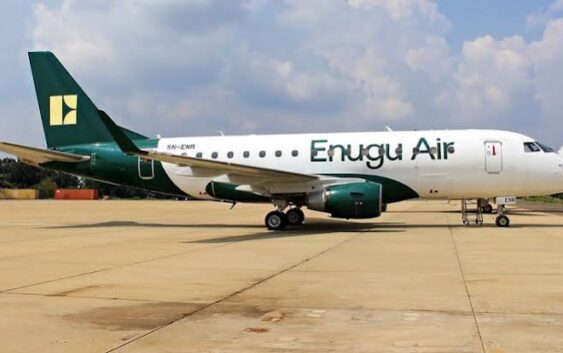
Enugu Air is set to reposition Enugu as a regional aviation gateway with the launch of direct flights from Akanu Ibiam International Airport to Douala, Cameroon, opening a new connection between South-Eastern Nigeria and Central Africa.
The new Enugu-Douala service, scheduled to commence on September 23, will operate twice weekly on Mondays and Wednesdays with an Embraer E170 aircraft.
Beyond connecting Nigeria and Cameroon, the airline said the new route is structured to make Enugu a convenient connecting point for passengers travelling from Lagos and Abuja to the Central African market.
Chief Operating Officer of Enugu Air, Ugonna Agubuokwu, said the new service would expand the role of Enugu in regional air travel by bringing businesses, families and commercial opportunities in Nigeria and Cameroon closer together.
“This is more than the introduction of a new route; it is about creating stronger connections between Nigeria and Cameroon and making regional travel more accessible, convenient and seamless for our passengers,” Agubuokwu said.
The airline said the new service would particularly provide traders and business travellers from the South-East with a direct alternative to travelling through Lagos before connecting to Cameroon or undertaking lengthy overland journeys.
Under the schedule, flights will depart Enugu at 12:45 p.m. and arrive at Douala International Airport at 1:45 p.m. The return flight will leave Douala at 2:30 p.m. and arrive in Enugu at 3:30 p.m.
Agubuokwu said the timing was deliberately designed to accommodate passengers connecting from Lagos and Abuja, potentially allowing travellers from the two major Nigerian cities to use Enugu as their gateway to Douala.
“The timing has been optimised so that passengers can conveniently connect from Lagos and Abuja. For business, for opportunity, and for the connections that matter, Africa is closer than you think,” he said.
The launch marks a shift in Enugu Air’s operations from an exclusively domestic network to regional services, with the airline seeking to extend the reach of its Enugu-based operations beyond Nigeria.
Its existing domestic network covers Lagos, Abuja, Port Harcourt, Kano, Asaba, Benin City, Owerri and Warri.
With the introduction of the Douala route, Enugu is expected to take on a new role within the airline’s network, serving not only passengers originating from the South-East but also travellers from other parts of Nigeria seeking access to Central and West African destinations.
The development is also expected to strengthen direct air connectivity between the South-East and Cameroon by providing an alternative to itineraries that require passengers to connect through Lagos or use road transportation for part of the journey.
The regional expansion forms part of the economic development agenda of Enugu State Governor, Peter Mbah, under which the state-backed airline has expanded its domestic operations and is now extending its network beyond Nigeria.
The Enugu-Douala route therefore represents the airline’s first step into regional operations and gives the South-East a direct international air connection to Cameroon from Enugu.
The new service is expected to support movement between the two markets for business, trade, family visits and other forms of regional travel while strengthening Enugu’s position within the wider African aviation network.
Airlines
Nigeria’s Airline Boom Faces Infrastructure Constraints
AON Vice Chairman and Chairman of Air Peace, Dr. Allen Onyema,

Nigeria’s drive to expand its domestic airline industry is facing a major infrastructure challenge, with operators warning that the country’s airports may not have the capacity to accommodate the growing number of airlines and aircraft entering the market.
The concern was raised at the 30th annual conference of the League of Aviation and Airport Correspondents (LAAC) in Lagos, where industry stakeholders examined the challenges confronting the sustainability and growth of the aviation sector.
Chairman of United Nigeria Airlines and spokesperson for the Airline Operators of Nigeria (AON), Prof. Obiora Okonkwo, specifically questioned the pace at which Airline Operating Certificates (AOCs) are being issued without a corresponding expansion of airport infrastructure.
According to him, while increased competition is welcome, the government must ensure that airport facilities, particularly aircraft parking and ramp areas, are capable of supporting the additional operators.
“More AOCs are being issued, and perhaps five more will be issued by year’s end. More competition is fine, no problem. But where is the infrastructure to accommodate these additional aircraft?” Okonkwo asked.
He disclosed that obtaining his own AOC took between two and three years, whereas some operators were now receiving theirs within six months.
Okonkwo said the growing number of aircraft could worsen congestion at airports unless infrastructure development kept pace with the expansion of the airline industry.
He cited a recent incident involving a United Nigeria aircraft which, according to him, remained on the tarmac for about 30 minutes because passengers could not disembark due to congestion on the ramp.
The airline executive also questioned whether Nigeria’s existing airspace capacity could adequately support the anticipated growth in aircraft operations.
His concerns come amid increasing efforts to encourage more indigenous airlines and promote competition in the domestic aviation market.
Meanwhile, the operators also highlighted the financial pressures affecting airlines, with AON Vice Chairman and Chairman of Air Peace, Allen Onyema, disclosing that airlines contend with about 54 different aviation charges.
Onyema said the numerous taxes, levies and charges had become a significant burden on operators and were affecting their ability to remain profitable and competitive.
He called for a comprehensive review of the charges, stressing that a sustainable aviation industry requires a balance between government revenue expectations and the survival of airlines.
Another major operational challenge highlighted by Okonkwo was the persistent problem of bird strikes.
He disclosed that a United Nigeria Embraer E190 aircraft had remained grounded for 13 days following a bird strike, despite repairs and replacement of damaged components.
He said such incidents impose huge financial losses on airlines, particularly when aircraft are acquired with borrowed funds.
Okonkwo also called for stronger protection of airline workers during flight disruptions, recounting an incident in which passengers allegedly refused to disembark after a United Nigeria flight returned to Lagos because of adverse weather conditions at Kano.
He warned that the safety and security of aviation workers must be taken seriously whenever disruptions occur.
The concerns raised by the operators suggest that Nigeria’s aviation expansion requires more than the licensing of new airlines.

For the anticipated growth to translate into improved connectivity and stronger competition, stakeholders say airport infrastructure, airspace capacity and operational safety measures must expand alongside the number of carriers.
Airlines
More Airlines, Same Airports, Bigger Crisis
From left, Chairman, League of Airport and Aviation Correspondent, (LAAC), Mr. Idris Suleiman, Former FAAN MD, Richard Aisuogbogun, Chairman, Airpeace Airlines, Dr. Allen Onyema, M/D, Top Brass, Capt. Iyayi and Ag. COO/Head, Aeronautical and Cargo Services, Public Affairs and Public Consumer, MMA-2, Ikeja Lagos Remi Jibodu during the 30th Annual Conference of LAAC held at Providence Hotel GRA Ikeja Lagos. PHOTO ISAAC JIMOH AYODELE.

*Operators raise alarm over ramp congestion, bird strikes and rising costs
*AON says 54 charges are stifling airline competitiveness
Nigeria’s aviation industry may be heading for a major capacity crisis as the number of airline operators continues to grow without a corresponding expansion of airport infrastructure, industry stakeholders have warned.
The warning came at the 30th annual conference of the League of Aviation and Airport Correspondents (LAAC) in Lagos, where airline operators raised concerns over the ability of existing airports to accommodate the growing number of carriers and aircraft entering the market.
Vice Chairman of the Airline Operators of Nigeria (AON) and Chairman of Air Peace, Allen Onyema, said Nigerian airlines currently contend with about 54 different taxes, levies and charges, which he described as a major obstacle to the profitability and competitiveness of the sector.
But beyond the financial burden, the operators raised concerns about whether Nigeria’s airport infrastructure is keeping pace with the expansion of the airline industry.
The AON spokesperson and Chairman of United Nigeria Airlines, Prof. Obiora Okonkwo, questioned the continued issuance of Airline Operating Certificates (AOCs) when available airport facilities are already under pressure.
Okonkwo disclosed that while it took him between two and three years to obtain an AOC, some new operators were now obtaining theirs in about six months.
He said increased competition was desirable but warned that new airlines would put additional pressure on already congested airport facilities.
“More AOCs are being issued, and perhaps five more will be issued by year’s end. More competition is fine, no problem. But where is the infrastructure to accommodate these additional aircraft?” he asked.
The United Nigeria Airlines chairman cited a recent experience in which one of his aircraft remained on the tarmac for about 30 minutes because passengers could not disembark due to ramp congestion.
His concern was that the situation could become more severe if more airlines acquire aircraft without corresponding improvements in airport infrastructure and airspace capacity.
“I wonder if we have enough airspace,” he added.
The infrastructure concerns are compounded by operational hazards, particularly bird strikes, which Okonkwo said were causing significant damage to airline operations.
He disclosed that one of his airline’s Embraer E190 aircraft had remained grounded for 13 days following a bird strike, despite repairs and replacement of damaged components.
“Today, I have an aircraft, E-190. This is the 13th day of AOG (aircraft on ground) due to bird strike. We bought new blades and fixed them,” he said.
Okonkwo said the financial impact was particularly painful for airlines that had borrowed money to acquire aircraft.
“Imagine having borrowed 30% of funds from the bank to acquire these beautiful aircraft, only to wake up and face a bird strike. It happens continuously within one month. It is very painful,” he said.
He expressed frustration over what he described as inadequate measures by the Federal Airports Authority of Nigeria (FAAN) to effectively address the bird-strike menace.
The airline executive also raised another growing concern—the treatment of airline workers during flight disruptions.
He recounted an incident involving a United Nigeria flight that returned to Lagos after heavy rain affected operations at Kano Airport. According to him, some passengers refused to disembark from the aircraft after it returned to Lagos, resulting in a difficult situation for the airline and its workers.
Okonkwo warned that protecting aviation personnel must be given greater attention, particularly during disruptions when passengers can become aggressive.
“If we cannot protect airline workers, who are somebody’s wives, children, sisters, and brothers, then when there is any flight disruption, what happens? Staff disappear because nobody wants to be harmed,” he said.
Meanwhile, Onyema said the industry’s infrastructure and operational challenges were being worsened by the high number of charges imposed on airlines.
According to him, Nigerian airlines pay about 54 different charges, a burden he said undermines their ability to compete effectively with foreign carriers.
“One thing I want to mention is that there are many charges. If I were to list them, there are about 54 that airlines pay,” Onyema said.
He also called attention to an ECOWAS agreement reportedly providing for a 25 per cent reduction in taxes across West Africa, saying the provision had yet to be implemented.
Onyema expressed optimism that direct engagement between airline operators and President Bola Tinubu could produce significant reforms in the sector.
He recalled the removal of the four per cent Free-on-Board customs duty after he raised concerns about its impact on airlines, describing the development as an example of what could happen when government responds to industry concerns.
The operators also raised concerns about the impact of official pronouncements on investor confidence and the reputation of Nigeria’s aviation industry.
Okonkwo urged government officials, particularly political appointees responsible for public communication, to acquire sufficient knowledge of aviation before making statements on the sector.
He argued that poorly informed statements could damage confidence in an industry already struggling with significant operational and financial pressures.
The concerns raised at the LAAC conference point to a deeper challenge confronting Nigerian aviation: the sector is seeking more airlines and greater competition, but its infrastructure, regulatory framework and operating environment may not yet be expanding at the same pace.
Mr Ayodele Olatiregun, Director, Finance & Accounts, FAAN during the LAAC 30th Annual Conference themed: Towards Sustainable Aviation Industry: Balancing Government Revenue Demands with Sector Growth held in Ikeja, Lagos on Thursday
Unless the gap between airline growth and infrastructure capacity is urgently addressed, increased competition could produce congestion and operational bottlenecks rather than the improved connectivity and service quality expected from a growing aviation market.

Enugu Air Opens Enugu-Douala Regional Link

NAMA: Safety Forced Removal of Lagos CAT III ILS

Air Peace: 85% of August Delays Caused by External Factors

Air Peace Expands Domestic Flight Schedule

Lufthansa Group to Bring Eurowings to Nigeria in 2027

Gateway International Airport Takes Off as Ogun Joins Nigeria’s Air Map
-
 Airlines3 months ago
Air Peace Expands Domestic Flight Schedule
-
 Airlines4 weeks ago
Lufthansa Group to Bring Eurowings to Nigeria in 2027
-
 Aviation12 months ago
Gateway International Airport Takes Off as Ogun Joins Nigeria’s Air Map
-

 Airlines12 months ago
₦100m Land Deal: Air Peace Backs Onyema’s Claim on Anambra Airport
-

 Aviation12 months ago
Nigeria, UAE Firm Sign Landmark Cargo Information Deal
-

 Airlines12 months ago
High Airfares, Hot Hotels: Nigeria’s Travel Paradox
-
 Airlines12 months ago
UK Partnership Opens Heathrow, Gatwick Gates for Air Peace – Onyema
-

 AIRPORTS1 year ago
MMA2 Named Nigeria’s Best Cargo Airport, Jibodu Honored